High security · Brantford
Safe Installation & Servicing
A dinner service ends with a stack of bills and a handful of credit slips, and right now they sit in an unlocked cash box on a shelf until morning, because nobody has gotten around to anything sturdier.
In plain words
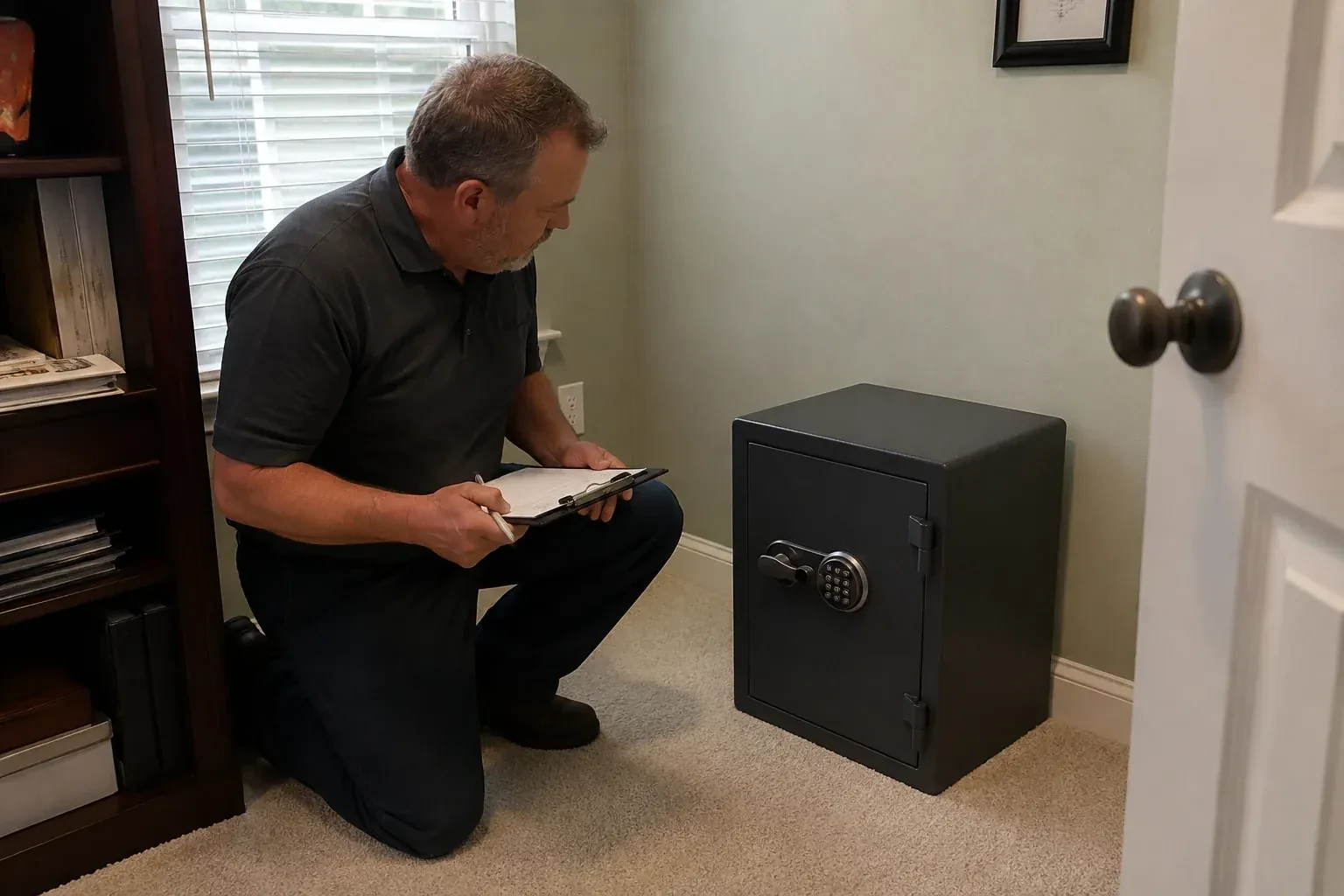
For a household bringing in its first real safe, the service covers everything between the empty spot on the floor and a working, anchored unit with a combination only the family knows. The locksmith walks through what the safe needs to hold, checks the floor or wall it will sit against, positions and levels it, and secures it with anchor bolts suited to that surface. The lock is set and cycled several times with the owner watching, so the last step of the visit is confirming, together, that it opens and closes exactly as it should.
How the visit goesThe keypad on the office safe blinks a low-battery warning every morning now, and whoever notices it first quietly hopes someone else deals with it before the batteries finally give out mid-week.
Safe Installation & Servicing
How the visit goes
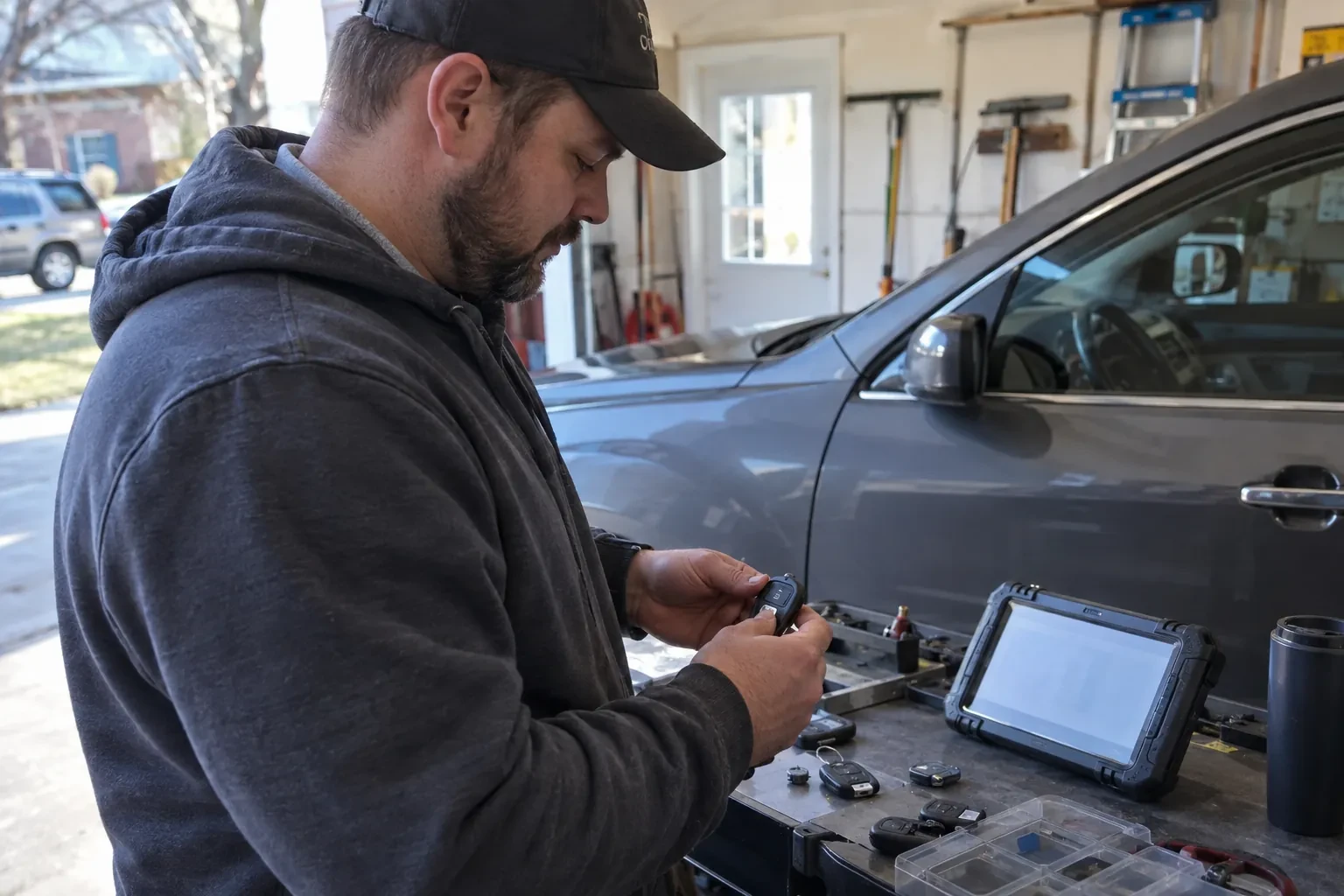
Getting a heavy unit to its final spot
A commercial safe can weigh several hundred pounds before anything is inside it, so the route from the door to the final position matters as much as the safe itself. The locksmith measures doorways, hallway turns, stairs, and any tight corner along the path, and checks whether an elevator, loading dock, or ramp is involved. A safe that cannot clear a doorway in one piece, or a floor that struggles to bear that weight partway up a building, changes the plan before delivery day rather than becoming a problem on site.
Anchoring into a concrete floor
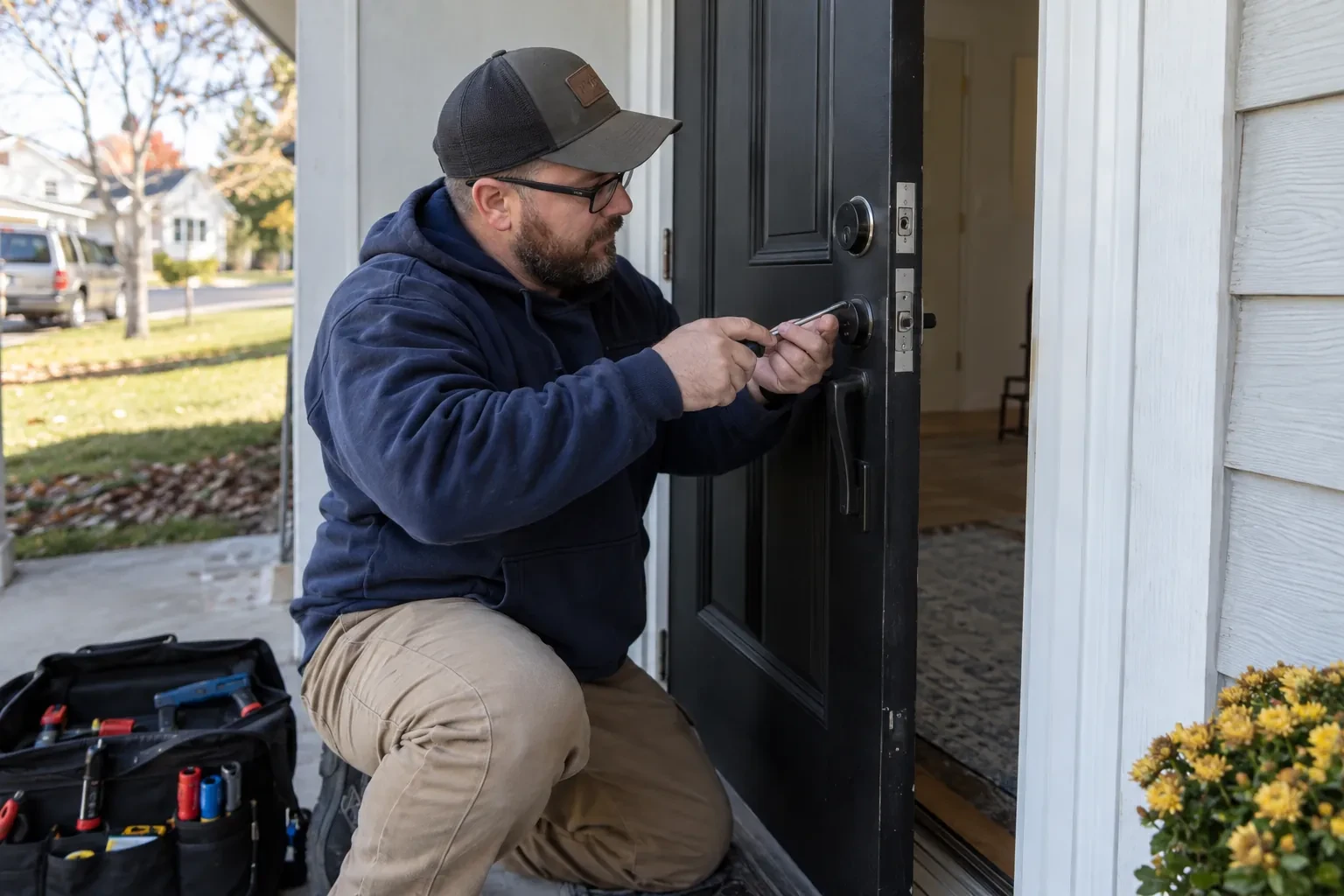
On a concrete floor, holes are drilled through the safe's pre-cut anchor points with a hammer drill and a masonry bit sized to the anchor hardware, and the dust is cleared from each hole so the anchor seats fully rather than on loose grit. Concrete anchor bolts are driven in and torqued to the hardware manufacturer's specification, tight enough to resist prying but not so tight that the anchor or the safe's own steel is stressed. The safe is tested afterward by hand to confirm it does not rock or shift.
What changes if the household or business grows
A safe sized for today's cash float or paper files can be outgrown well before it wears out, and it is worth thinking about that possibility rather than assuming the same unit fits forever. A second smaller safe for a different purpose, an upgraded rating as a business takes on more overnight cash, or an additional user code as staff changes are all changes that build on the existing installation rather than replacing it outright.
Safe Installation & Servicing
In the van
Mechanical or electronic lock
Hammer drill and masonry bits
Mounting plate
Nine-volt backup battery
Desiccant packets
Safe Installation & Servicing
What affects the quote
Fire rating and duration chosen
A longer fire-rated duration or a lower protected temperature for digital media generally means thicker insulation and a larger overall footprint for the same interior storage space.
Requests for concealment
Fitting a safe into a closet floor, a recessed wall cavity, or behind a built-in panel takes more planning than a straightforward open placement, and can limit which units will actually fit.
New installation versus servicing an existing unit
Fitting a brand-new safe involves positioning, anchoring, and lock setup from scratch, while servicing an existing one focuses on bolt-work, lock testing, and confirming or adding anchoring, generally a shorter list of tasks.
What to have ready
- Does an insurer or head office require a specific rating?
- What floor or wall will the safe sit against?
- Does the lock use a dial, a keypad, or both?
Safe Installation & Servicing: questions
QuestionsCan the combination or code be changed after installation?
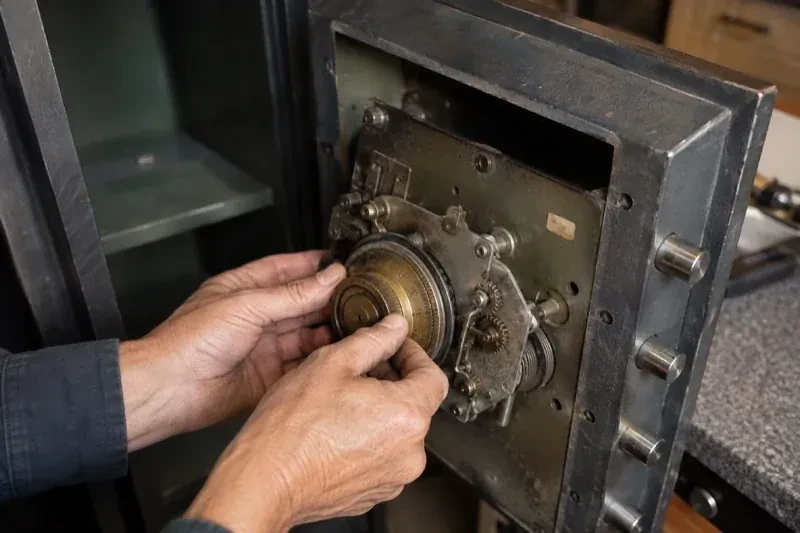
Yes, on both mechanical and electronic locks. A mechanical dial is reset to a new combination by working inside the lock body, while an electronic keypad is simply reprogrammed at the keypad or through its service menu. Changing it after a change in staff, a move, or simply out of caution is routine work rather than anything unusual, and it can be arranged as its own visit.
How often does the battery need replacing on an electronic lock?
Most electronic locks give a low-battery warning, usually a beep or flashing light, well before they actually stop working, and replacing the battery within that same week is the safer habit rather than waiting. Depending on how often the safe is opened, a battery commonly lasts somewhere between one and several years, and keeping a spare of the correct type near the safe avoids a search once the warning starts.
How do I know what rating of safe I actually need?
Start with what will be inside it. Cash, jewelry, and firearms mainly need protection from tools and time, so the burglary rating matters most. Paper records and digital backups mainly need protection from heat, so the fire rating matters most, and digital media needs a noticeably lower internal temperature than paper to survive. Many households and businesses end up choosing a unit built to both standards rather than picking just one.