Locksmith
Read this before you buy a lock
Reading about locks is not most people's idea of a good evening, so we have kept these pieces short. Each one answers a single question clearly, from how to keep a lock working through a cold snap to what to think about before adding a keypad at the office.
Frequently asked questions
When does a locksmith decide to drill instead of pick?
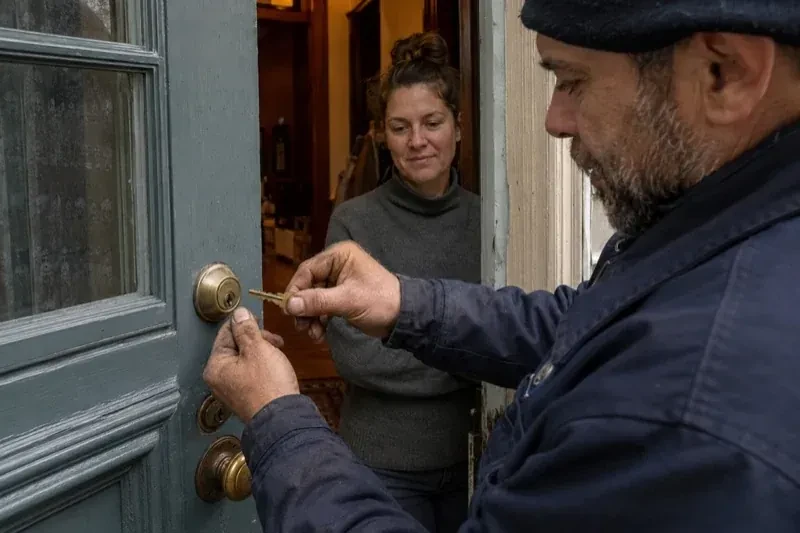
Drilling is the last rung, reached only when the cylinder has genuinely stopped cooperating. Typical reasons are a plug seized by corrosion or a failed spring, a key snapped deep inside that blocks the pins, a high-security cylinder whose anti-pick features make picking impractical, or a lock already damaged by someone's earlier attempt. The decision is explained before the drill comes out, the hole is confined to the cylinder, and replacement hardware goes in straight afterwards.
What should I have ready when I call?
The address and unit number, which door you are outside, what the lock looks like, and where the keys are: with someone, lost, broken or simply refusing. Say whether there is an alarm or a card reader on the door, who can disarm or confirm your authority, and whether the building has a property manager. If you can send a photo of the lock and the door edge, the right cylinders and cores come on the first trip.
The key broke while the door was locked. Can you still get me in?
Yes. The fragment comes out first, because nothing else can happen while it blocks the keyway. With the cylinder clear and the plug at rest, the door is opened by the same non-destructive methods used for any lockout, then a working key is cut and tested. If the door is a rental, the visit is noted for the building manager on request.
What should I have ready when I call about a break-in?
Whether the police have been called and any occurrence number; whether everyone is safe and the property is empty of intruders; which opening was forced and whether it closes at all; whether the damage is to the lock, the frame, the door or the glass; whether keys, remotes or codes were taken; whether you own, rent or manage the property; and whether there is glass beside the door. Photos on your phone help the locksmith bring the right hardware.
Do I have to prove I live or work here?
It is a normal part of the visit and it protects you as much as anyone. Photo identification matching the address is the simplest route; a lease, a bill, a management record or a manager or neighbour who can confirm you works as well. For a business, the key holder or the person on the lease is enough. If the documents are behind the jammed door, the check is completed once you are inside, before the locksmith leaves.
The car key was on the same ring. Can you deal with that too?
Vehicle keys are a separate branch of locksmith work because most carry a chip the car's immobiliser recognises. Retiring a lost car key means programming the car to forget it and to accept a new one, which an automotive locksmith does at the vehicle. Mention the car when you book; where the company offers that service it can be scheduled, and otherwise the household rekey proceeds and you are pointed to the right help.
Will I need to prove I own or rent the home?
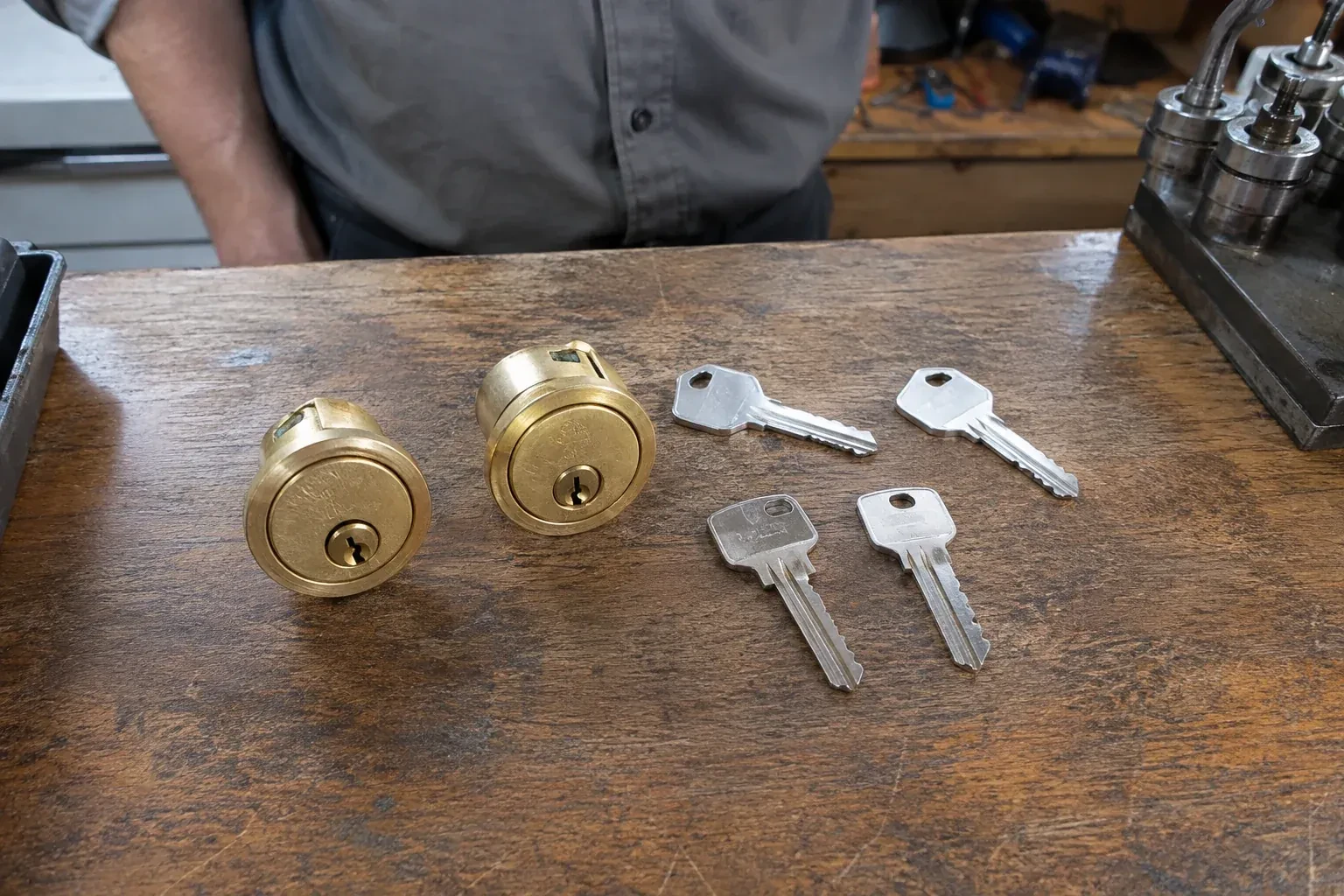
Yes, and it is a welcome part of the job. Rekeying decides who can enter, so the locksmith confirms the person asking has the standing to make that decision. For an owner that means photo identification alongside a document that links them to the property, for instance a property tax notice or the closing statement. A manager brings the owner's written authorization. A tenant mentions that the landlord has agreed and will be given a key, since tenancy rules here expect both to hold one.
Does the finish of the deadbolt matter beyond looks?
It does on an exposed door. Winter salt spray, summer sun and humid air all work on the outside trim, and residential deadbolts carry a finish grade that reflects how well the coating resists them. A lifetime or PVD-style finish stays bright longer on a south-facing or roadside door, while a sheltered porch door can carry any finish you like. Matching the knob or lever below is mostly a matter of taste.
Is a smart lock a good upgrade, and what happens when the batteries run out?
For a household with many people coming and going, codes that can be added and removed are a real convenience. Behind the keypad it is still a deadbolt, so grade and strike matter as much as ever. Batteries typically last months and the lock warns you as they fade; depending on the model, a dead battery is handled with a mechanical override key or with external contacts for a temporary power source, so it is worth confirming which one your lock uses.
Does a rented home need the landlord involved for this work?
Repairing a lock so it works as before is ordinary maintenance, but anything that changes who can open the door, such as a rekeyed cylinder or new keys, is something a tenant and landlord are expected to agree on and share keys for. The locksmith asks up front who should receive keys and can leave a note of what was done for the property manager, so both sides know what is on the door.
Can a smart lock go on a patio door, a side gate or a multipoint door?
Some can, and the locksmith will say which. Sliding patio doors use a hook or a pin rather than a deadbolt, so they take purpose-made electronic latches rather than a standard smart deadbolt. Multipoint doors, common on newer fibreglass and steel entries, lock at several points with one lever; a growing number of smart handles are built for them, and compatibility with your specific gearbox is checked first. Gates take weather-rated keypad locks designed for outdoor posts.
If the lock gets replaced, can the existing intercom or buzzer stay?
In most cases, yes. The buzzer, keypad and intercom are generally separate from the mechanical lock or cylinder, so replacing the lock itself does not usually mean replacing the electronic side too. Where the two are connected, such as an electric strike wired to the same frame as a new mechanical lock, the locksmith checks the fit and wiring before starting so the electronic system keeps working once the new hardware is in place. Anything that would need to change is explained beforehand.
Will the whole mailbox be replaced, or just the lock inside it?
Almost always, only the lock: the small cylinder and its cam come out, and a matching replacement goes into the same hole in the same compartment door. The mailbox itself, the door, and the surrounding panel stay exactly as they were. A full compartment door or panel is only replaced when it has been damaged beyond a simple lock swap, and that would be discussed separately before any work begins.
How should I keep a written record of my new combination?
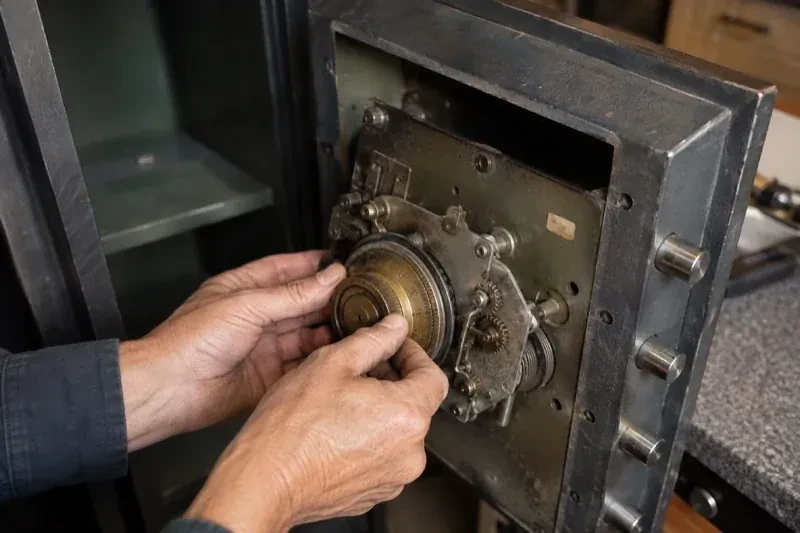
Somewhere away from the safe itself: a sealed note held by a manager, a separate secure file, or a password manager already used for other business records all work better than a note taped to or near the safe, which is one of the first places anyone would check. Deciding who updates that record when staff change is worth agreeing on before this visit ends.
Can the combination or code be changed after installation?
Yes, on both mechanical and electronic locks. A mechanical dial is reset to a new combination by working inside the lock body, while an electronic keypad is simply reprogrammed at the keypad or through its service menu. Changing it after a change in staff, a move, or simply out of caution is routine work rather than anything unusual, and it can be arranged as its own visit.
Is a high security cylinder really pick proof?
Nothing is beyond a laboratory with unlimited time, so the honest measure is minutes, not absolutes. Rated cylinders are tested to resist skilled picking and impressioning for a set period, and drilling and forcing for another. In the real world that matters because someone at a door has seconds, not a workbench. The sidebar and false grooves in the pins give a picker nothing reliable to feel, and the hardened inserts stop a bit, which is why these attacks move on to easier doors.
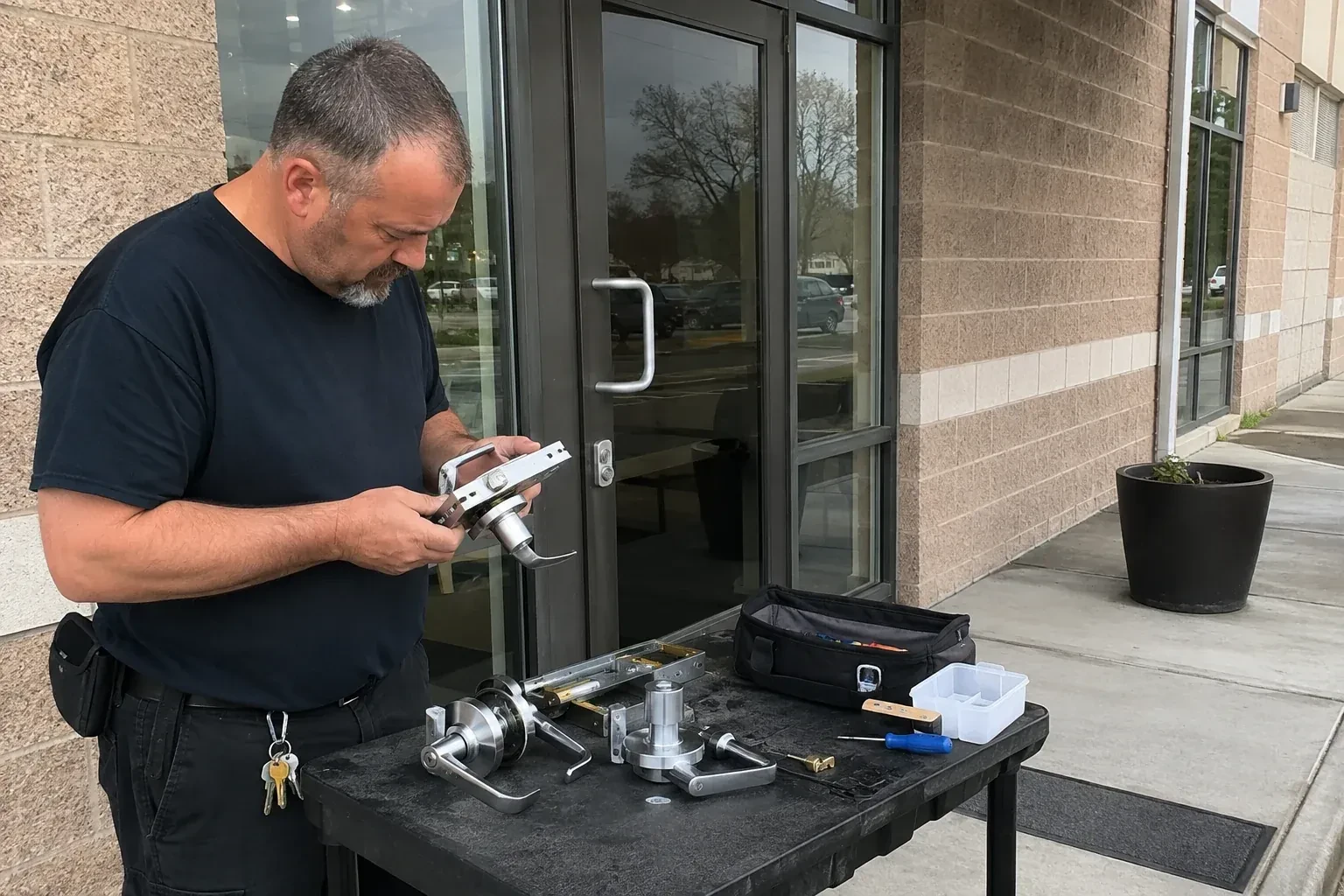
Can all our doors be put on a single key?
Yes, if the cylinders share a keyway or can be fitted with ones that do. Keying everything alike is popular with small shops because staff carry one key and spares are simple. The trade-off is that one key then opens the cash room as readily as the front door. Many businesses choose a middle path: the doors everyone uses on one key, the sensitive rooms on another, and an owner's master that opens both.
Can different lock brands be mixed in one master key system?
Sometimes, but it depends on the keyway and pinning platform each brand uses; some are compatible with one another and some are not. Where a mix already exists on a property, the assessment identifies which cylinders can be brought into a single hierarchy and which need replacing with a matching platform so every level pins correctly across the whole set of doors.
Can access control be added to just one door, or does it have to cover the whole building?
A single door with its own standalone reader is a complete installation on its own, and plenty of businesses start there. If more doors need controlling later, a networked controller can be added at that point, or the building can simply add another standalone unit. Nothing about starting small commits the business to expanding, and nothing about a single-door job rules out growing the system later.
Can I still lock the door from outside?
Yes. The releasing device only governs the inside of the door; the outside gets its own trim, a pull, a lever with a cylinder, or a keyed cylinder alone, chosen for how that door is entered. Locking or unlocking that outside trim has no effect on the inside crossbar, which always releases the latch under a push, so entry security and exit function are handled as two separate questions.
What is a grand-master key system, and does a small business need one?
A grand-master system adds a layer above a standard master key, useful for a business with several buildings or departments where one senior key should open everything and mid-level keys should open only their own area. A single-location business with a handful of doors usually only needs a straightforward master and change-key structure, without the extra layer.
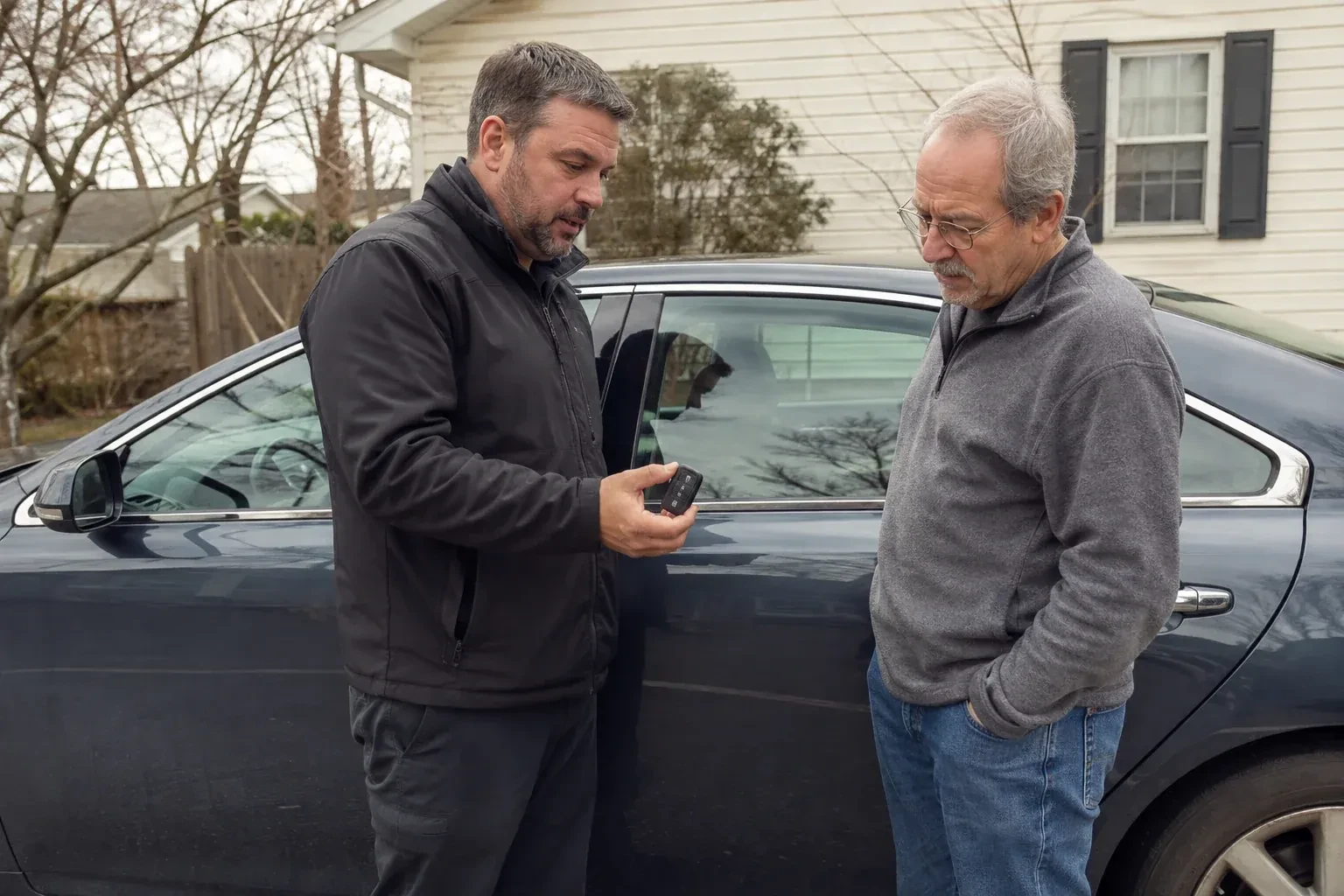
Can you open a pickup, a motorcycle, a trailer or a motorhome?
Yes. Trucks and vans often have a separate cargo or tailgate lock, motorhomes use household-style cylinders on their living-space doors, trailers and hitch locks are padlock-type hardware, and motorcycle seat and steering locks are small wafer cylinders. Say what the vehicle is when you call so the right picks and blanks are in the van, and expect the same authorisation check for each.
After a break-in the doors and ignition are on different keys. Can that be fixed?
Yes. When a door lock is forced and replaced, or an ignition is swapped, the car can end up needing two blades. A locksmith can rekey the replacement cylinder to match the surviving one, so a single key operates every lock again, and cut new keys to that combination. The transponder side is unchanged by the lock work, so your existing programmed keys carry on starting the car once the blades match.
What if the fob's battery is already low?
A low battery in the original does not stop a spare from being made, since the chip and code stored inside still respond during programming even as the battery fades. It is worth mentioning the low battery when you call, though, since the new fob is a natural moment to have a fresh battery on hand for both keys and to note which type each one takes.
Do I need to bring my car anywhere, or does the work happen where it is?
The vehicle generally stays where it is parked, since the equipment used for programming travels to it rather than the other way around. What matters more than the location is that the vehicle itself is present for the visit, since most procedures read information directly from the car as part of registering the new fob.
If I only want a spare, what happens to my current key?
Nothing changes about it. A spare is added alongside the existing key without clearing or altering anything already stored in the vehicle's memory. The only keys that get cleared are the ones you specifically identify as lost, stolen, or no longer wanted, and that is confirmed with you before any clearing happens.
I just bought a used vehicle with one worn key. What should I expect?
A single worn key is a common starting point after buying used, and the visit usually has two parts: reading the existing wafers so a crisp new key can be cut, and deciding whether the barrel itself needs a service given whatever wear the previous owner's key left behind. Bringing whatever paperwork came with the sale helps confirm ownership before any work begins.
Can a vehicle lock be repaired without replacing the whole mechanism?
In many cases, yes. A locksmith opens the trim panel, tests the cylinder, the linkage and the actuator separately, and repairs or replaces only the part that has actually failed. A slipped linkage rod, for example, is often reclipped rather than replaced outright.
My steering lock seized up over winter storage. Can that be fixed without a whole new lock?
Usually, yes. The cleaning method the lock's own maker directs, along with gentle, repeated working of the mechanism, frees many steering locks that have simply seized from disuse or corrosion, without needing to force the key or replace the lock. Only a lock that is cracked, badly rusted internally, or damaged by an earlier forced attempt tends to need full replacement rather than freeing and lubricating.