Lockouts · Brantford
Home Lockout Service
The moving truck has left, half the boxes are inside, and the single key the previous owner handed over turns the knob but not the deadbolt.
In plain words
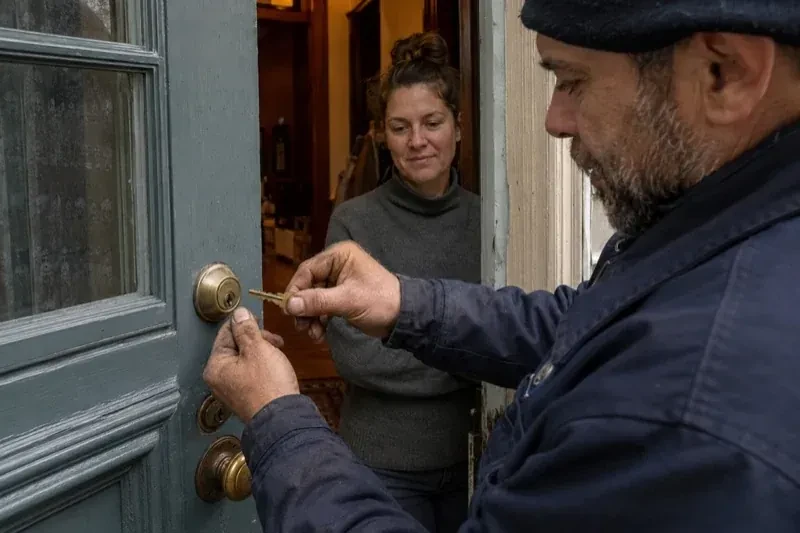
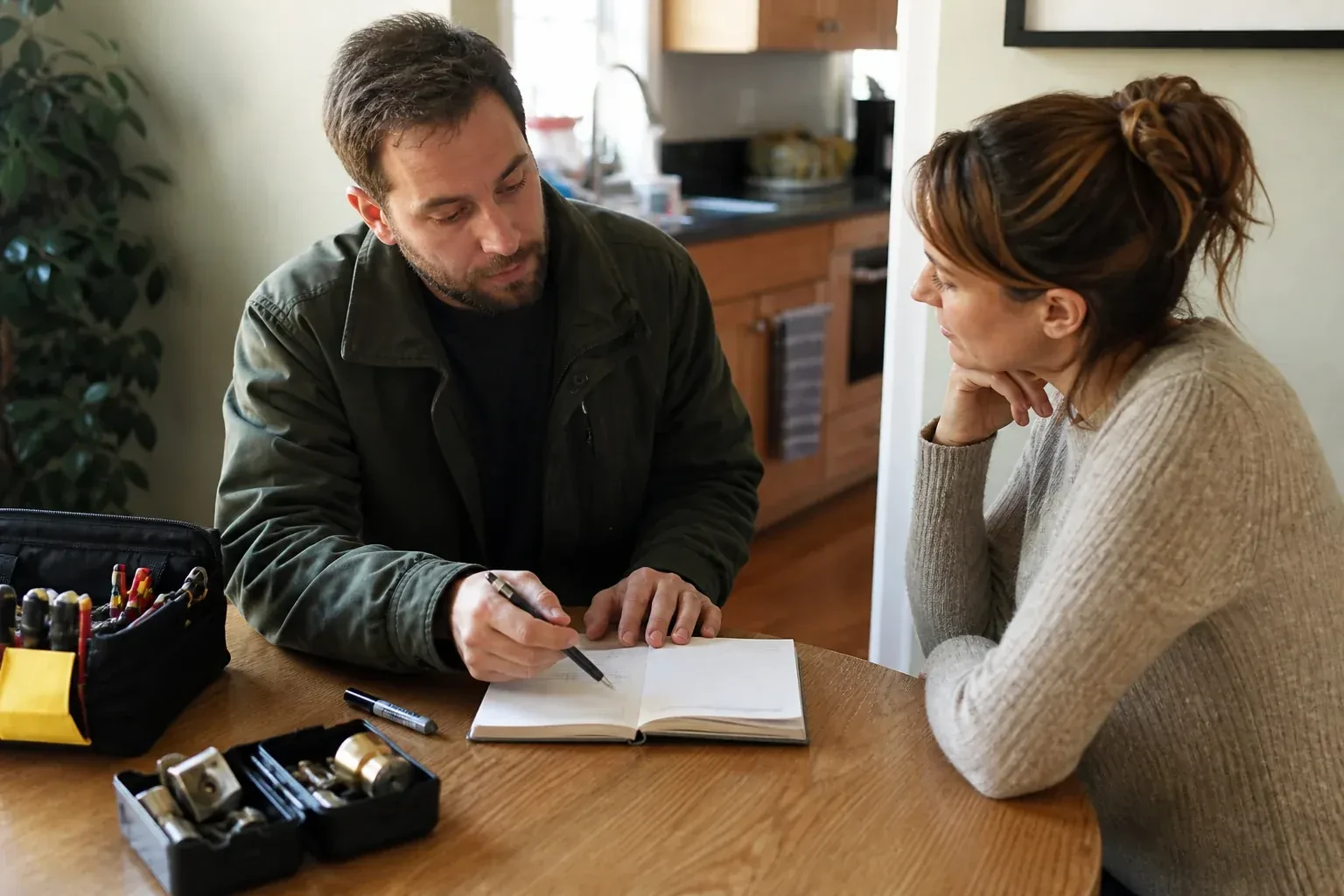
The visit follows a steady order. On the phone you describe the door, the lock and where the key went, which tells the locksmith what to bring. At the house, identification and address are checked and the lock is examined, including the door's fit in its frame. The opening itself comes next, using the least invasive technique that suits the hardware. Once inside, the lock is cycled several times to confirm it works, and you are told what was done. Any recommendation, such as rekeying because a key is missing, is explained then and carried out only if you want it.
How the visit goesYou stepped out to grab the recycling bin and the door swung shut behind you. Through the glass you can see your keys hanging on the hook by the stairs, exactly where they always are, and the latch has caught.
Home Lockout Service
How the visit goes
Reading the lock itself
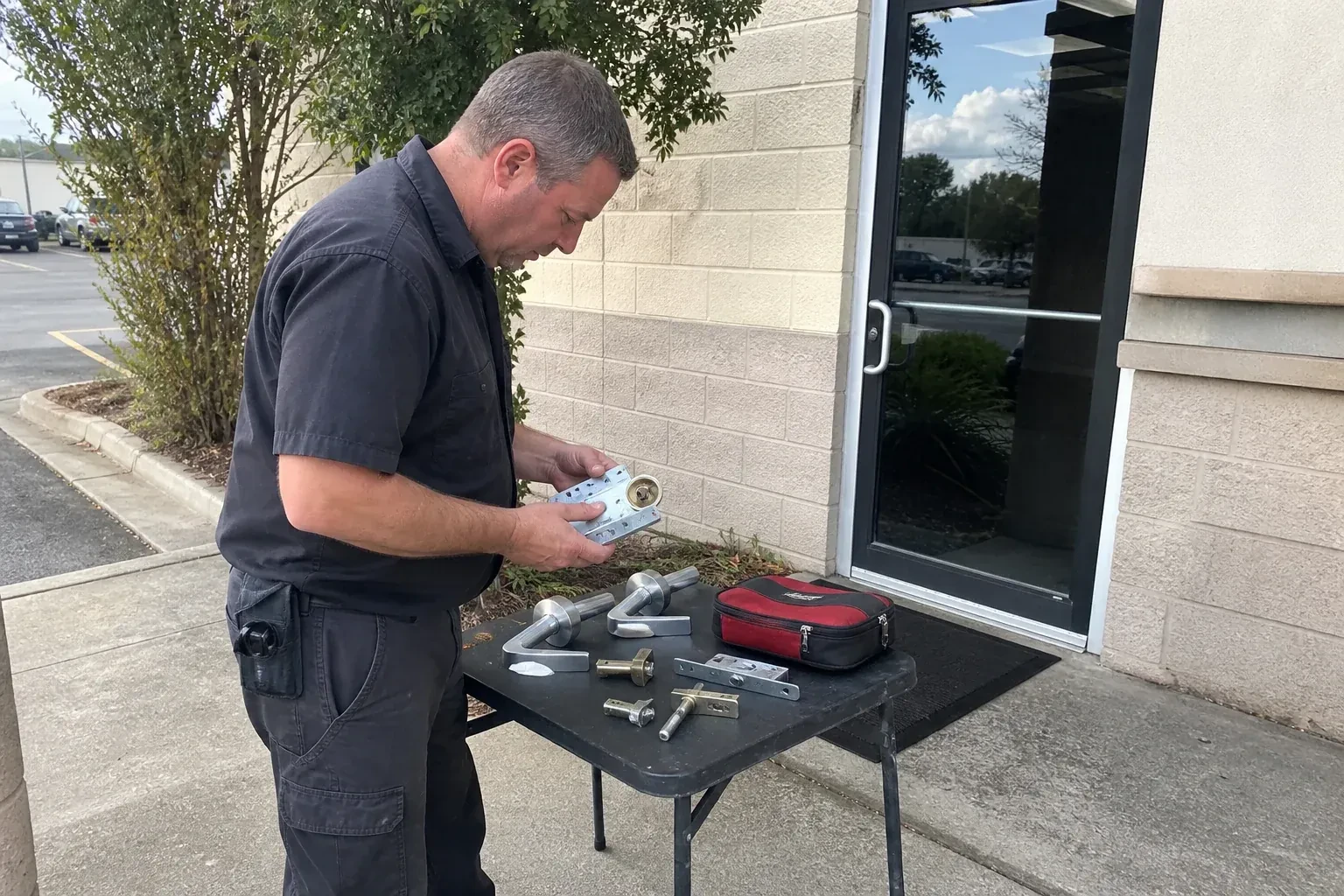
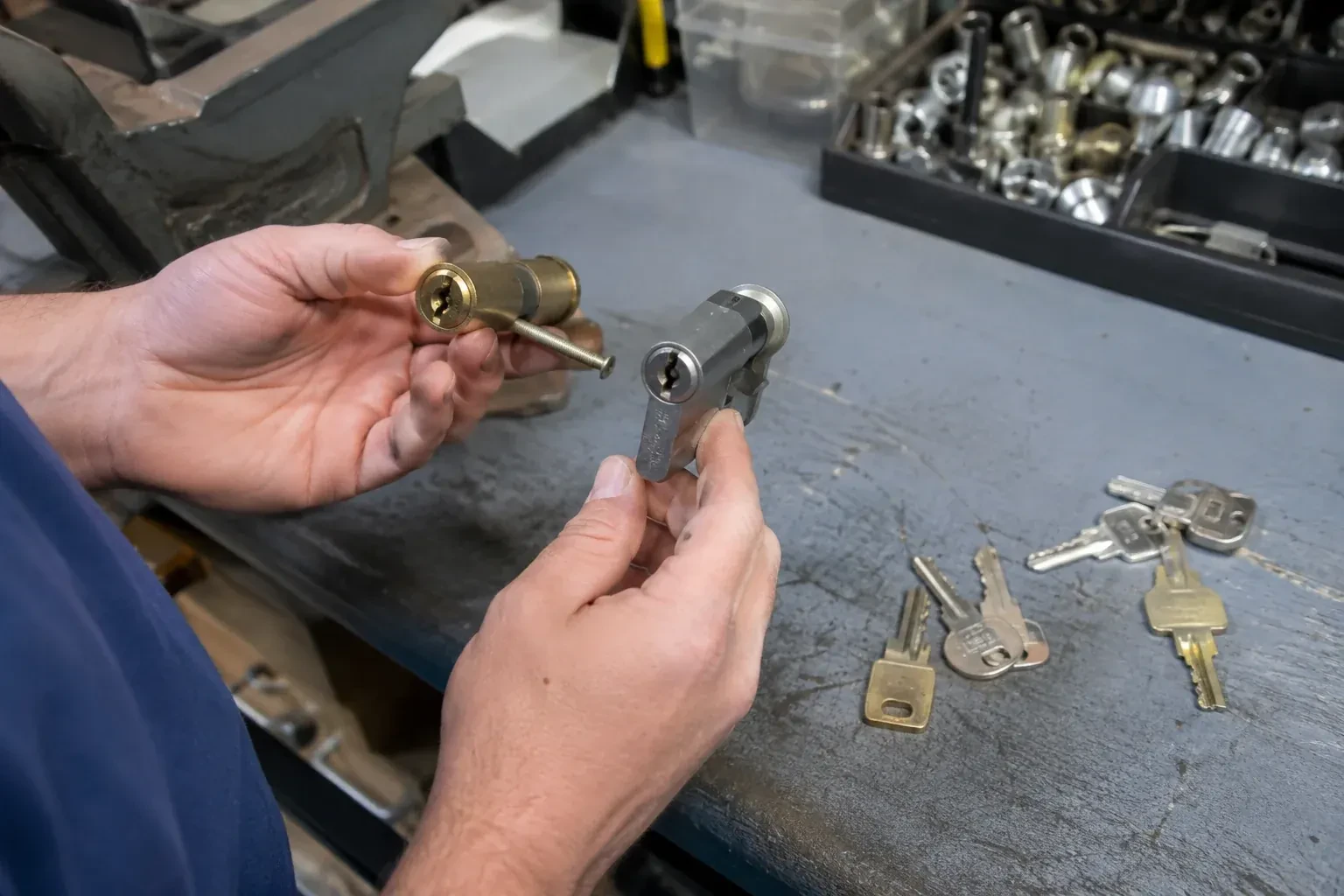
Every lock announces what it is to someone who knows where to look. The shape of the keyway, the maker's mark on the face, the presence of a thumb-turn or a second keyed side, and whether the door has a separate deadbolt above a latching knob all tell the locksmith which family of hardware they are dealing with. A residential pin-tumbler cylinder, a mortise case in a century home, a restricted keyway with security pins and a keypad lock with a hidden override each respond to different techniques. Identifying the lock correctly before touching it is what makes a clean, non-destructive opening the usual outcome.
Working a deadbolt open
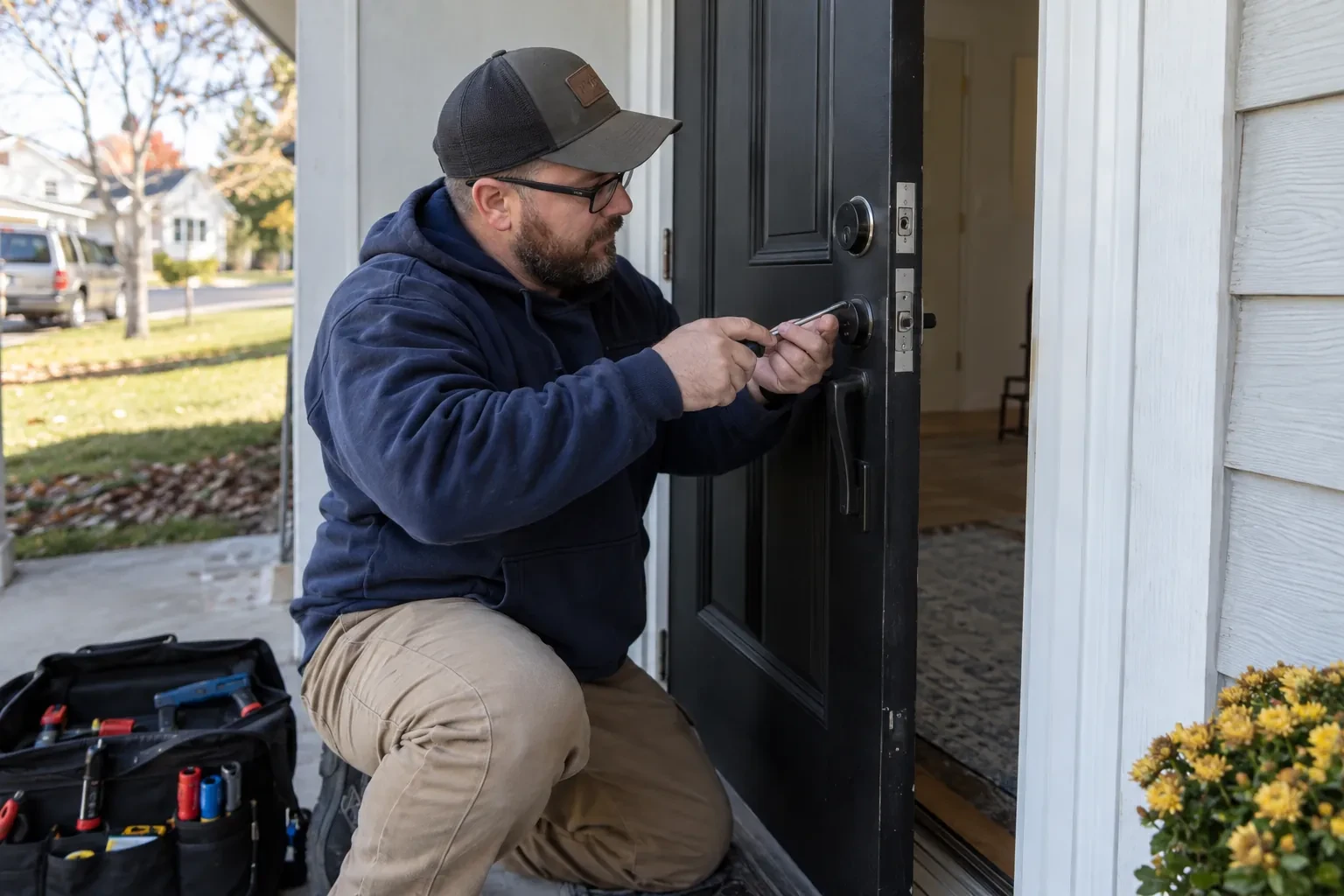
A thrown deadbolt has no bevel to exploit, so the cylinder itself has to be persuaded. The locksmith applies light rotational tension to the plug and sets each pin to the shear line, or reads the pin heights with a decoder and cuts a key that matches. Some cylinders let the plug turn one way only; a plug spinner flicks it past the point where the tailpiece engages so the bolt can retract. Security pins slow the process rather than stop it. The bolt draws back, the door opens, and the cylinder is cycled with your key afterwards to confirm nothing inside was disturbed by the work.
Looking after the cylinder afterwards
A lock that has just been opened deserves a little care so it keeps turning sweetly. Twice a year, follow your lock's own maintenance guidance: many residential cylinders take a puff of dry graphite or PTFE lubricant into the keyway, some a specified liquid product instead; general-purpose oil sprays attract dust and gum the pins. Wipe grit off your keys before using them, and retire a key that has worn thin or bent, cutting a new one from the code or from a crisp original rather than from a tired copy. If the key starts to need a wiggle to turn, that is the cylinder asking for attention early, while it is still an easy fix rather than a lockout.
Home Lockout Service
In the van
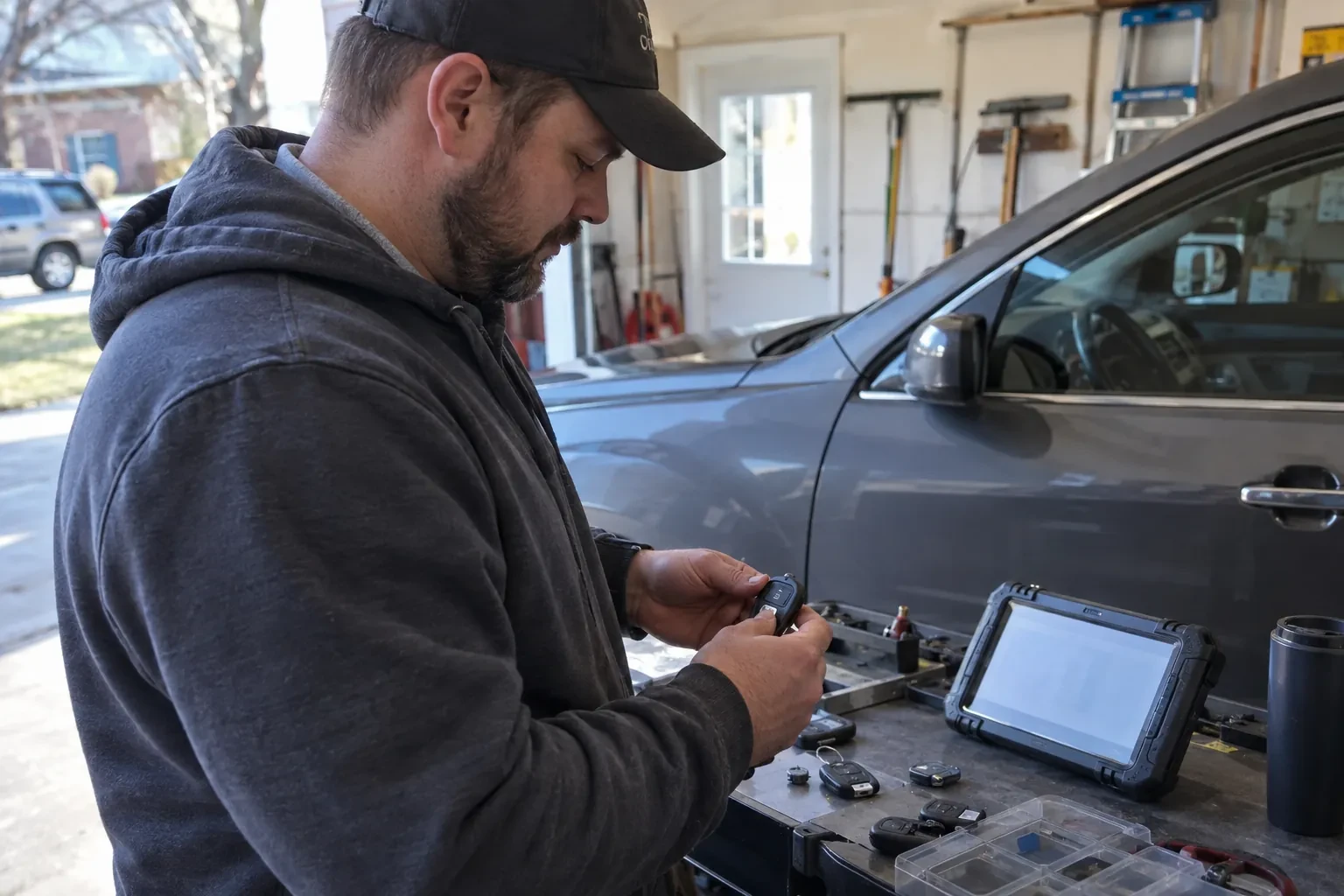
Key blanks and key cutter
Pick and tension tools
Broken key extractors
Cylinder decoder
Dry graphite or PTFE lubricant
Home Lockout Service
What affects the quote
Distance to your door
Travel is part of every call-out. A house across town and a rural property at the end of a long road involve different driving time, and the quote reflects the trip as well as the work.
Drilling and a replacement cylinder
If the cylinder has to be drilled, the quote gains the new cylinder or complete deadbolt and the labour to fit it. You are told this before the drill comes out, never after.
Door and frame adjustment
When the lockout was really a swollen or sagging door, fixing the cause means work on hinges, strike plate or weatherstrip. That adjustment is quoted as its own item alongside the opening.
What to have ready
- Which door are you locked out of, and what kind of lock is on it?
- Is the key inside the house, lost, broken in the lock, or turning without opening?
- Is the lock a keypad or smart lock, and does it have any power left?
Home Lockout Service: questions
QuestionsWhen does a locksmith decide to drill instead of pick?
Drilling is the last rung, reached only when the cylinder has genuinely stopped cooperating. Typical reasons are a plug seized by corrosion or a failed spring, a key snapped deep inside that blocks the pins, a high-security cylinder whose anti-pick features make picking impractical, or a lock already damaged by someone's earlier attempt. The decision is explained before the drill comes out, the hole is confined to the cylinder, and replacement hardware goes in straight afterwards.
Is a double-cylinder deadbolt a good idea after a lockout?
A deadbolt keyed on both sides is sometimes suggested for doors with glass beside them, but on a main escape door it means finding a key to get out. A door people use to leave the home should open from the inside without a key or special knowledge, especially in an emergency. A single-cylinder deadbolt with a thumb-turn, paired with a reinforced strike and a proper glass film if needed, keeps both security and a clear way out.
How do I make sure this never happens again?
Three habits cover most households. Give a spare key to someone you trust who lives nearby. Fix a small combination lockbox somewhere discreet on the property for the one day a year everyone is out at once. And if you have a keypad lock, add a code for a family member and keep the mechanical override key on your keyring rather than in a drawer inside. The locksmith can set up any of these before leaving.
Related services
- Broken Key ExtractionThe key went in like any other morning, you turned it, and something gave with a small metallic click.
- Break-In Damage Lock RepairThe patio slider is sitting crooked on its track.
- Seized & Jammed Lock OpeningThe key turns a full circle without any resistance and the deadbolt stays exactly where it is.