Change or rekey · Brantford
Gate & Building Entry Locks
The gate to the side yard used to close with a satisfying click.
In plain words
A property that grew its gates one at a time, a shed lock here, a side gate there, tends to end up with a drawer full of keys that only sort of match. This service takes stock of every gate and padlock on the property and works out which ones can reasonably be brought onto a single key, replacing or recombining cylinders as needed. The owner leaves with fewer keys, a clear note of what opens what, and a plan for adding any new gate onto the same system later.
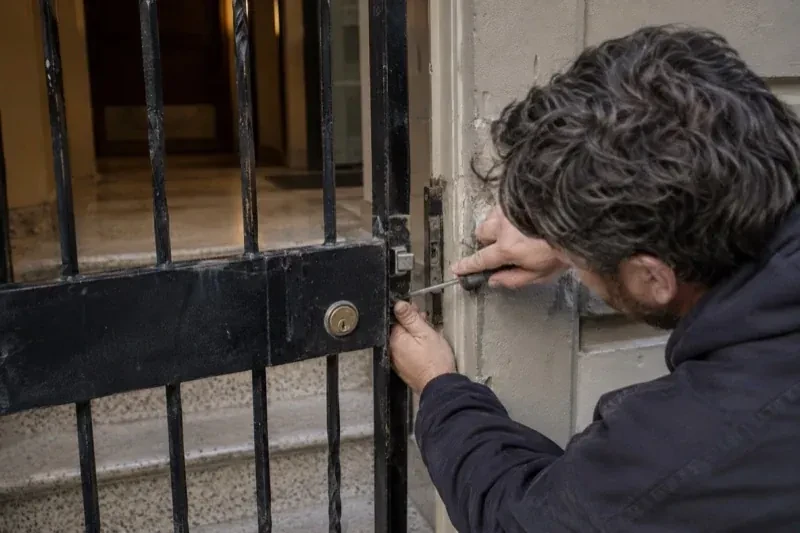
How the visit goesSomeone pried at the gate latch overnight, and now the strike plate hangs by one screw and the cylinder spins loose in its housing. The gate still closes, technically, but a firm shoulder is all it would take to open it from outside.
Gate & Building Entry Locks
How the visit goes
Identifying the hardware family
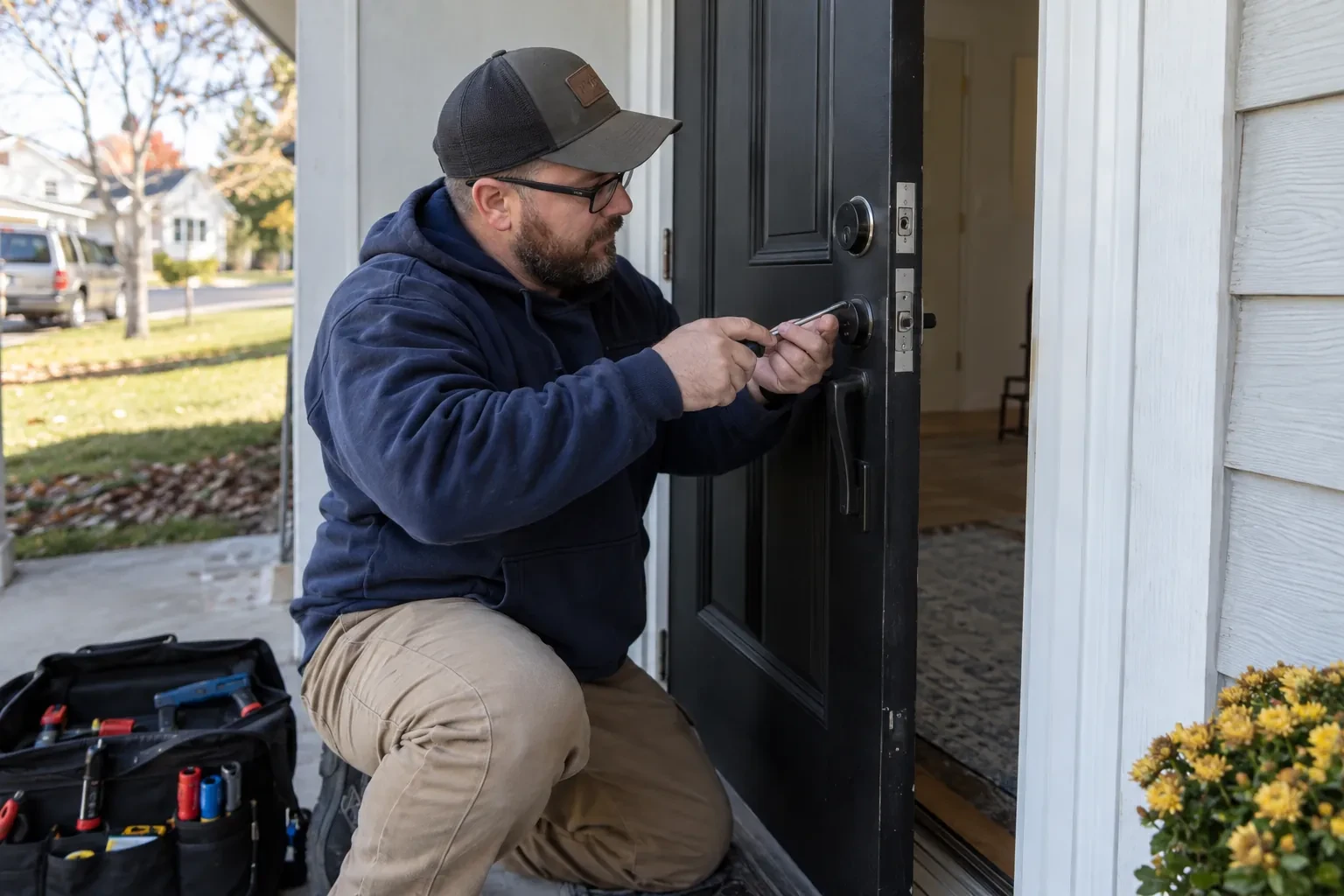
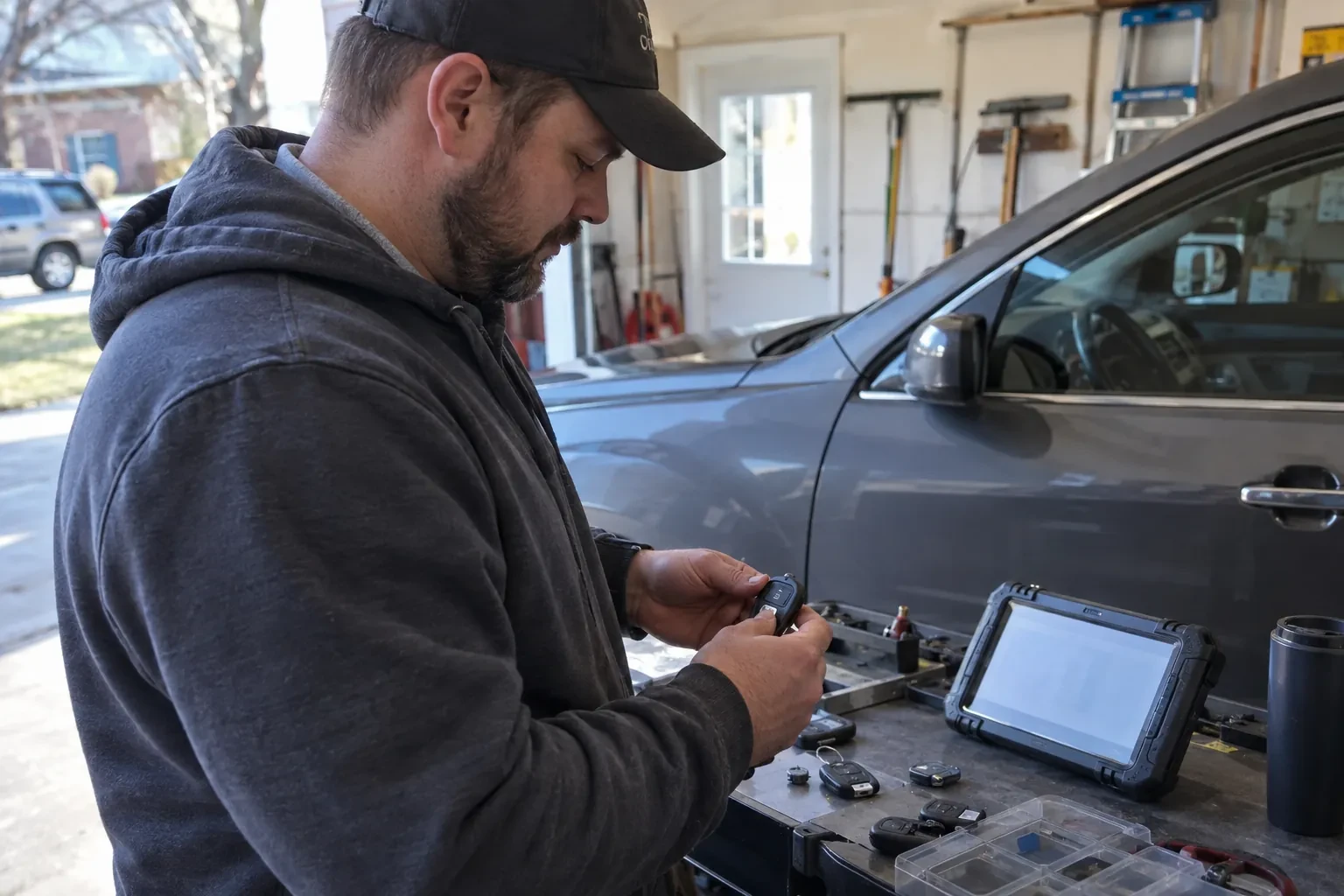
Every lock on a gate or shared entry belongs to a family with its own habits: a surface-mounted gate lock, a mortise case built into a heavier door, a rim cylinder feeding an electric strike, or a panic device on a fire exit. The maker's mark, the keyway shape and whether a thumb-turn or a second keyed side is present all point to which family sits on the door. Getting this right before opening anything up is what lets the visit move straight to adjustment or replacement instead of guessing at parts that will not fit the housing already there.
Coordinating keys across a shared entry
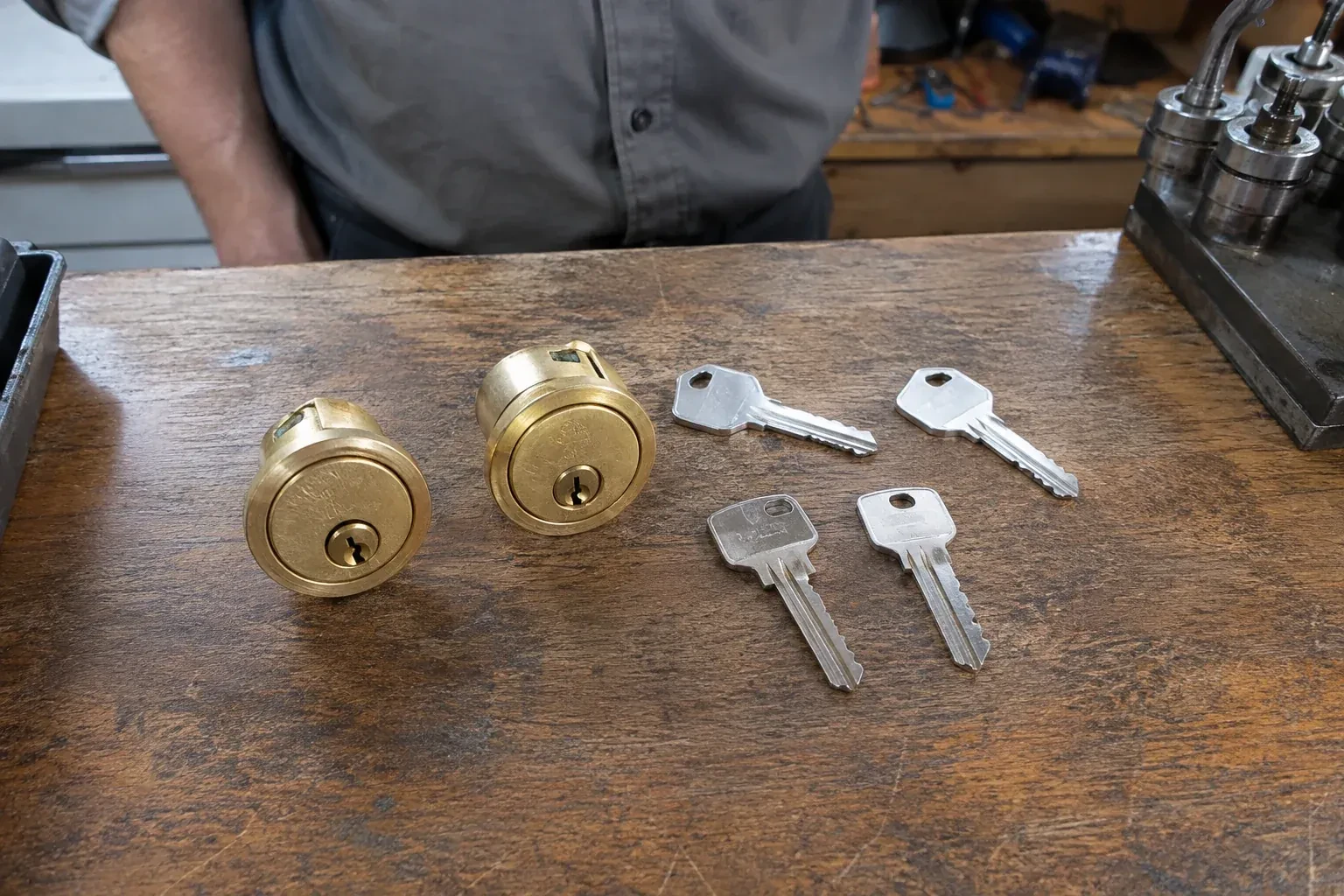
On a property with several gates or a shared building entry, the cylinders that should open on one key are brought onto a common pinning during the same visit, rather than one at a time as complaints come in. Current residents or unit holders each receive a key that matches every door they are meant to use, and a short list is kept of which key opens what. Any gate meant to stay on its own separate key, such as a utility gate the property manager alone uses, is deliberately left off the shared system.
A record for the owner or property manager
You leave with a plain account of what changed: which cylinders were rekeyed or replaced, how many new keys were cut and to whom, whether any gate was brought onto a shared key or deliberately kept separate, and what was adjusted on the closer, strike or post. For a rental or a condo, this note is worth passing to whoever manages the building, since it settles later questions about who currently holds a working key without anyone having to guess or ask around.
Gate & Building Entry Locks
In the van
Hinges, pivots and shims
Keyed-alike cylinders
Gate and door closers
Plug follower and repinning kit
Voltage tester for electric strikes

Gate & Building Entry Locks
What affects the quote
Type and grade of the gate or door lock
A basic surface-mounted gate latch, a weather-rated cylinder, a mortise case and a panic device on a building entry each take different parts and different amounts of time to service, and that difference is reflected in the quote.
Access to the gate or entry
A ground-level gate on an easy driveway is straightforward. A shared building entry behind a locked lobby, a gate at the far end of a long property, or awkward scaffolding around the hardware adds time the quote takes into account.
Materials the gate or frame is built from
Wood, wrought iron, aluminum and vinyl gates each take fasteners and mounting approaches suited to that material, and matching the lock and closer correctly to the gate's construction is part of what the quote covers.
What to have ready
- Is this a single household gate or a shared building entry?
- Is the gate wood, metal, aluminum or vinyl?
- Is the lock dragging, slamming, stuck, or simply not latching?
Gate & Building Entry Locks: questions
QuestionsIf the lock gets replaced, can the existing intercom or buzzer stay?
In most cases, yes. The buzzer, keypad and intercom are generally separate from the mechanical lock or cylinder, so replacing the lock itself does not usually mean replacing the electronic side too. Where the two are connected, such as an electric strike wired to the same frame as a new mechanical lock, the locksmith checks the fit and wiring before starting so the electronic system keeps working once the new hardware is in place. Anything that would need to change is explained beforehand.
What is the difference between a gate lock and a regular door lock?
A gate lock is built to work outdoors, so it usually pairs a latch or bolt with a closer that swings the gate shut on its own using its own spring, rather than relying on a person to push it home. The cylinder tends to be weather-rated, and the whole assembly fits a gate frame or post rather than a conventional door jamb. A building entry door, by contrast, often combines this outdoor hardware with an interior-style latch or an electric strike.
Does this service cover the gate itself, or only the lock?
Both, where the two are connected, which on a gate they usually are. A locksmith working on a gate lock also looks at the hinges, the post and the closer, since a lock rarely fails on its own when the real cause is a sagging gate or a post that has shifted. Work that goes beyond hardware the locksmith carries, such as rebuilding a rotted post or a damaged fence panel, is flagged so it can be handled by whoever normally does that kind of repair.
Related services
- Deadbolt InstallationYou bought a keypad deadbolt online and pulled the old one off, only to find the hole in the door is a different size and the bolt latch sits at a backset the new kit does not list.
- Lock Replacement & UpgradeThree teenagers, a dog walker, a cleaner and one house key that keeps going missing.
- Vintage Mortise Lock ServiceThe brass knob on the front door of your century home turns, but nothing happens on the other side.