Lockouts · Brantford
Broken Key Extraction
The key went in like any other morning, you turned it, and something gave with a small metallic click.
In plain words
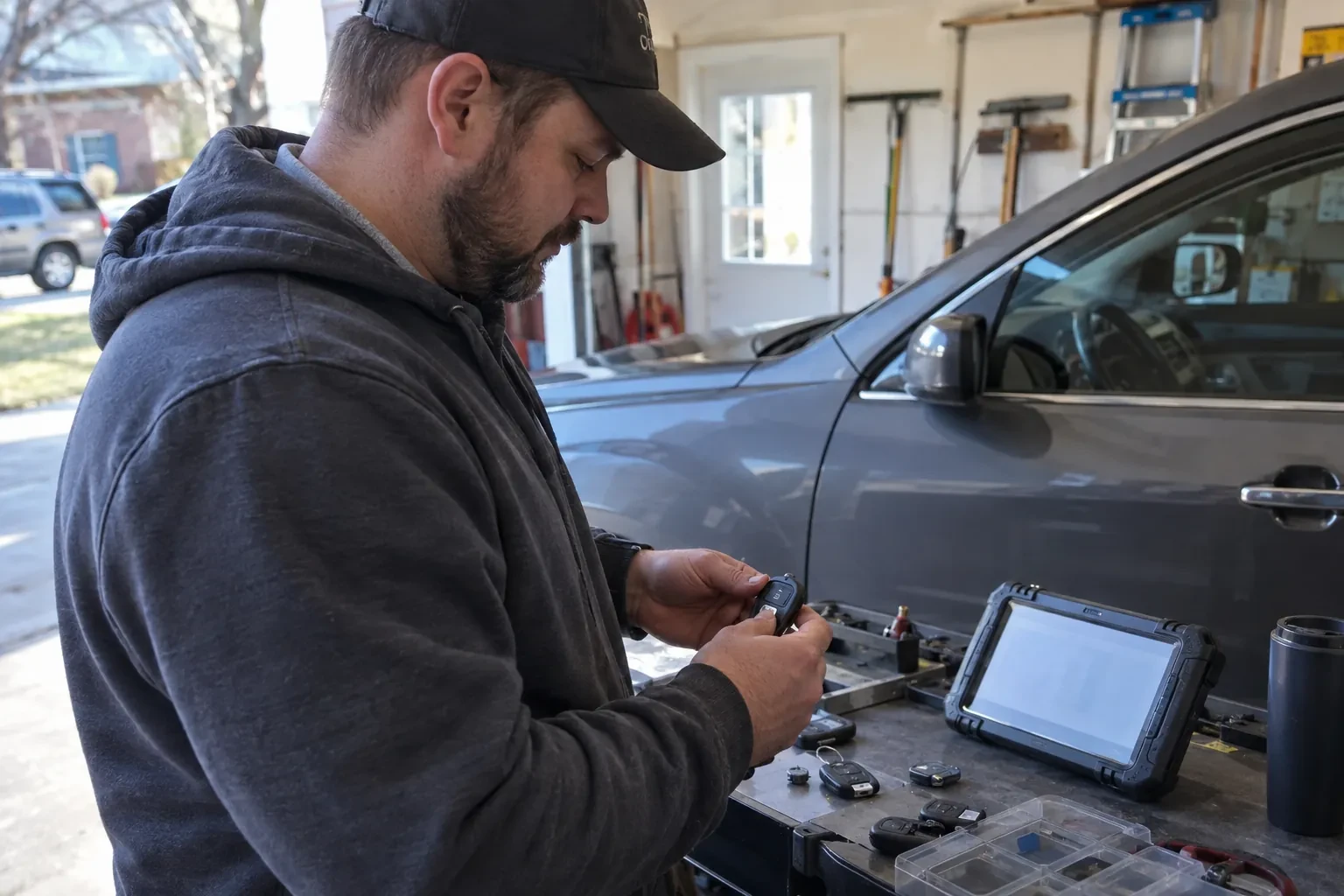
A car key that breaks in the door or the ignition is handled with the same extraction tools, with one difference. On most vehicles the plastic head of the key carries the transponder chip and the remote buttons, and that half is usually intact in your hand. Once the blade is drawn out of the lock, a new blade can often be cut and fitted to the existing head, so the chip keeps talking to the car without reprogramming. The ignition wafers are checked for disturbance and the steering lock is confirmed free. Proof of ownership is asked for before work begins.
How the visit goesThe apartment key snapped mid-turn, leaving the cylinder twisted halfway between locked and open. The building manager's spare is somewhere across town and nobody else has a copy. You are on the wrong side of the door.
Broken Key Extraction
How the visit goes
What has already been tried
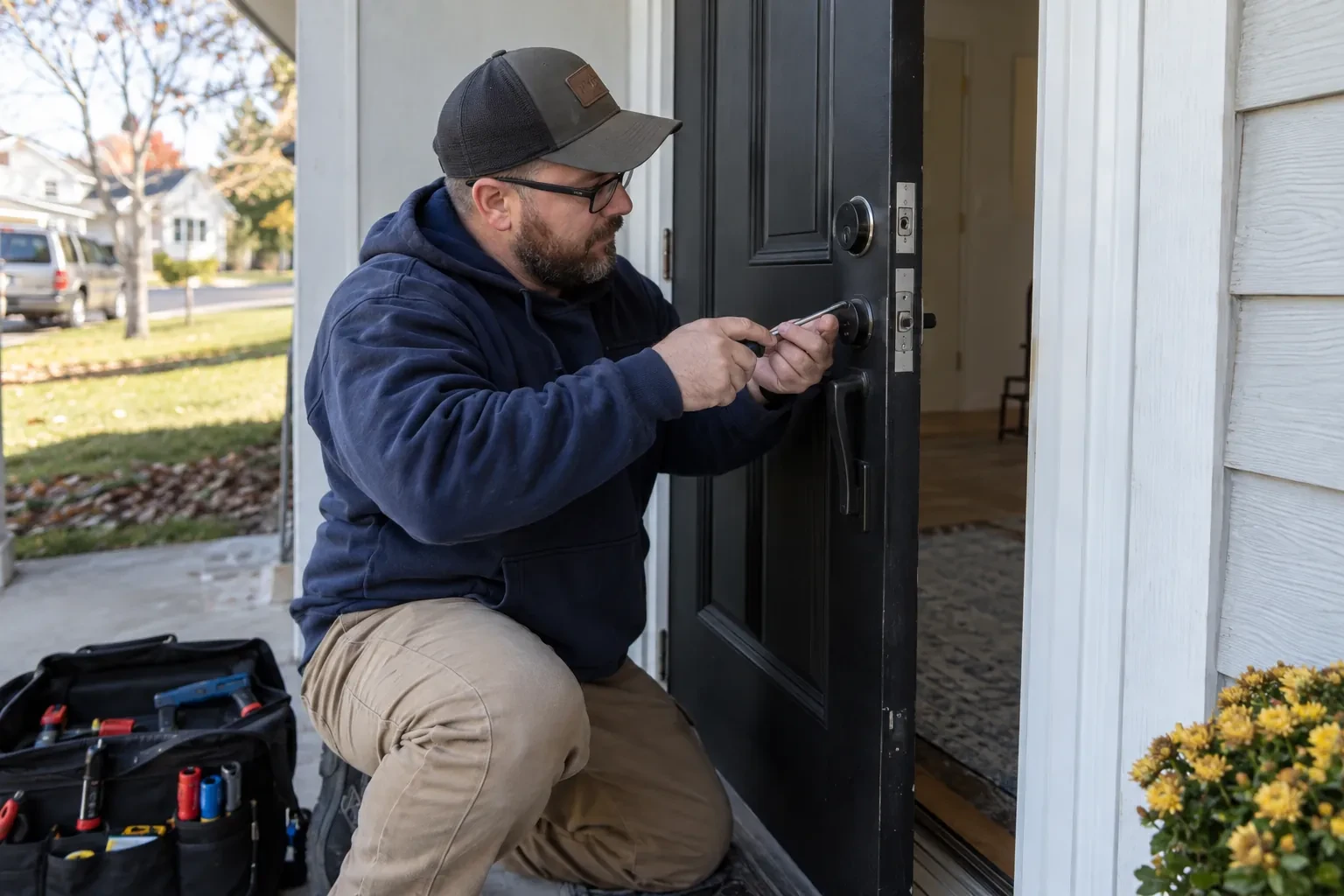
Before choosing a tool the locksmith asks what has gone into the keyway since the break. Tweezers often push a fragment deeper; a screwdriver tip can bend pins; a drop of glue on the other half bonds to nothing useful and leaves a film that has to be dissolved before extractors will slide. A second key jammed on top of the first is a common find. None of this is anything to be embarrassed about; it just changes the plan, and knowing about it in advance means the right solvent, a plug follower or a spare cylinder is in the van before work starts.
When the piece is standing proud
A fragment that shows above the cylinder face looks like the easy case, and it is, provided nobody pushes on it. The locksmith grips it with fine-jawed extractor pliers or needle-point tweezers made for the purpose, steadies the cylinder with the other hand, and pulls straight out along the line of the keyway. If it resists, the plug is checked for rest position rather than the pull being increased, because a piece forced against lifted pins can bend them. A trace of dry lubricant at the keyway entrance eases a tight fit. The piece comes out whole, and the lock is ready to test.
A key cut from the pattern, not the wear
You leave with a key that was cut to the lock's original specification rather than traced from the tired blade that just failed. That difference shows every time you use it: it seats fully, lifts each pin cleanly and turns without a wiggle. Two or three copies made from that fresh cut give you spares that are as good as the first. The old bent or thinning keys that shared the ring are worth retiring now, because a key that has started to bend has started to crack, and the next one to snap will be one of them.
Broken Key Extraction
In the van
Key blanks and code cutter
Plug follower and cap tool
Spiral key extractors
Compressed air for the keyway
Replacement cylinder or deadbolt

Broken Key Extraction
What affects the quote
Condition of the cylinder
Worn pins, a loose cap, grit or corrosion found after the piece is out may call for a service, a rekey or a new cylinder, each explained and quoted separately.
Whether the plug turned before the break
A key that snapped mid-turn leaves the plug rotated and the pins holding the fragment. Easing the plug back to rest before extraction is an extra step in the work.
Where the key broke
A house deadbolt, a knob, an older mortise case, a padlock, a car door and a vehicle ignition each call for different access and different care, and the quote follows the hardware.
What to have ready
- Do you own, rent or manage the property, and is identification with you?
- Is any part of the key still visible above the face of the lock?
- Did the key turn part of the way before it snapped?
Broken Key Extraction: questions
QuestionsThe key broke while the door was locked. Can you still get me in?
Yes. The fragment comes out first, because nothing else can happen while it blocks the keyway. With the cylinder clear and the plug at rest, the door is opened by the same non-destructive methods used for any lockout, then a working key is cut and tested. If the door is a rental, the visit is noted for the building manager on request.
What information helps when I call?
What the key was in: a front door deadbolt, a knob, a padlock, the driver's door or the ignition. Whether any of the key shows above the face. Whether the key turned before it broke and whether the door is locked now. Whether anything has been inserted since. Whether you have the other half, a spare or the key code. And whether the property is owned, rented or managed.
Should I rekey or replace the lock afterwards?
Only if the inspection finds a reason. A clean cylinder with sound pins goes straight back to work with a new key. Rekeying makes sense when the pins are worn and sticking, or when a lost or unaccounted key shares the same cut. Replacement is for a cylinder that is corroded, cracked or of a grade that will keep eating keys. Each is offered as its own decision, not bundled in.