Commercial · Brantford
Commercial-Grade Lock Replacement
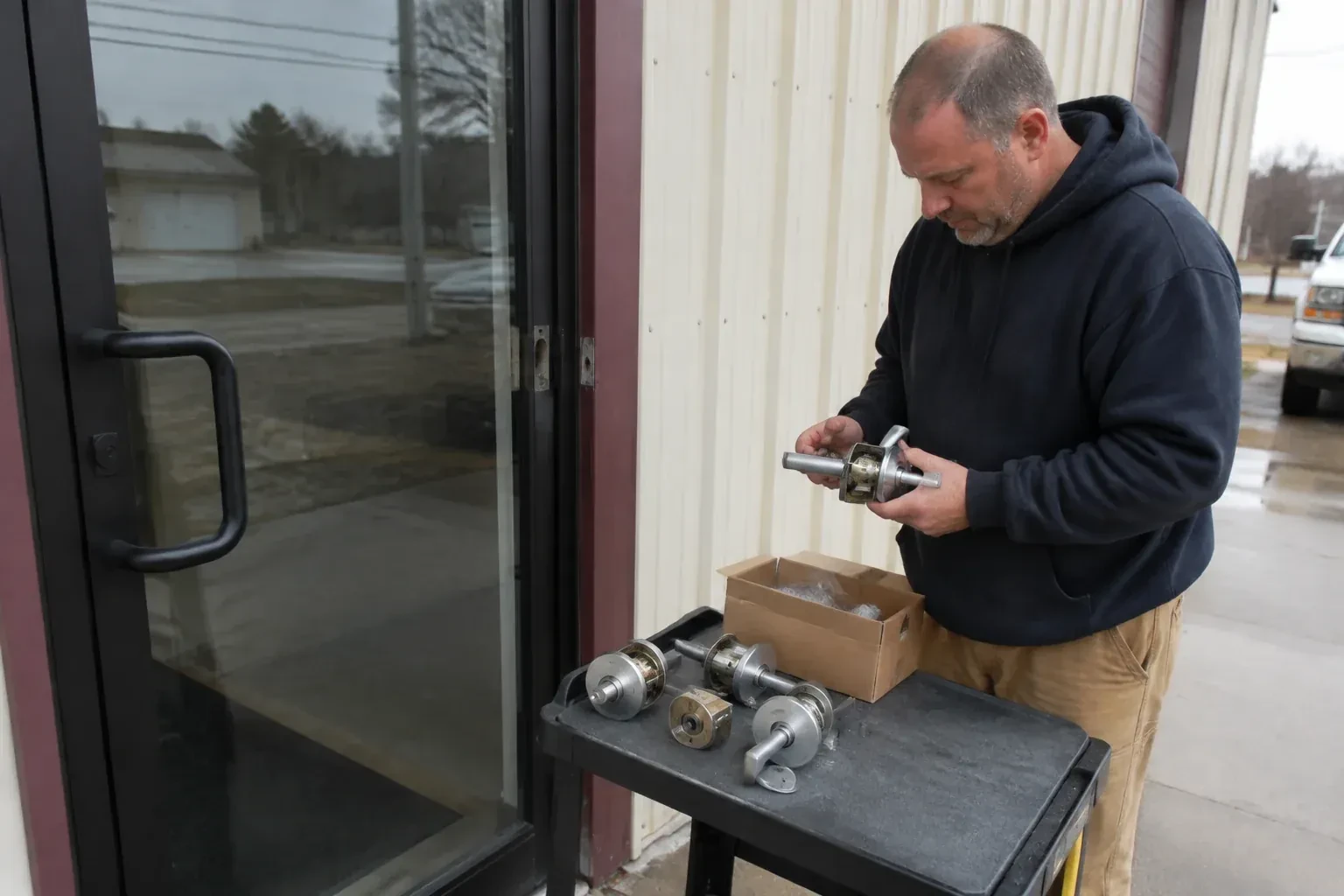
At closing time the hookbolt on the storefront door catches the keeper only on the second or third try, and one employee has started giving the door a shoulder to force it home.
In plain words
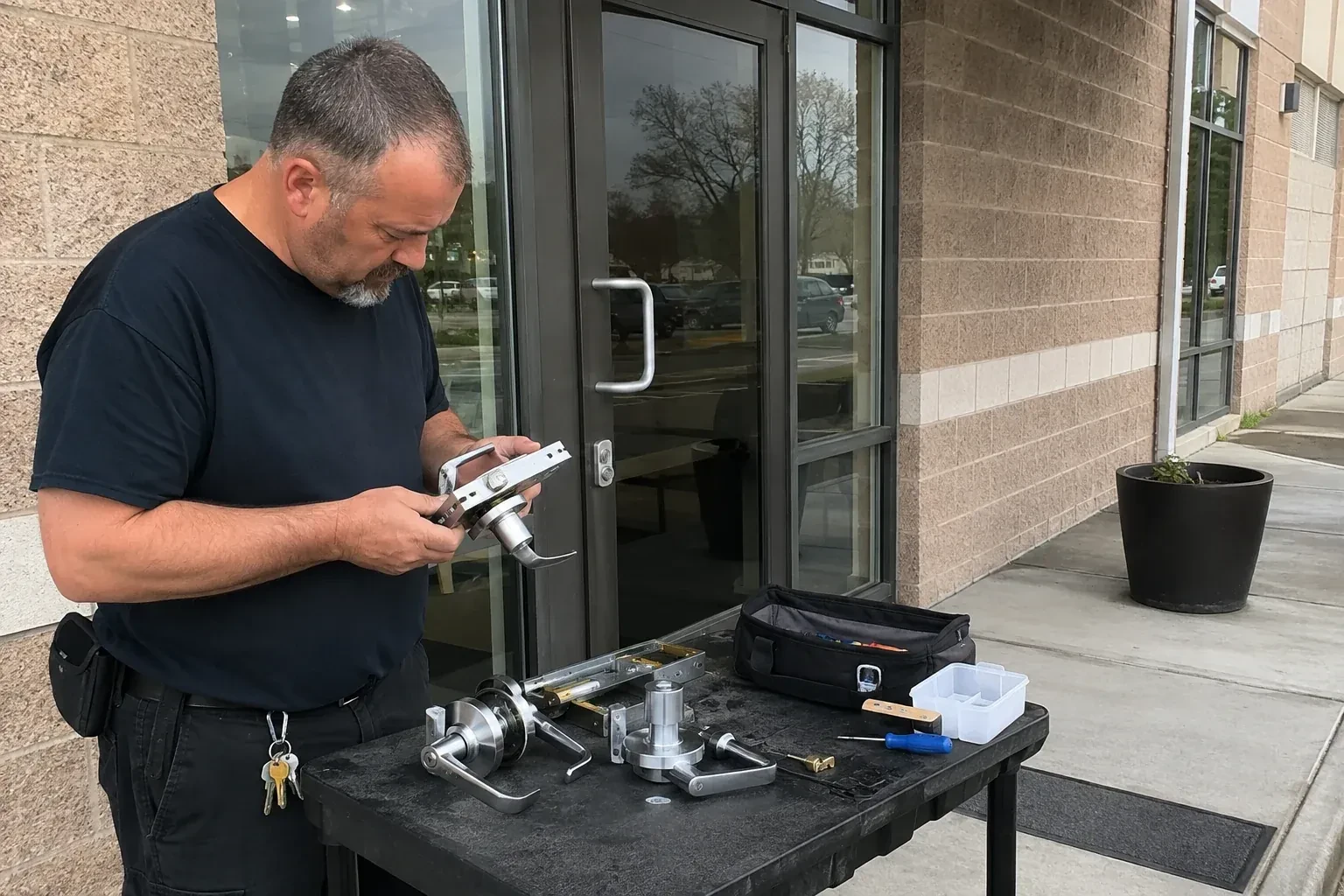
Commercial-grade lock replacement swaps hardware that is worn, damaged, mismatched or simply not rated for a business door with hardware built for that duty: a mortise lock body, a heavy cylindrical lockset, or a narrow-stile lock or hookbolt for an aluminum storefront door. The locksmith reads the door's construction, the traffic the opening takes, and any key or access-control system already running before choosing a replacement. New hardware is keyed into that existing system rather than left to stand on its own, so one business ends up with one coherent set of locks instead of a patchwork of whatever was fitted door by door over the years.
How the visit goesAn inspection report flagged the rear exit as needing hardware that opens with one motion and no key, and that door currently has an ordinary keyed knob on the inside.
Commercial-Grade Lock Replacement
How the visit goes
Confirming who can authorize the work
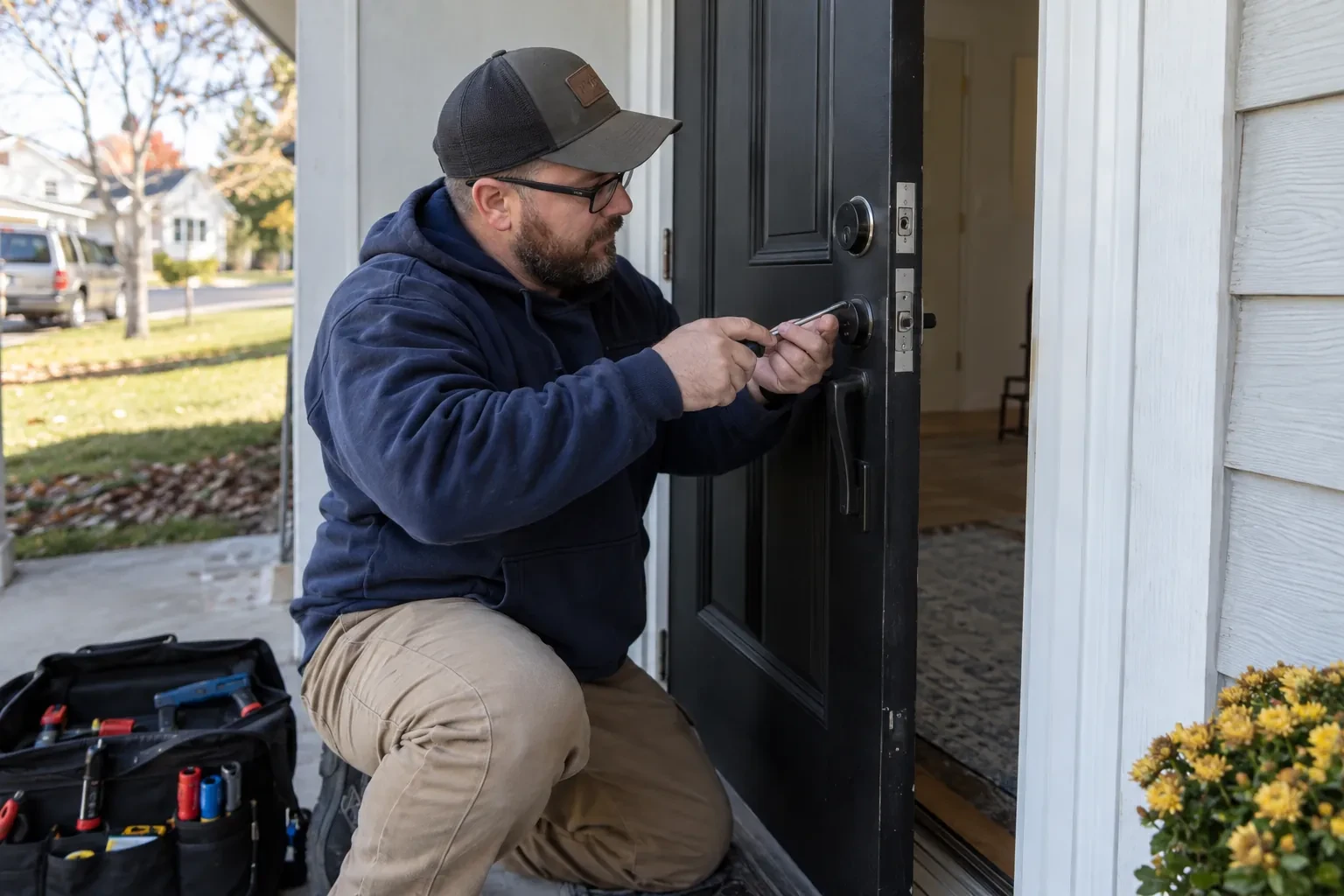
Before any hardware is opened up, the locksmith confirms who is speaking for the business: an owner, a property manager, or a staff member the account recognizes as authorized to order and pay for the work. On a multi-tenant building this also means confirming which doors belong to which lease. This step exists for the same reason a home lockout starts with identification: a business's security is only as good as its record of who was allowed to change it, and a clear authorization at the start keeps that record clean.
Cutting keys and updating the record
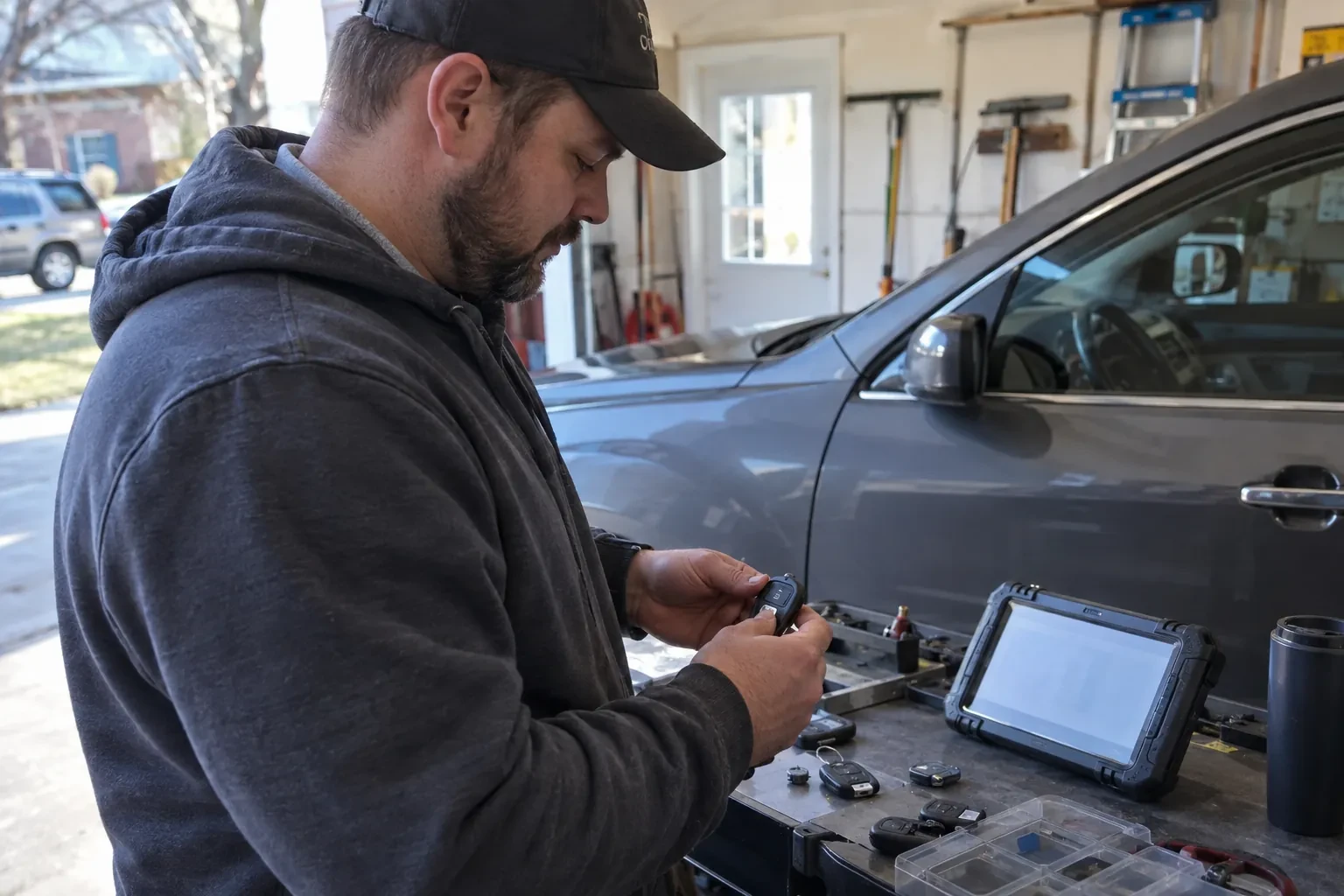
New keys are cut to the agreed system and tested in every door they are meant to open before anyone leaves the site. Where a master or interchangeable-core system is involved, the locksmith updates the business's key-control log with what was issued, what was retired, and which doors now share which key, so the paper record matches the metal. Any key that was reported lost or held by someone no longer with the business is confirmed as no longer functional on the new hardware.
Ready for the next security decision
With current hardware and an accurate key-control record in place, the business is better positioned for whatever comes next: adding a location to the master key system, upgrading a single door to an interchangeable core so staff can rekey it without a service call, or answering an insurer's or landlord's question about what security is on a given door. None of that requires starting from scratch, because the replacement visit leaves behind hardware and documentation that a future decision can build on directly.
Commercial-Grade Lock Replacement
In the van
Listed panic or exit hardware
Mortise prep and installation tools
Mortise lock body
Strike plates and keepers
Key-control log and tags

Commercial-Grade Lock Replacement
What affects the quote
Restricted or patented keyways
A restricted keyway usually costs more as hardware than a standard cylinder, and duplicate keys are controlled through the manufacturer or distributor rather than cut freely; some restricted programs require formal registration, while others control the same blanks without a signed authorization step.
Keying complexity
A single stand-alone cylinder is the simplest keying job. A master or grand-master structure spanning multiple doors, departments or locations takes more planning and more cylinders to combinate correctly, and that planning is part of the quote.
Timing relative to a lease or renovation
Work scheduled around a tenant turnover, a renovation, or a building-wide upgrade across several units can be planned and quoted as a coordinated project rather than a series of separate calls.
What to have ready
- Do you want a master key system, an interchangeable core, or a stand-alone lock?
- Is this one door, or part of a wider multi-door or multi-branch project?
- Is the door part of a fire separation or a marked exit route?
Commercial-Grade Lock Replacement: questions
QuestionsWhat is a grand-master key system, and does a small business need one?
A grand-master system adds a layer above a standard master key, useful for a business with several buildings or departments where one senior key should open everything and mid-level keys should open only their own area. A single-location business with a handful of doors usually only needs a straightforward master and change-key structure, without the extra layer.
Do you replace hardware after an attempted break-in even if the door still locks?
Yes, and it is worth having it checked even when the door still appears to function. A cylinder that was drilled at, pried or struck can be weakened internally without showing it externally, and a bent strike or a cracked frame around the lock can let a door appear locked while offering far less resistance than it should.
What happens to keys held by former employees or contractors?
Once a cylinder is replaced or rekeyed, any key that was not reissued for the new combination simply stops working on that door. This is the direct answer to a key that walked out with someone who left the business, and it is worth doing across every door that key used to open, not only the one that prompted the call.
Related services
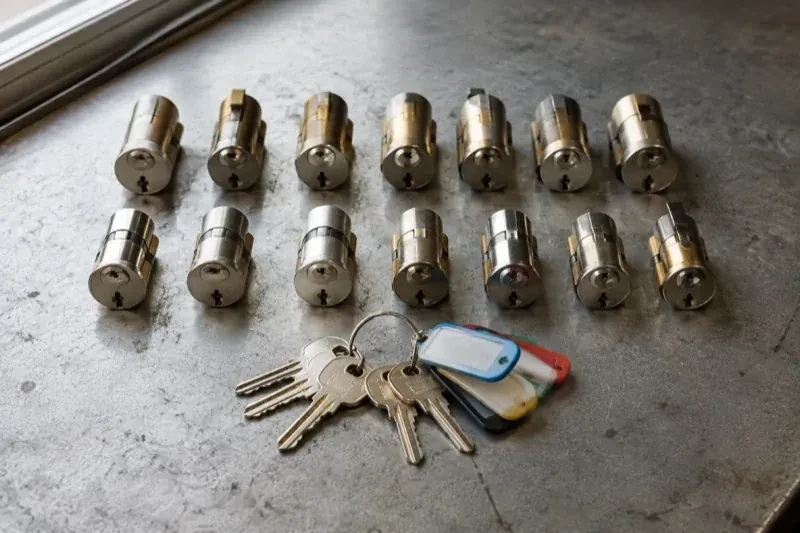
- Master Key System DesignThe office key ring has become the org chart.
- Access Control InstallationSomething went missing from the storeroom over a weekend, and when you ask who was in the building, the honest answer is anyone with a key.
- Panic & Exit HardwareThe new access-control reader at the staff entrance works fine going in, but nobody has sorted out the door's exit side, and right now a card reader and a pushbar exist as two separate ideas.