Car keys · Brantford
Car Key Replacement
The car is yours now, but somebody else still holds a key to it.
In plain words
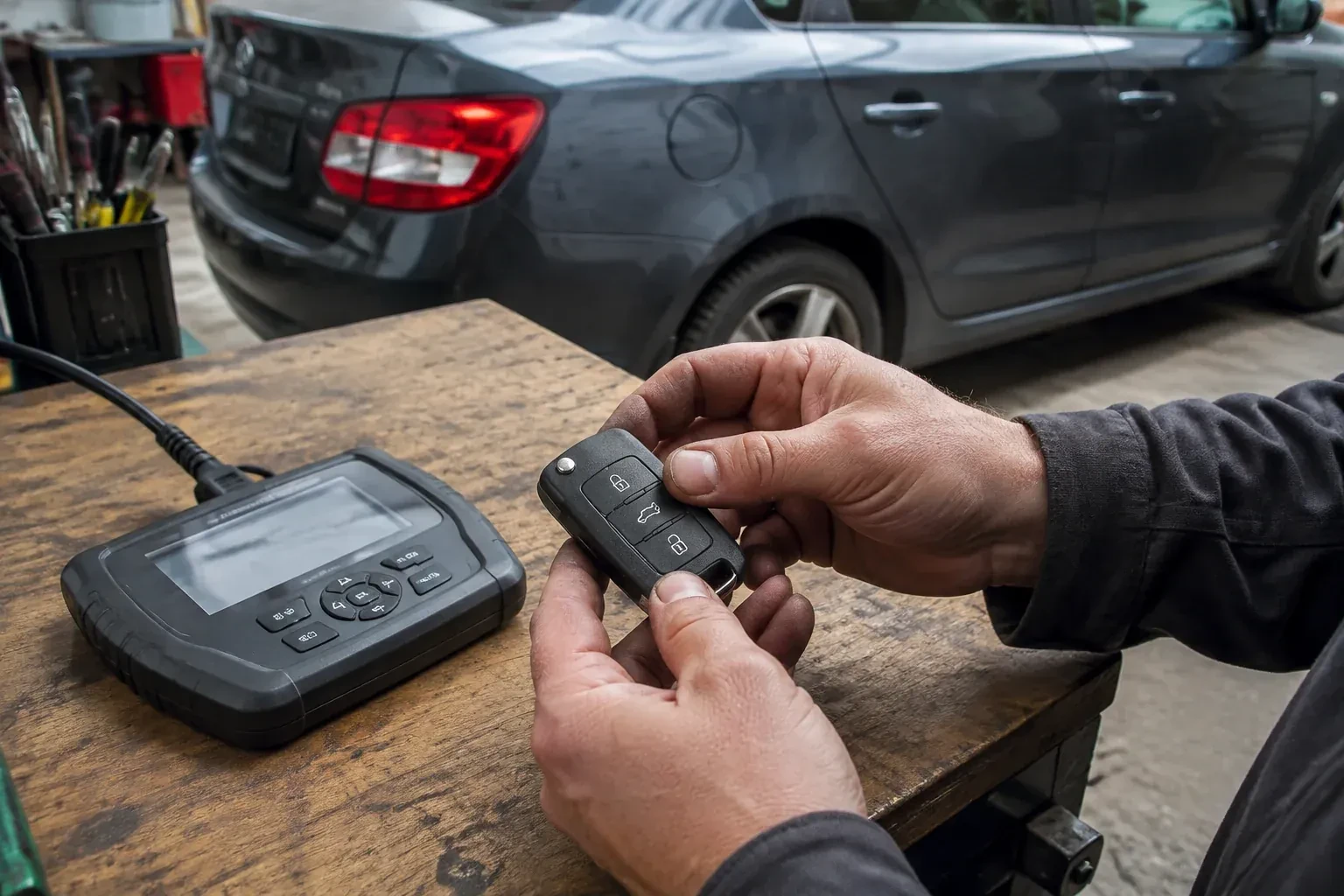
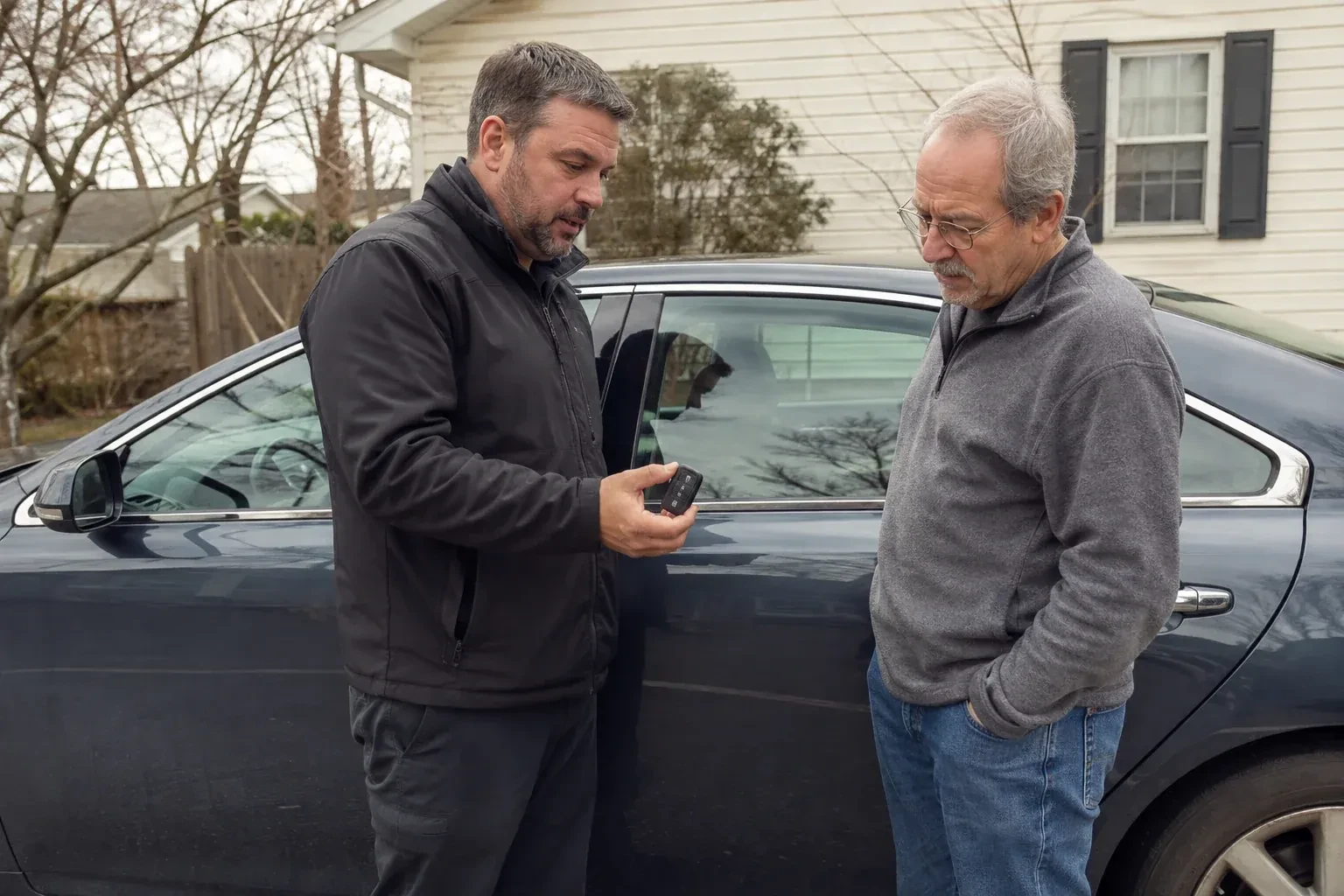
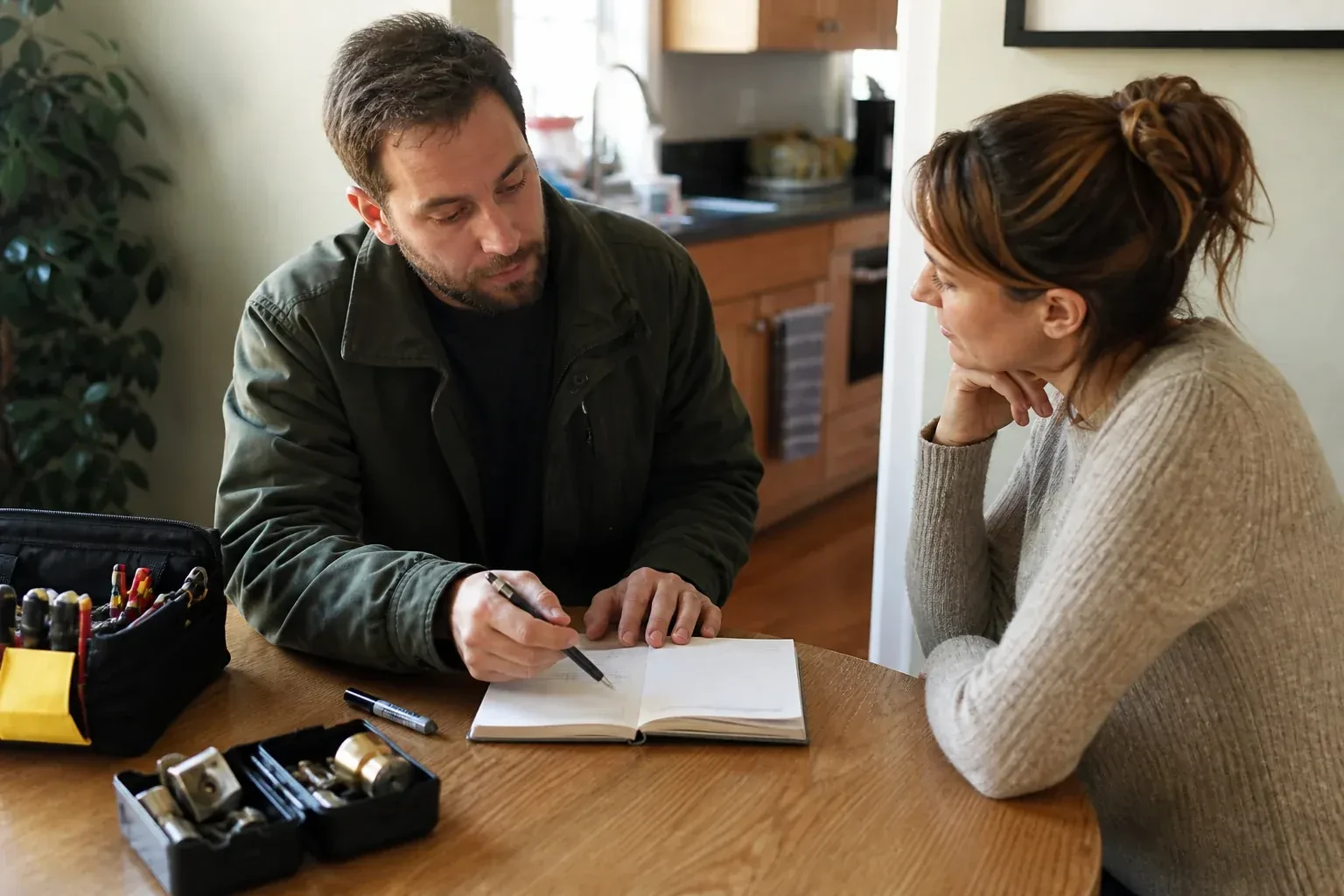
Most replacement keys are made where the car is parked. A mobile locksmith carries blanks, a cutting machine and programming equipment in the van, plugs into the diagnostic port and does the work on your driveway, in a parking garage or at the roadside. For most vehicles there is no need to move the car to a shop, and you watch the key cut and tested on the spot; a few systems still need a dealer or an equipped shop, flagged by the VIN check. The locksmith needs the vehicle's identity, proof of ownership, and what the old key could do, so the right parts are on board.
How the visit goesMinus twenty outside, the fob button does nothing, and the door keyhole has a crust of road salt over it because you have not used a metal key in that car since the day you bought it.
Car Key Replacement
How the visit goes
The car itself: battery, access and location
Programming writes to the vehicle's computers, so the locksmith checks the basics of the car before starting. A weak battery from a car that has sat locked for weeks is put on a maintainer so the voltage stays steady through the session. The diagnostic port under the dash has to be reachable, which means the car has to be opened first if every key is gone. Where the car is parked matters as well: an underground garage with poor light, a tight street spot or a snowbank against the driver's door all shape how the work is set up. A few questions on the phone cover most of this.
All keys lost: reset first, then reissue
When nothing remains, the sequence changes. The car is opened, the blade is produced from the lock or the code, and then, where the system supports it, the immobilizer memory is reset so every stored key is erased; others follow their own maker-specific route instead. New keys are then registered one after another, and registering two gives the car a spare from day one. On some vehicles this stage needs a longer security timer or manufacturer data, which is arranged in advance. The old keys, wherever they are, are now unknown to the car. Each new key is then started and driven a short distance to confirm the reset held.
Keys that work every lock on the car
You leave with keys that have been tried, not merely programmed. Each one has opened the doors, turned or woken the ignition, started the engine and worked every button it carries, and you have watched it happen. If the car has a mechanical lock that was stiff, it has been freed and lubricated so the blade is a genuine backup. Should the old key have been rebuilt around its original electronics, it has been through the same checks as a brand-new one. The point of the routine is simple: the next time you reach for the key, there is nothing to wonder about.
Car Key Replacement
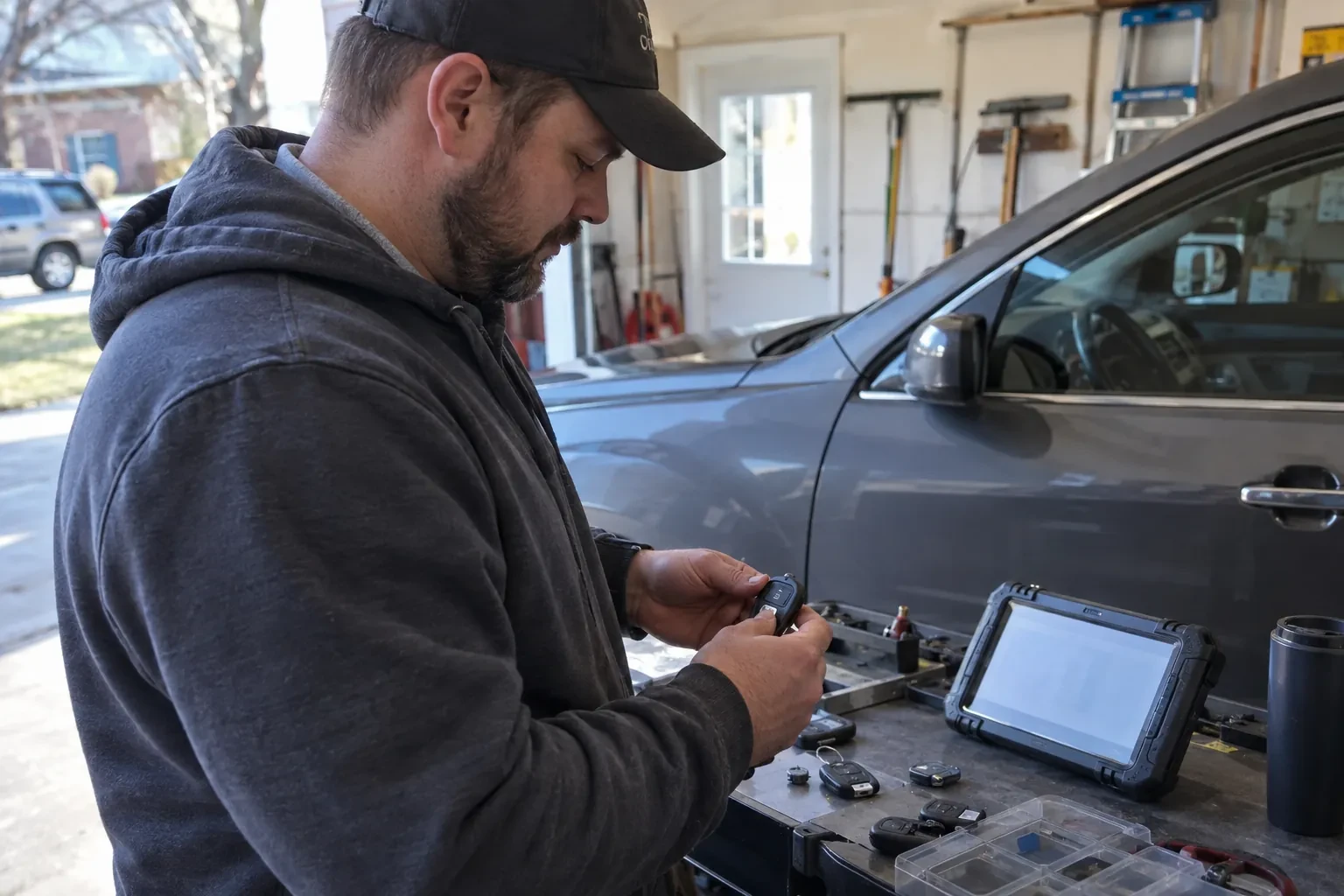
In the van
Security PIN or secure-data access
Laser-style milling cutter
Decoding pick and lock reader
OBD programming tool
Transponder key blank
Car Key Replacement
What affects the quote
Edge-cut or high-security blade
A plain edge-cut blade is cut on a code machine in moments. An internal high-security blade is milled to fine tolerances on a different machine, and the blanks themselves are dearer, so the blade type shows up in the quote.
Where the vehicle is
Travel is part of every mobile call. A car on a driveway across town and one in a lot at the end of a rural road involve different trips, and the quote reflects the distance.
One working key or none
A spare added beside a working key is a shorter routine. Starting from nothing means working through whatever that vehicle's own all-keys-lost procedure calls for, commonly opening the car, decoding the lock and resetting the immobilizer, and the quote reflects those extra stages.
What to have ready
- Was the key lost, stolen, broken, or damaged by water?
- Is the car registered in your name, leased, or owned by a company?
- How many keys would you like to leave with?
Car Key Replacement: questions
QuestionsAfter a break-in the doors and ignition are on different keys. Can that be fixed?
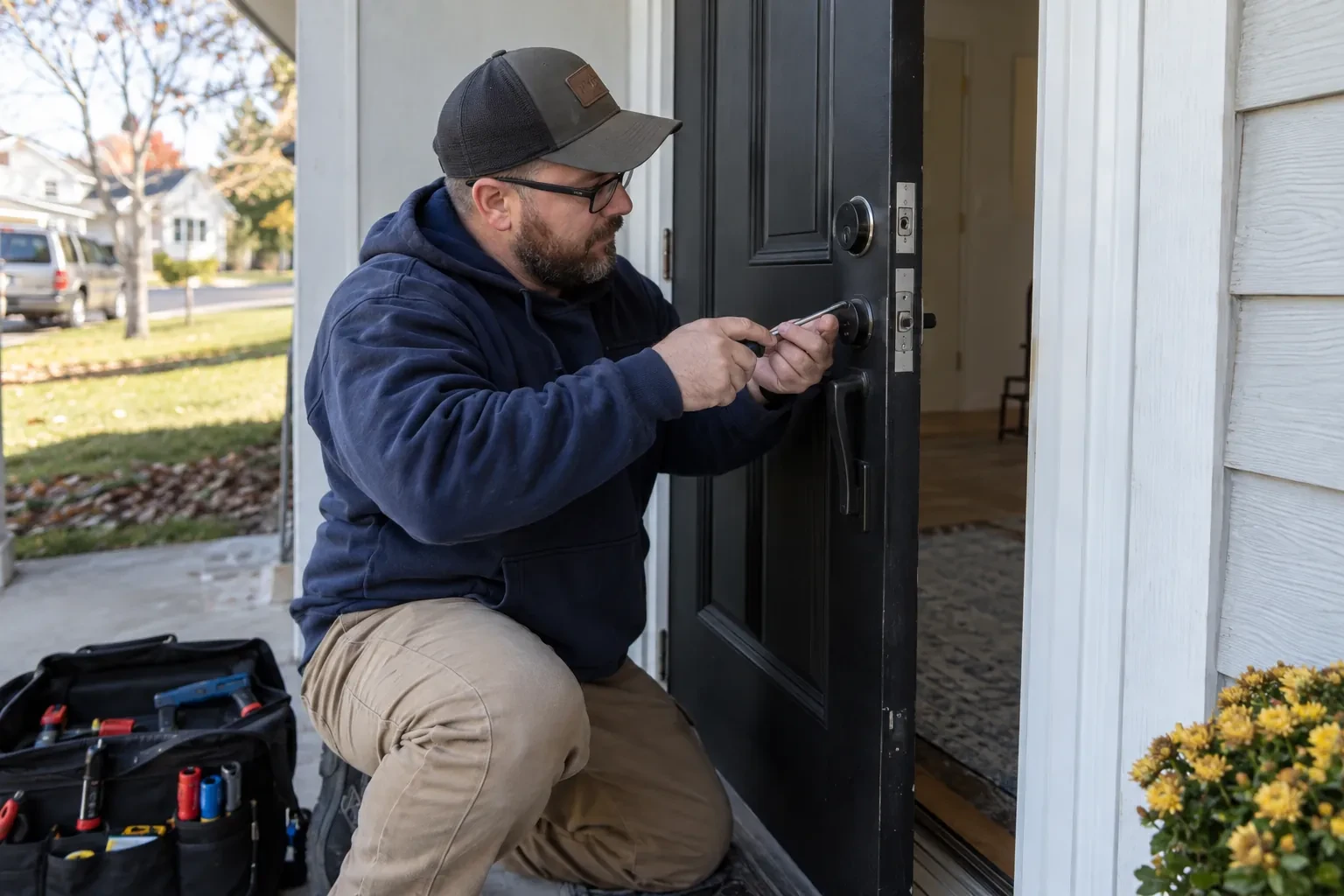
Yes. When a door lock is forced and replaced, or an ignition is swapped, the car can end up needing two blades. A locksmith can rekey the replacement cylinder to match the surviving one, so a single key operates every lock again, and cut new keys to that combination. The transponder side is unchanged by the lock work, so your existing programmed keys carry on starting the car once the blades match.
What is a transponder key, and does my car have one?
A transponder is a small chip in the head of the key with no battery of its own. When the key is in the ignition, or the fob is inside the cabin, the immobilizer sends a signal and the chip answers with a code; if the code is unknown, the engine is prevented from running. Every new light vehicle sold in Canada since September 2007 has been required to have an immobilizer, so almost any car from that time on uses one.
The car is leased or belongs to my employer. Can you still make me a key?
Yes, with the right paperwork. For a leased car, the lease agreement in your name together with your identification and the permit covers it. For a company vehicle, the locksmith needs authorization from the business: a work order, purchase order or letter naming the VIN and the person collecting the key. Mention the arrangement when you call so the correct document is ready and the record can be completed properly.
Related services
- Spare Car Key DuplicationA lockout last month ended with a locksmith opening the door and going home, and the same single key has been carried ever since with nothing behind it.
- Key Fob ProgrammingA fob went missing weeks ago somewhere between a coat pocket and a parking lot, and a spare has covered the gap since.
- Transponder Key ProgrammingSince the remote starter was installed last month, the original key has started acting strangely, the car catches on the first turn some mornings and refuses outright on others.