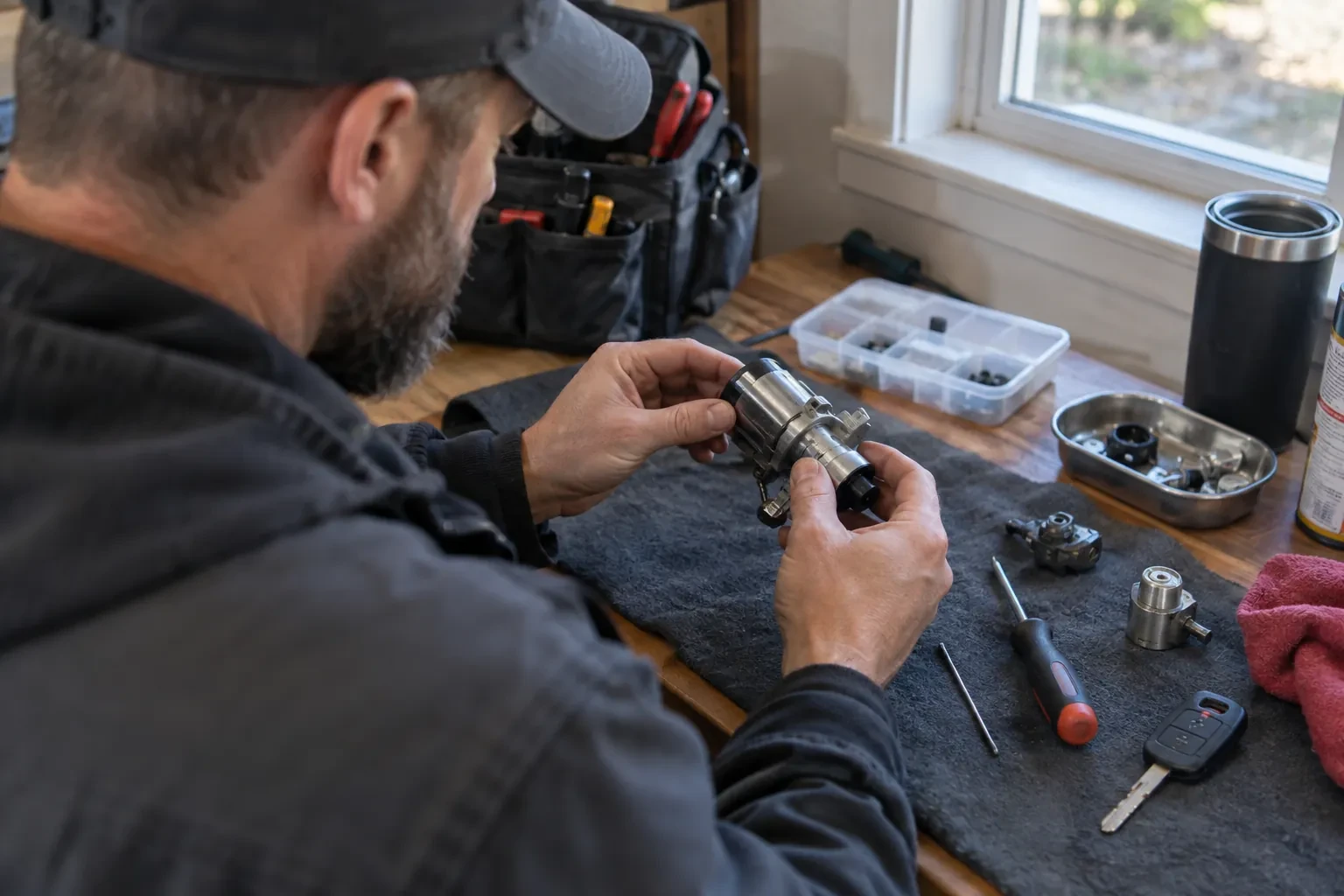
Commercial
Commercial Locks
Commercial doors are used by staff, customers, cleaners and deliveries, all with different needs and none of them careful. The hardware has to be built for that, and the keying plan has to make sense to whoever manages the building next year.
Which one do I need?
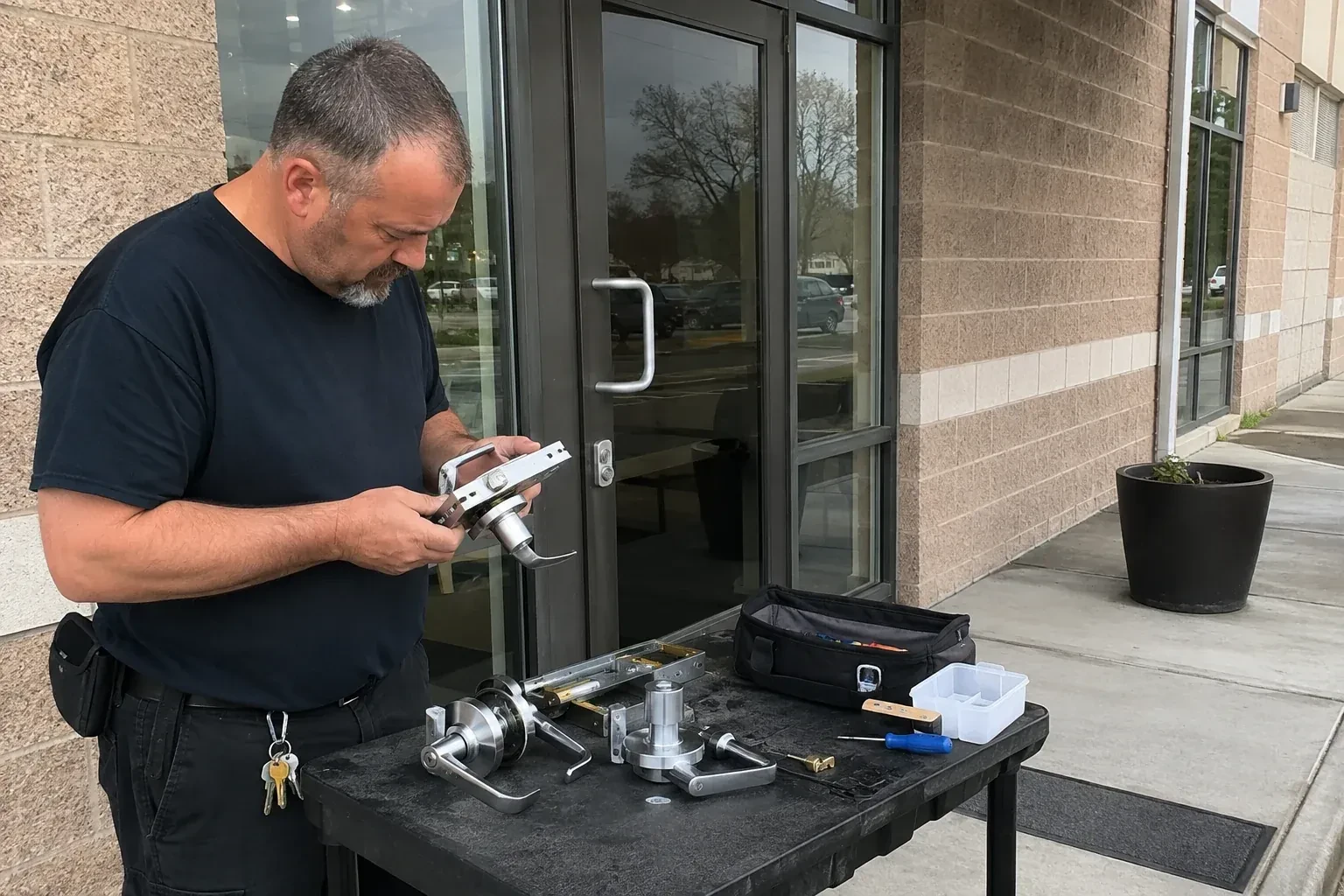
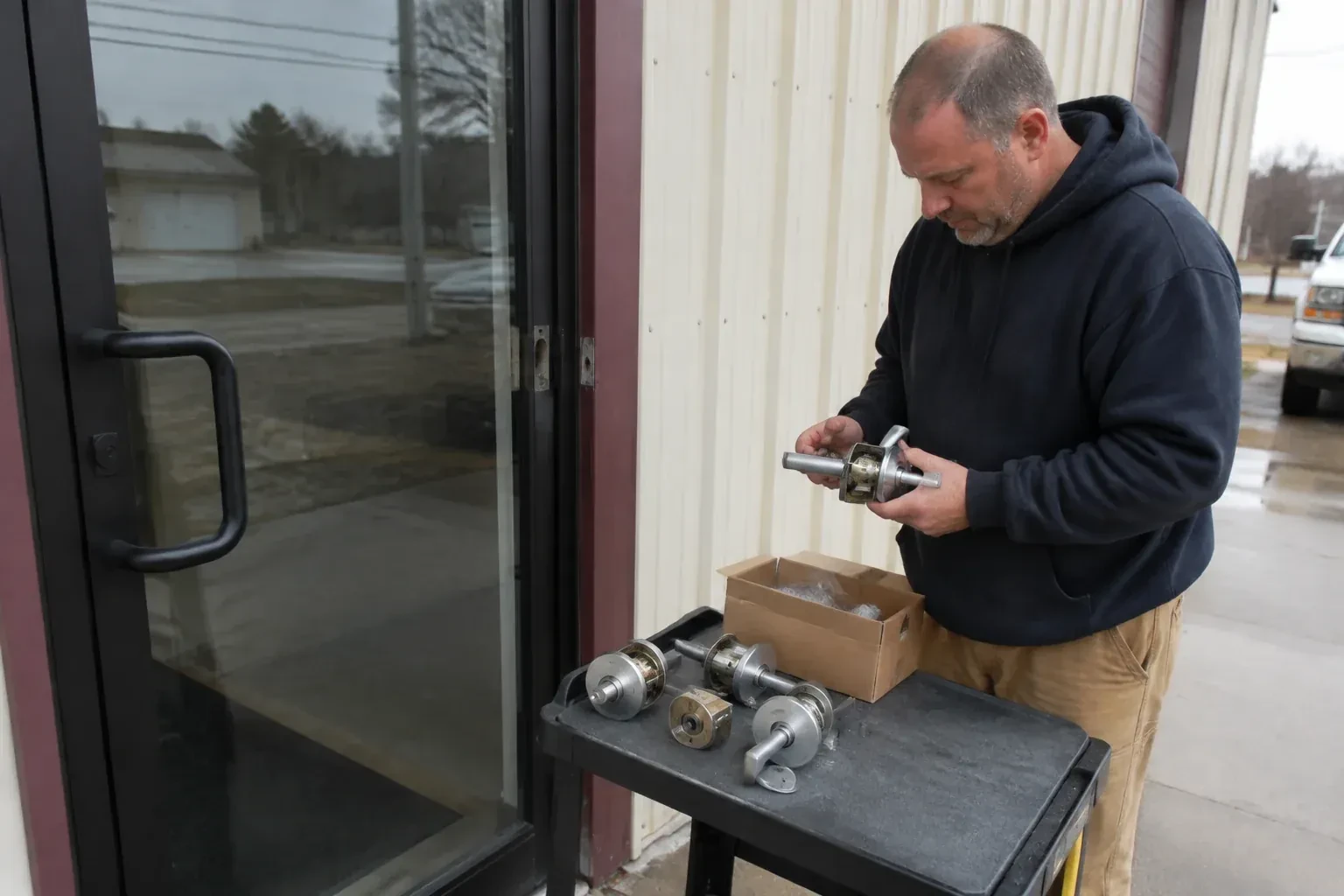
- A break-in overnight took the cash float and a staff member's bag with her work keys inside it.Commercial Rekeying
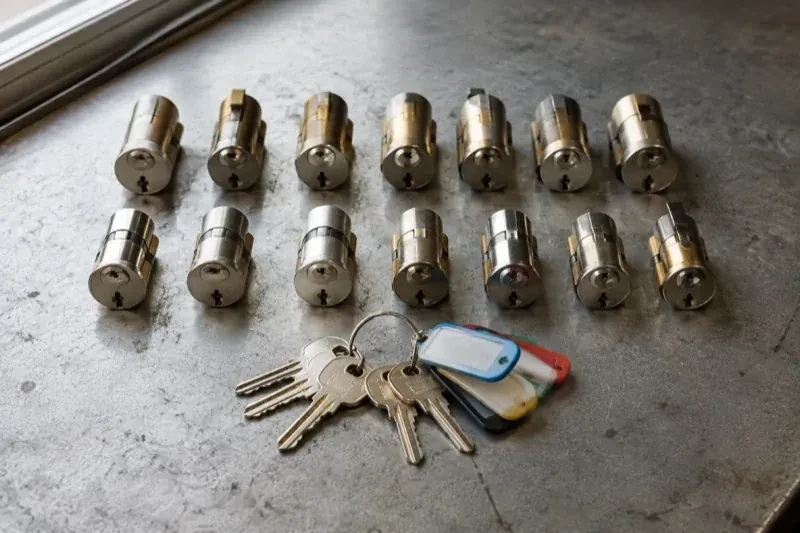
- The office key ring has become the org chart.Master Key System Design
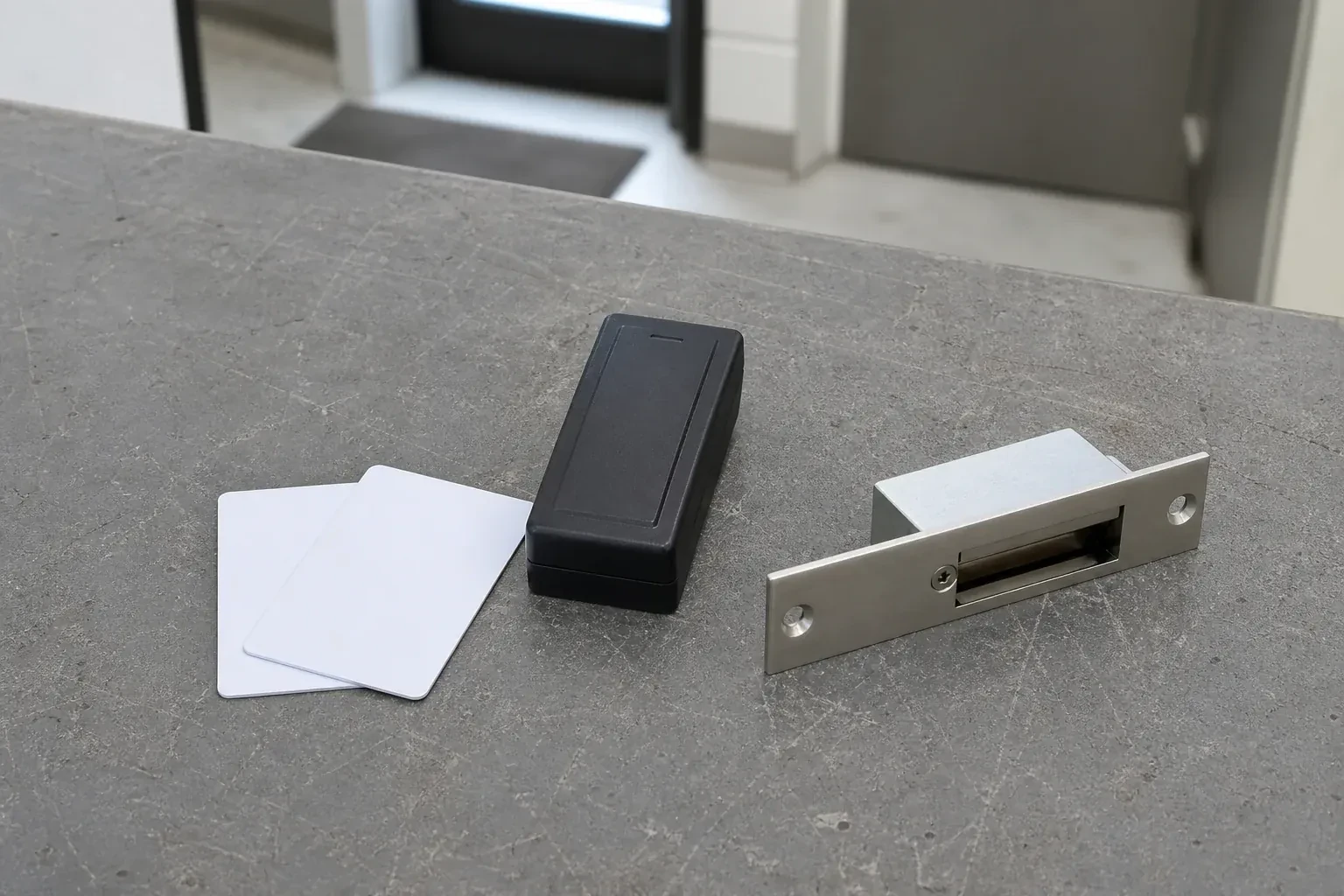
- Something went missing from the storeroom over a weekend, and when you ask who was in the building, the honest answer is anyone with a key.Access Control Installation
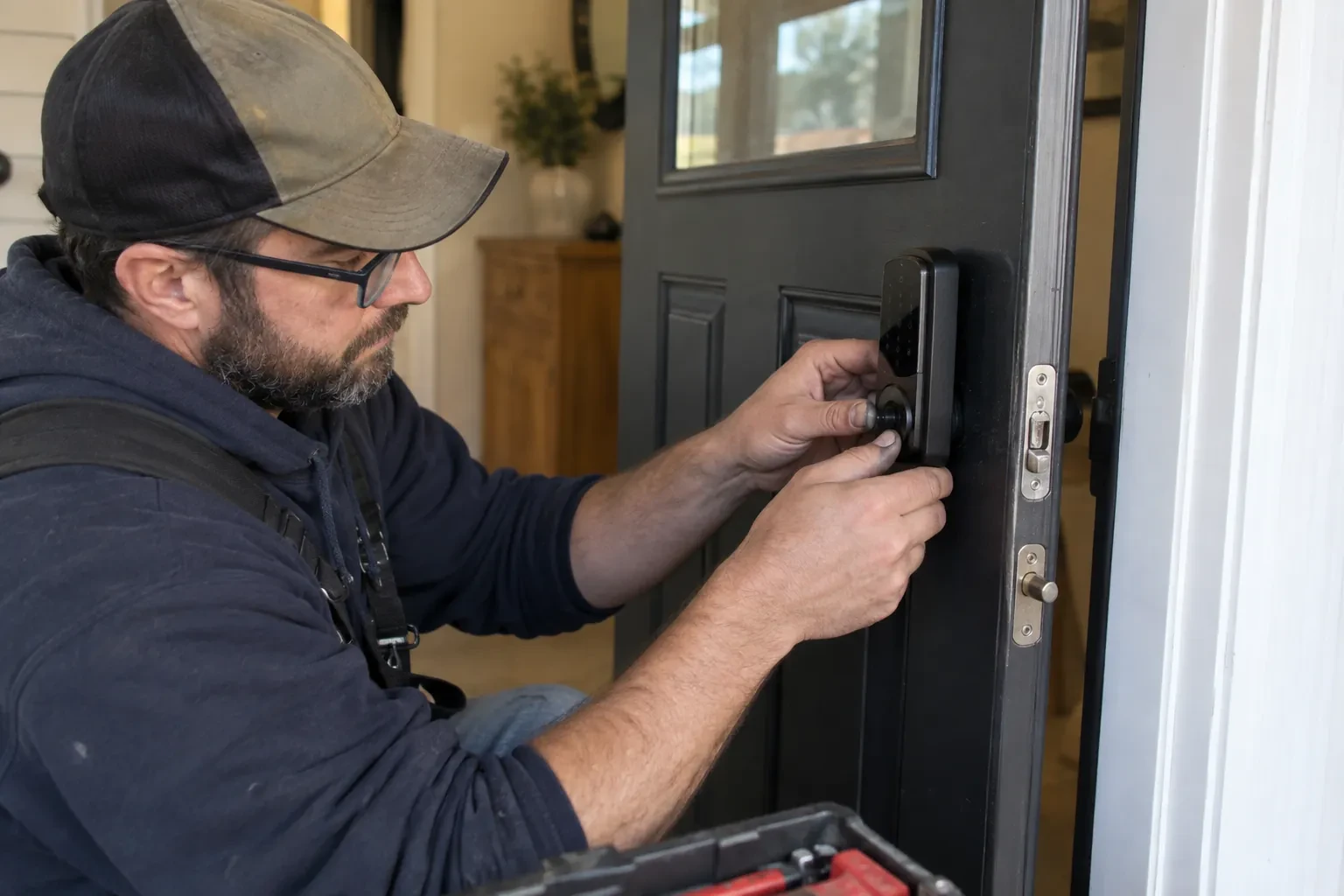
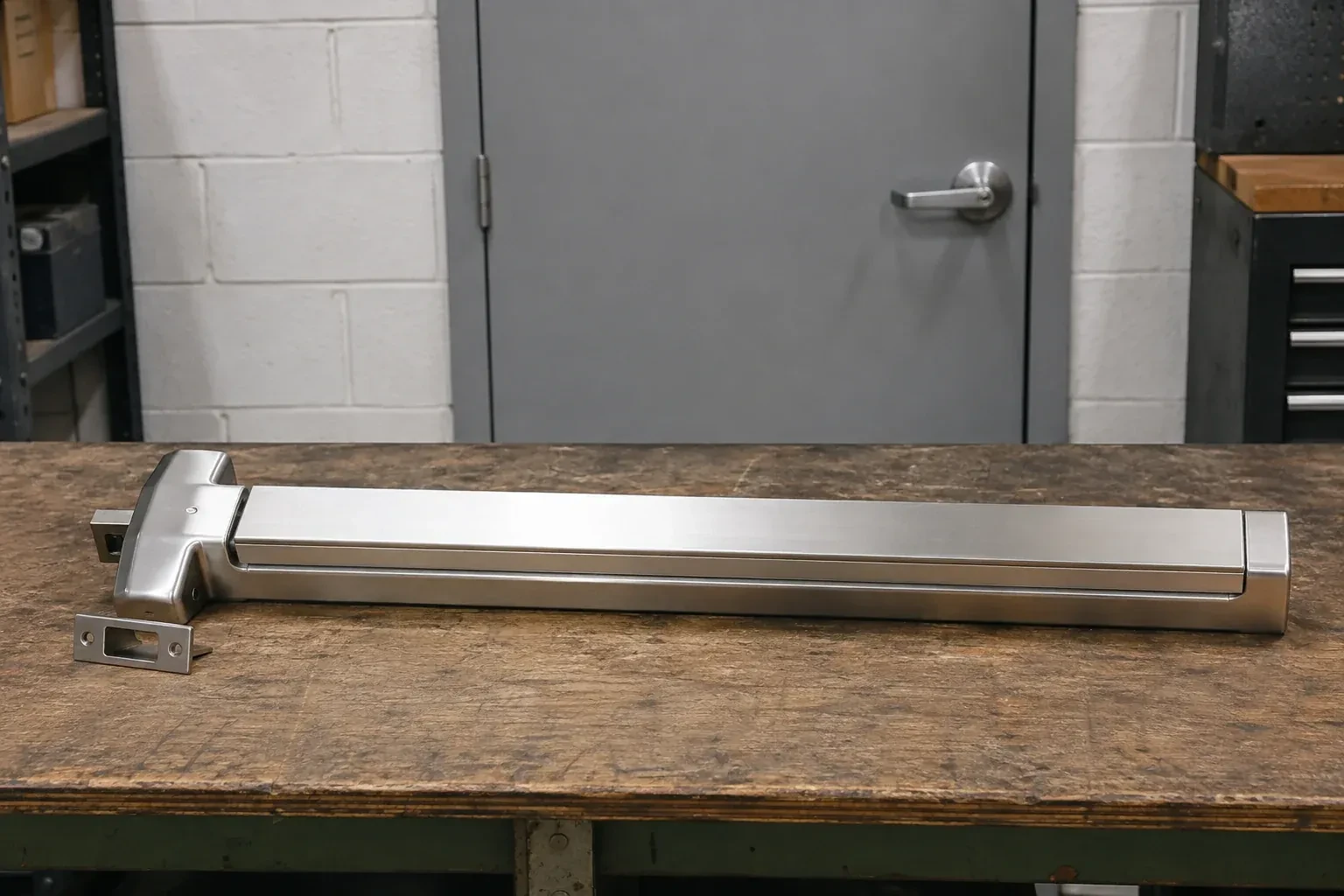
- The new access-control reader at the staff entrance works fine going in, but nobody has sorted out the door's exit side, and right now a card reader and a pushbar exist as two separate ideas.Panic & Exit Hardware
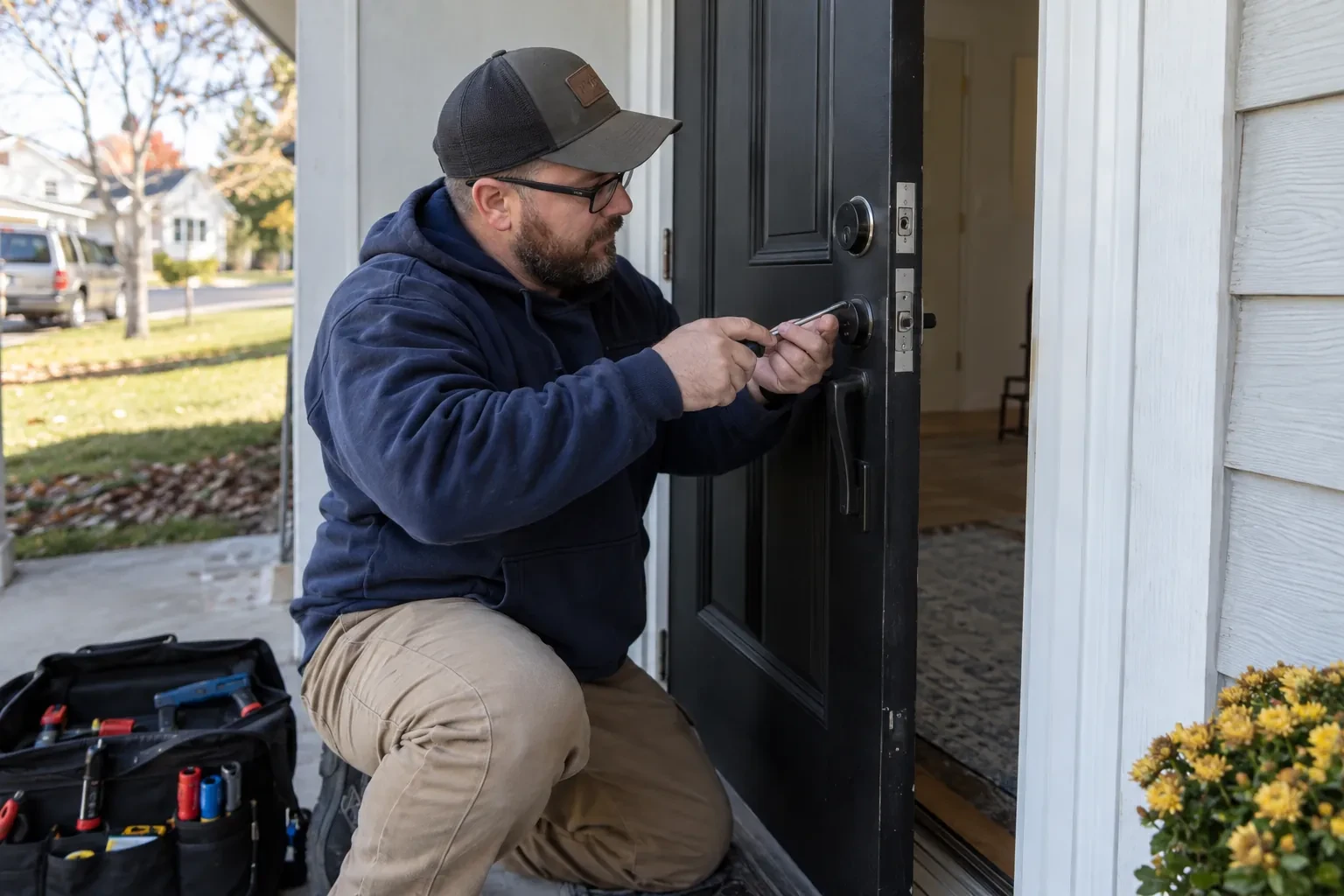
- At closing time the hookbolt on the storefront door catches the keeper only on the second or third try, and one employee has started giving the door a shoulder to force it home.Commercial-Grade Lock Replacement
Commercial Locks
Locks for shops, offices and buildings: rekeying at turnover, commercial-grade hardware, exit devices, master key systems and access control.
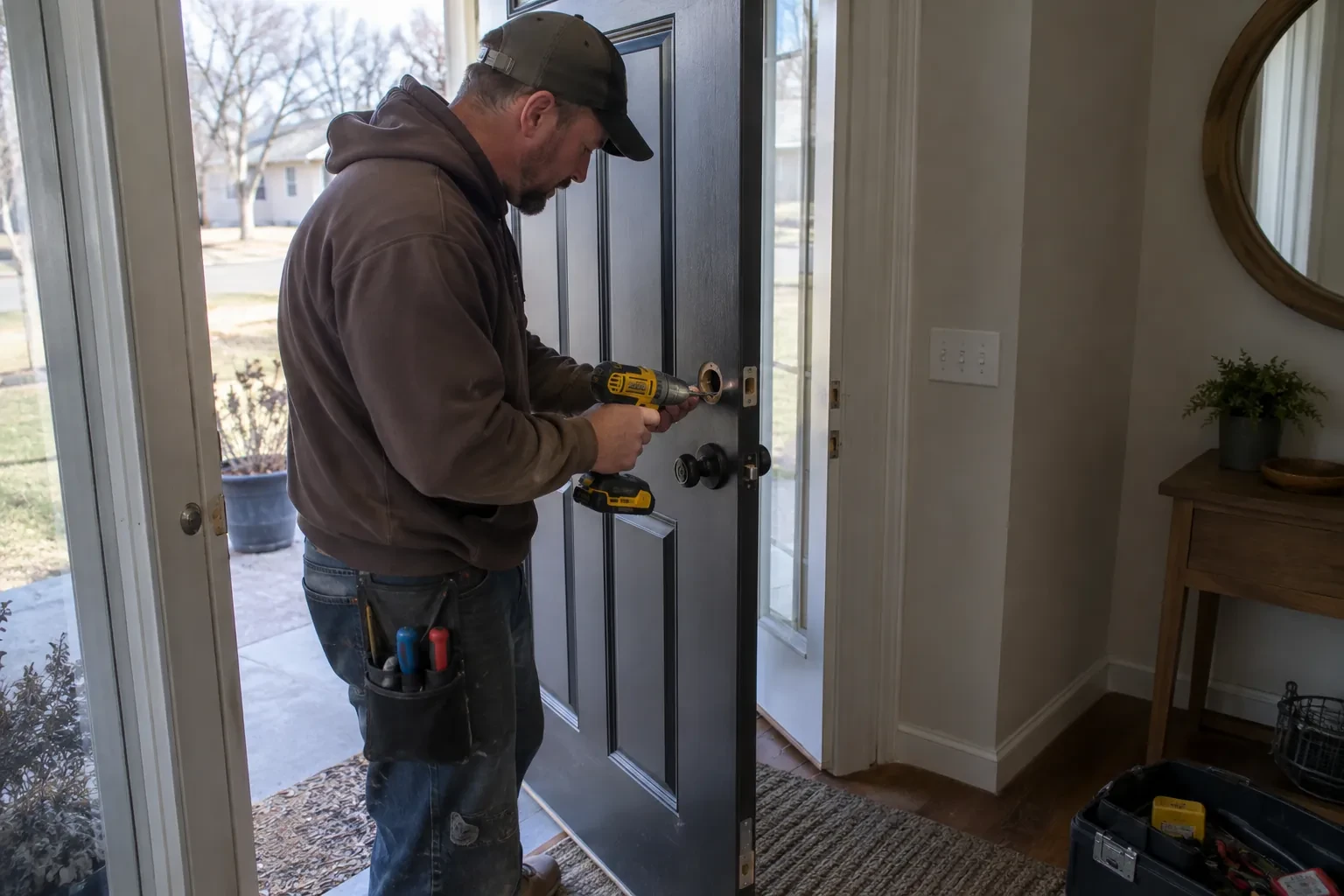
Commercial Rekeying
Which doors are the landlord's
In a plaza, an office building or a multi-tenant industrial unit, some doors on your floor plan are not yours to rekey. Corridor doors, electrical and mechanical rooms, shared loading doors and the building's fire exits usually sit on the landlord's master system, and a suite entrance may be required to accept the landlord's key as well as yours. The locksmith sorts the openings into two columns before starting: those the lease puts under your control, which get the new plan, and those that stay as they are or need the property manager's say-so.
Where a suite door must accept both a tenant key and the building master, it is pinned to do exactly that.