High security · Tutela Heights
Safe Installation & Servicing in Tutela Heights
A dinner service ends with a stack of bills and a handful of credit slips, and right now they sit in an unlocked cash box on a shelf until morning, because nobody has gotten around to anything sturdier.
In plain words
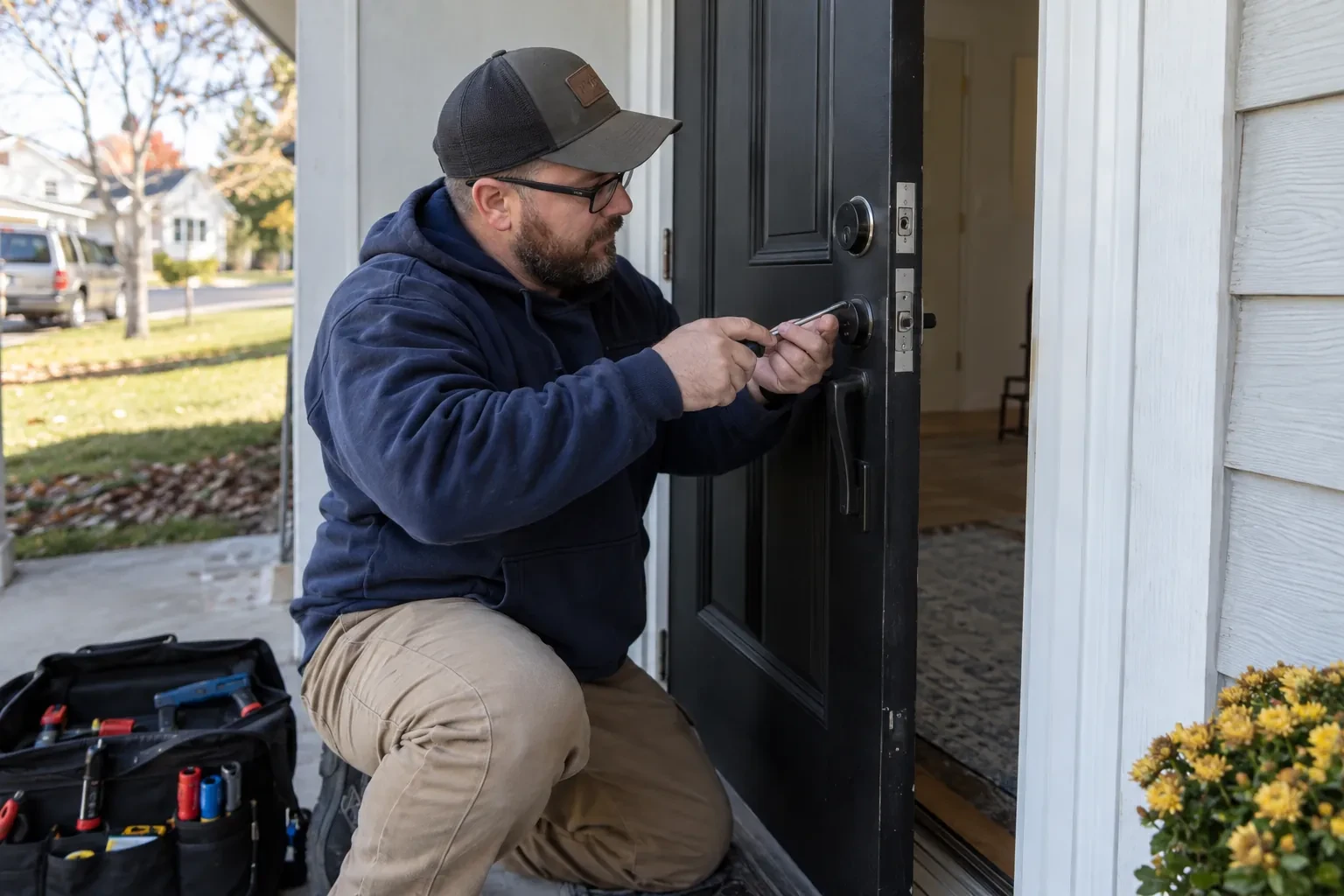
Safe installation and servicing starts with a plain question: what needs protecting, and from what. A till float and a box of paper contracts fail in completely different ways, so a burglary rating and a fire rating are chosen separately rather than assumed from one label. Once the right unit is picked, it is set in its final spot, leveled, and anchored into the floor or wall so it cannot be carried off. The lock, whether a dial or a keypad, is set to a combination or code only the owner holds, then cycled and tested before anyone signs off on the job.
How the visit goesThe accountant's office keeps a decade of client files in cardboard boxes because the only safe in the building is a small drawer safe meant for a laptop, nowhere near large enough for binders of paper.
Safe Installation & Servicing
How the visit goes
What the safe actually needs to hold
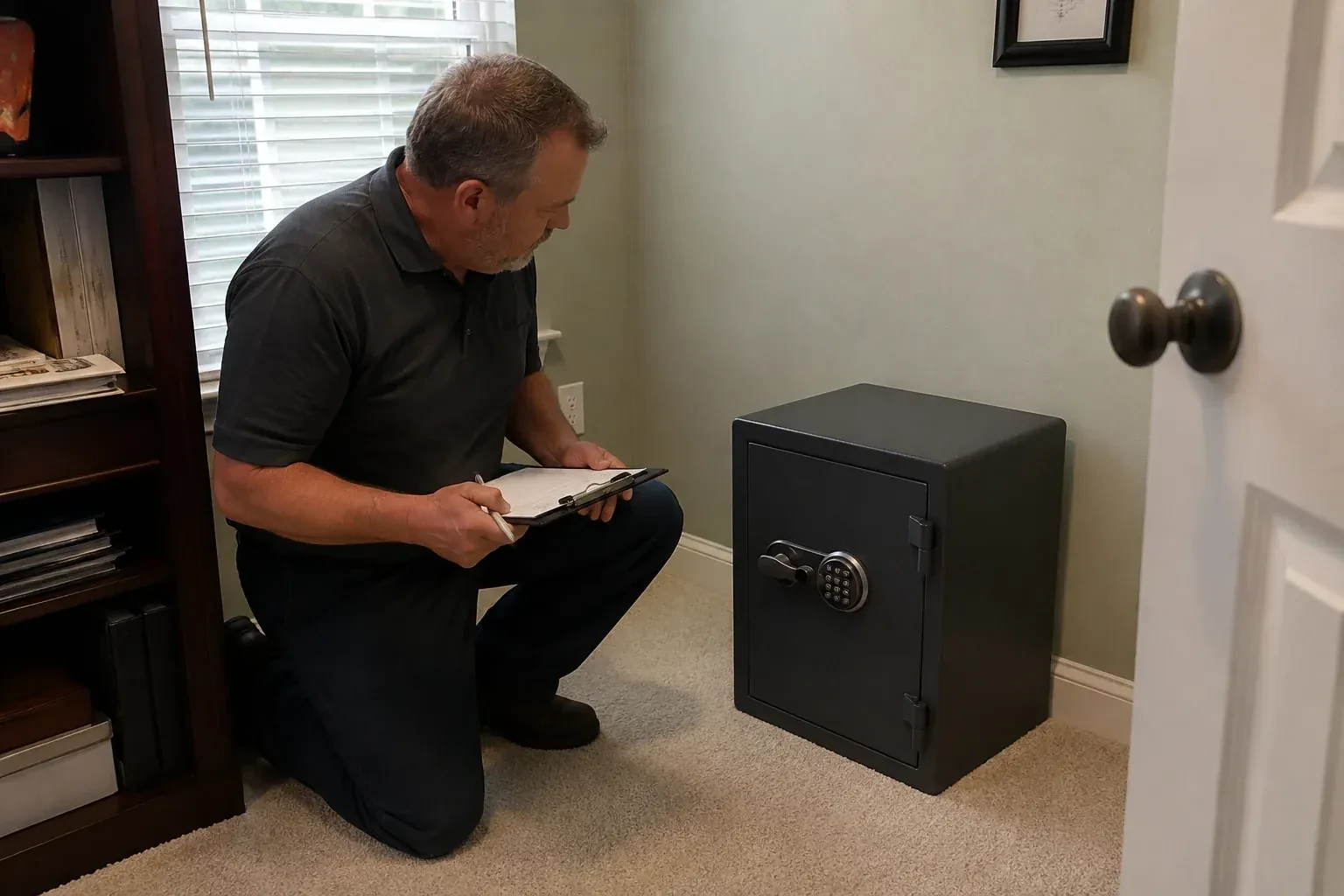
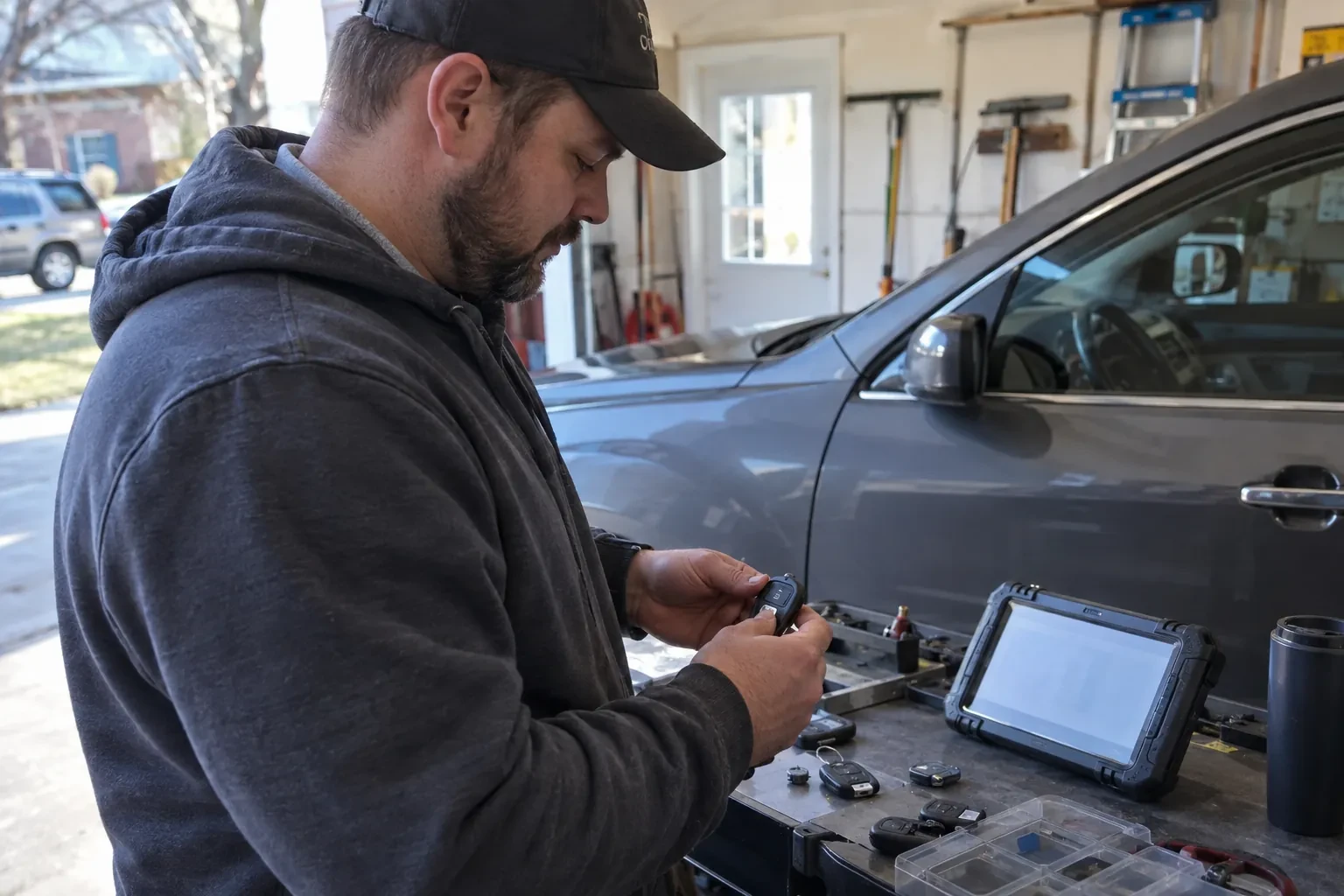
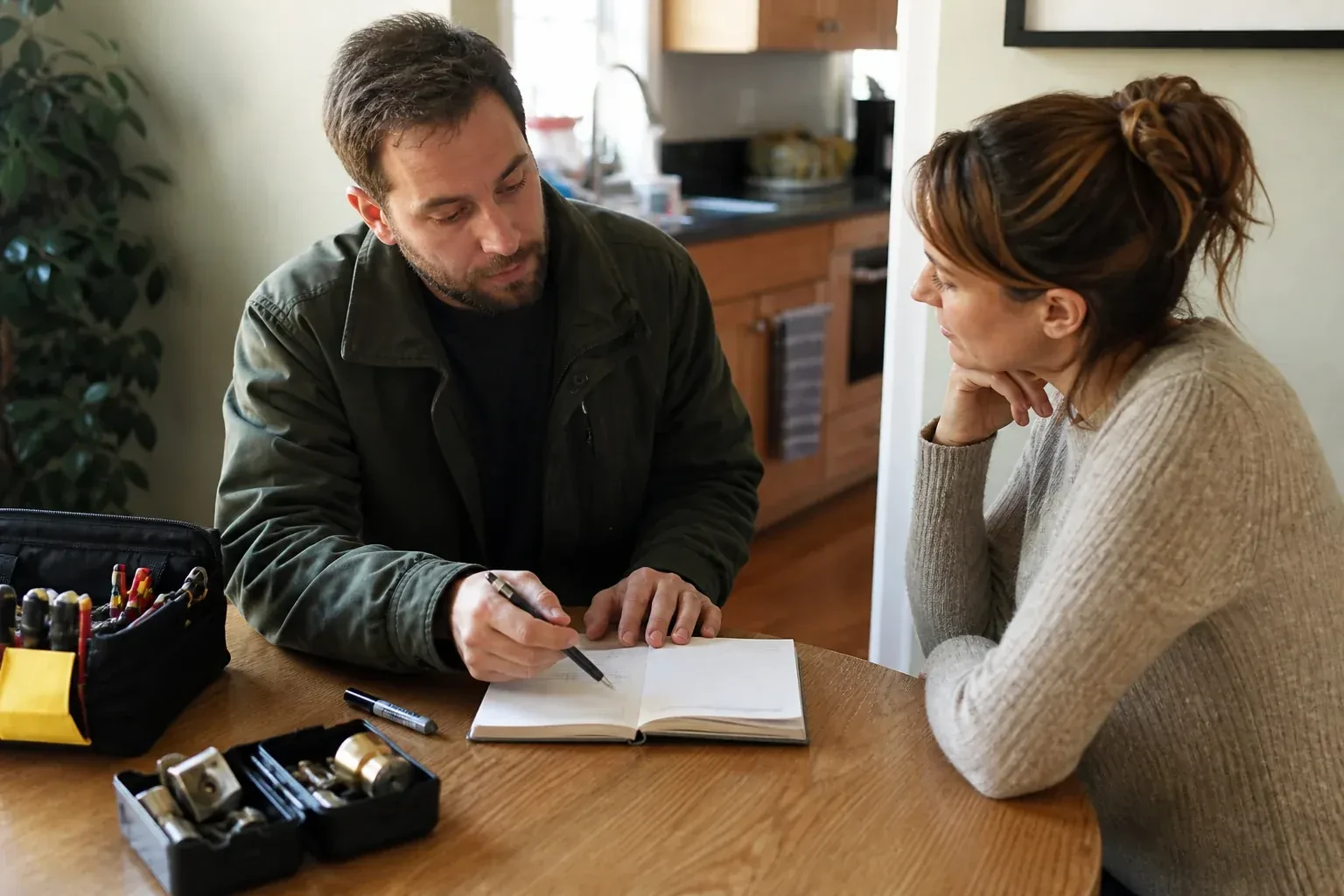
Before any hardware is chosen, the locksmith asks what will actually sit inside: cash from a till, jewelry, firearms, paper contracts, backup drives, or some mix of all of it. Each of those has a different enemy. Cash and jewelry are mainly at risk from tools and time, so a burglary rating matters most. Paper is mainly at risk from heat, so a fire rating matters most, and digital media needs a much lower internal temperature than paper to survive the same fire. Answering this question first is what keeps the rest of the visit from guessing.
Bringing an existing safe back into full working order
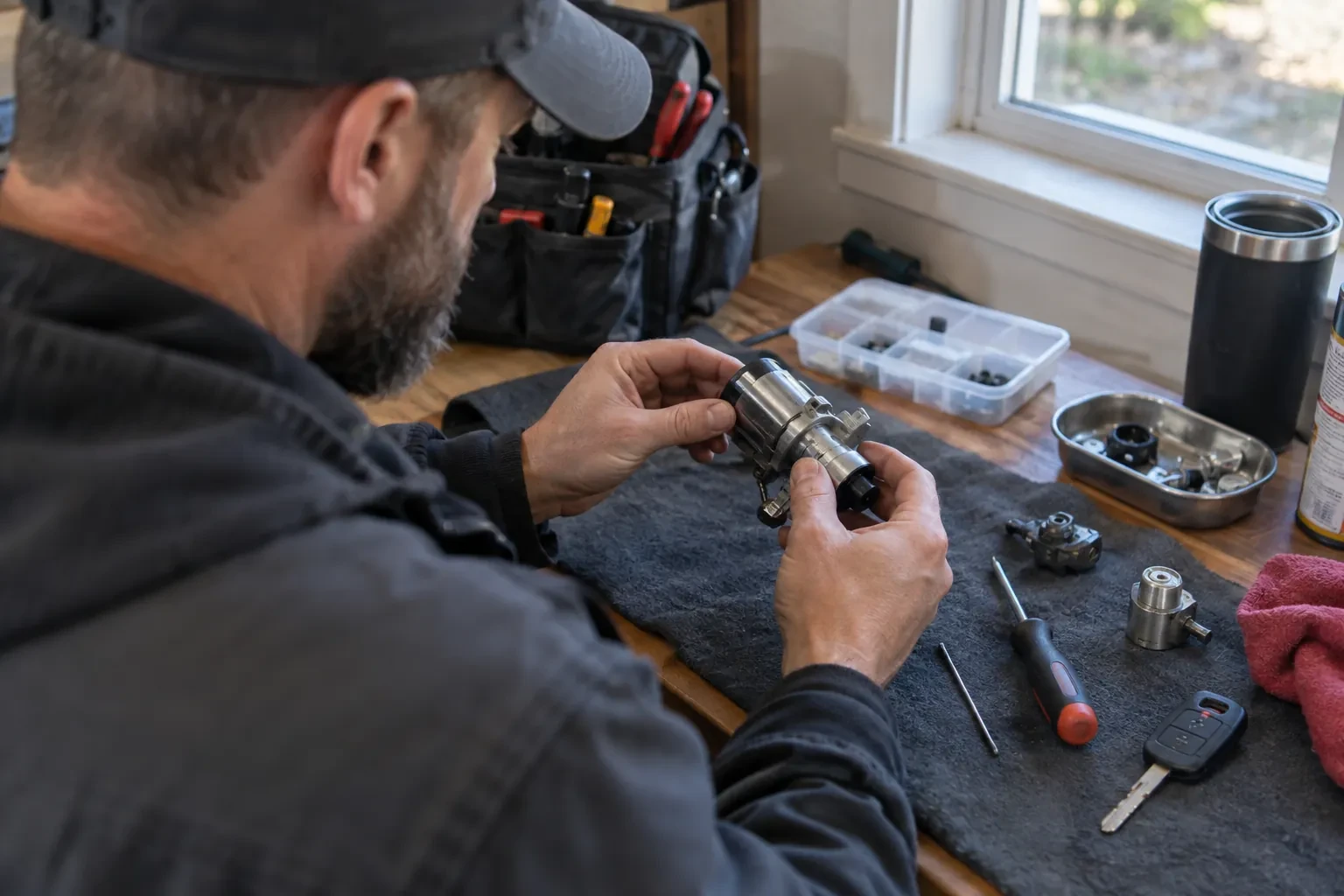
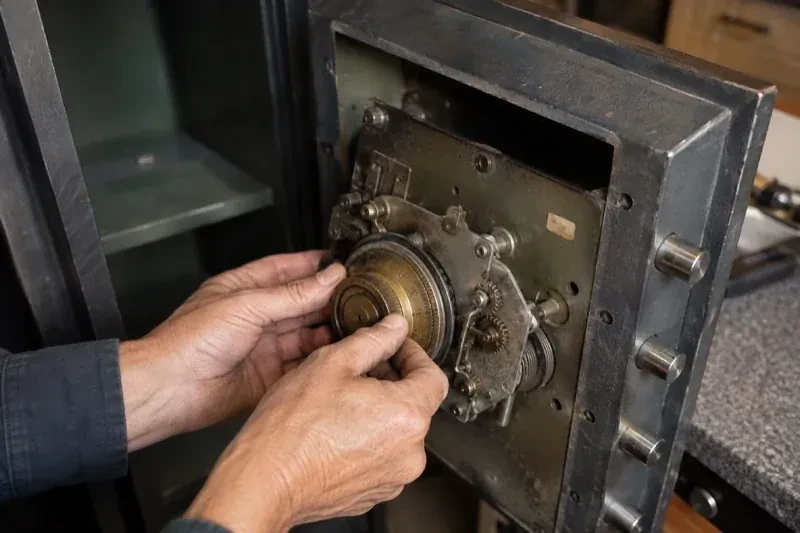
Servicing starts with the bolt-work: the mechanism is opened, cleaned of old grease and grit, and lubricated with a product suited to steel bolt-work rather than a general household oil. The lock is cycled repeatedly and adjusted if it binds or hesitates, and any handle or spindle that has worked loose is tightened. Batteries in an electronic lock are replaced as routine maintenance rather than waiting for a failure, and the door seal and hinges are checked and freed if they have picked up rust.
Paperwork worth keeping somewhere other than inside the safe
The model number, the burglary and fire ratings, and a note of how and where the unit was anchored are all details worth keeping on file, ideally somewhere other than locked inside the safe itself. An insurer asking about coverage for cash or valuables will often want exactly this information, and having it ready saves a search through old boxes later. A few photographs taken during installation, showing the anchoring and the rating label, cover most of what gets asked for afterward.
Safe Installation & Servicing
In the van
Mechanical or electronic lock
Hammer drill and masonry bits
Mounting plate
Nine-volt backup battery
Desiccant packets
Safe Installation & Servicing
What affects the quote
Size and weight of the safe
A larger, heavier unit needs more capable moving equipment and more time to position safely than a compact document safe, which shows up in the labour involved rather than the hardware itself.
Requests for concealment
Fitting a safe into a closet floor, a recessed wall cavity, or behind a built-in panel takes more planning than a straightforward open placement, and can limit which units will actually fit.
Floor or wall construction
Solid concrete, a wood subfloor reaching into joists, and tile each call for a different anchoring approach and different hardware, and the substrate is confirmed before any drilling begins.
What to have ready
- Roughly how much does the safe weigh, if known?
- Does an insurer or head office require a specific rating?
- Has the safe ever been anchored to the floor or wall before?
Safe Installation & Servicing: questions
QuestionsCan the combination or code be changed after installation?
Yes, on both mechanical and electronic locks. A mechanical dial is reset to a new combination by working inside the lock body, while an electronic keypad is simply reprogrammed at the keypad or through its service menu. Changing it after a change in staff, a move, or simply out of caution is routine work rather than anything unusual, and it can be arranged as its own visit.
How often does the battery need replacing on an electronic lock?
Most electronic locks give a low-battery warning, usually a beep or flashing light, well before they actually stop working, and replacing the battery within that same week is the safer habit rather than waiting. Depending on how often the safe is opened, a battery commonly lasts somewhere between one and several years, and keeping a spare of the correct type near the safe avoids a search once the warning starts.
How do I know what rating of safe I actually need?
Start with what will be inside it. Cash, jewelry, and firearms mainly need protection from tools and time, so the burglary rating matters most. Paper records and digital backups mainly need protection from heat, so the fire rating matters most, and digital media needs a noticeably lower internal temperature than paper to survive. Many households and businesses end up choosing a unit built to both standards rather than picking just one.