Commercial · Echo Place
Commercial-Grade Lock Replacement in Echo Place
At closing time the hookbolt on the storefront door catches the keeper only on the second or third try, and one employee has started giving the door a shoulder to force it home.
In plain words
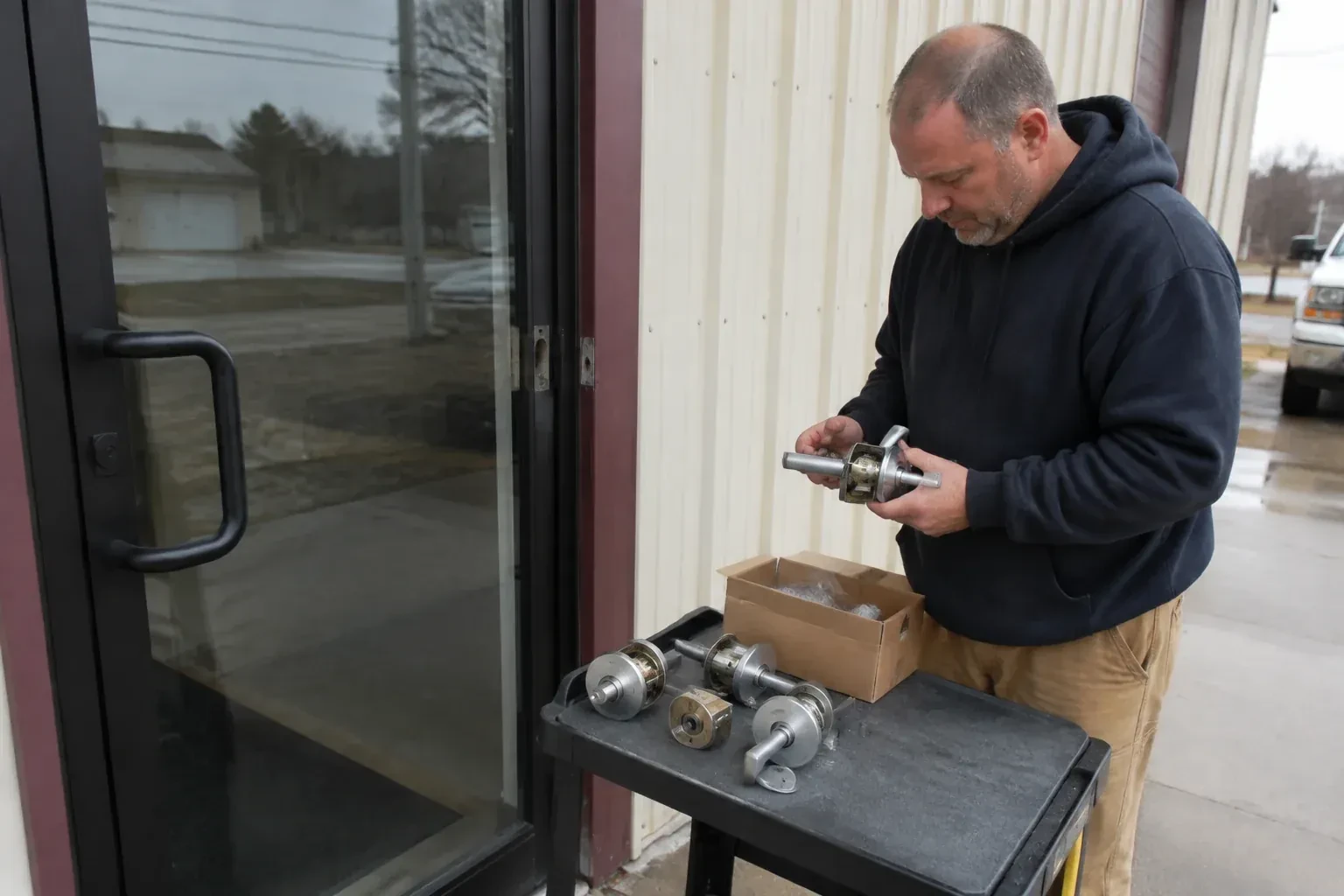
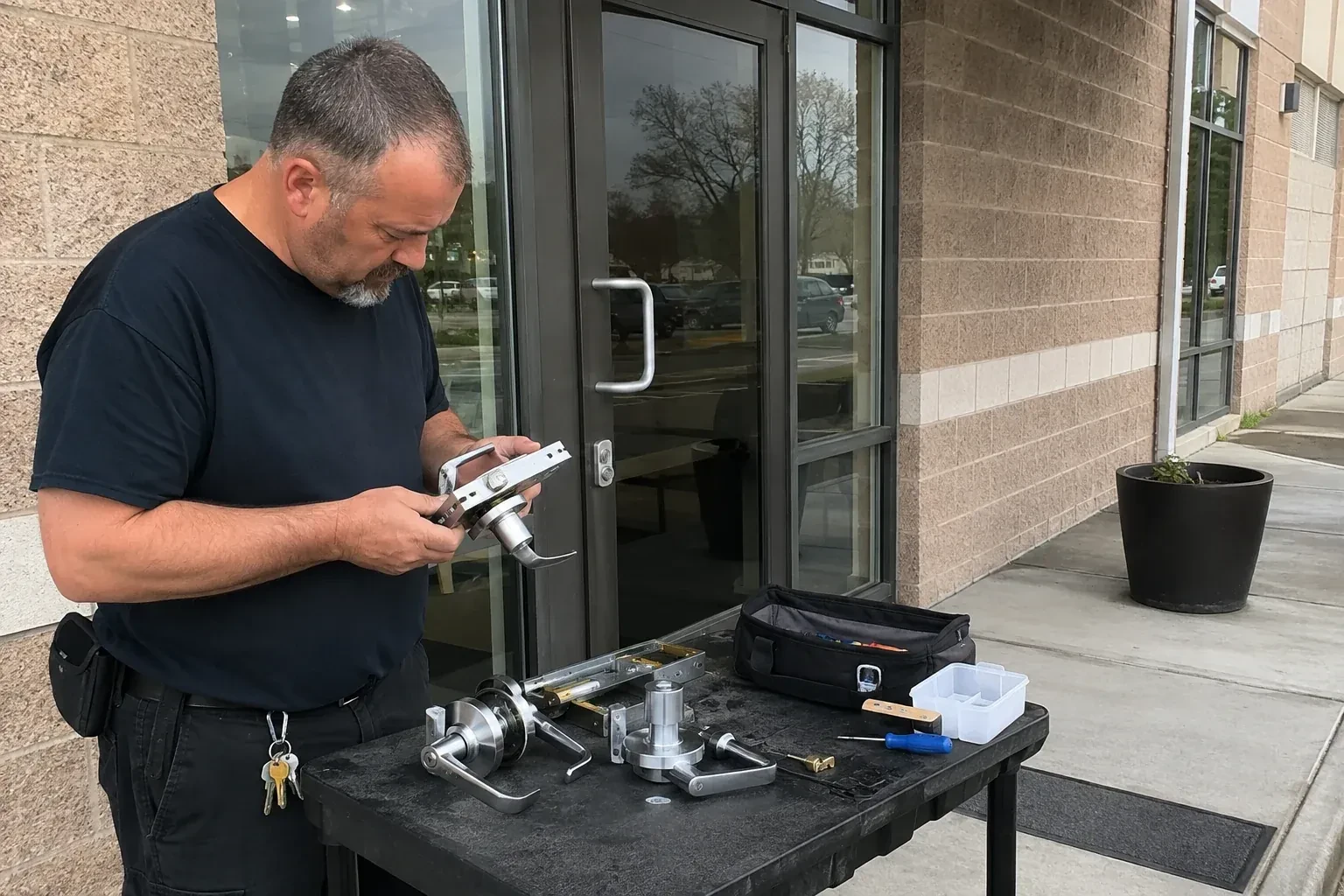
Think of it as re-equipping a door for the job it actually does rather than swapping one lock for a similar one. A back door taking deliveries all shift needs different internals than a quiet office entrance, and a storefront's aluminum frame needs a narrow-stile lock a wood door was never built to accept. The locksmith matches lock body, cylinder and strike to the door's real prep and real use, decides with the business whether the new hardware joins an existing master key system or starts a new one, and leaves the opening cycling cleanly from both sides before the visit ends.
How the visit goesOvernight someone forced the back door, and the cylinder face is scarred, the metal around the strike has pulled loose from the frame, and the latch no longer sits flush.
Commercial-Grade Lock Replacement
How the visit goes
Checking for a fire rating or an exit requirement
Some commercial doors are part of a fire separation or a required exit route, and that status changes which hardware is legal to install on them. The locksmith looks for a fire label on the door and frame, checks whether the opening serves an assembly space or a high-occupant-load area that calls for listed, push-type release hardware, and confirms whether the door is required to close and latch on its own. None of this is guesswork; it is read directly off the door, its label, and the building's own occupancy information.
Testing under real conditions before signing off
The finished hardware is cycled from both sides, under the door's normal swing and closing force, and by more than one person where staff are on site to try it, since a lock that operates cleanly for one hand may bind for another depending on height and grip. Any electric strike or reader tie-in is triggered several times to confirm consistent release. Only once the hardware performs the same way on repeated tries is the work considered finished rather than merely installed.
One key system instead of a patchwork
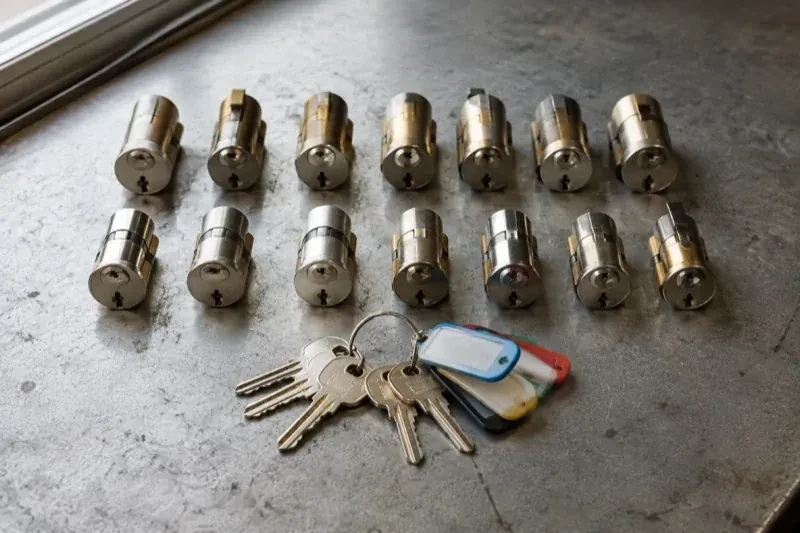
Where the visit brought hardware onto a shared master or interchangeable-core system, the business now has one coherent structure instead of a different cylinder on every door. A master key opens what it is supposed to, sub-master and change keys are limited to their own doors, and the key-control log reflects exactly who was issued what. The next time a lock needs attention, whoever handles it can read that log rather than guessing at what system, if any, the previous hardware belonged to.
Commercial-Grade Lock Replacement
In the van
Listed panic or exit hardware
Mortise prep and installation tools
Mortise lock body
Strike plates and keepers
Key-control log and tags

Commercial-Grade Lock Replacement
What affects the quote
Removal of old hardware
Whether old locks, cylinders and strikes are left with the business, disposed of, or kept as spares for a wider system is a small choice that can affect the time and scope named in the quote.
Electrified hardware and access-control integration
An electric strike, maglock or reader tie-in adds parts and testing time beyond a purely mechanical lock, and the quote separates that electrified work from the mechanical hardware so each is clear on its own.
Key-control documentation
Setting up or updating a written key-control log, recording who holds which key and which doors share a system, is a small but distinct task the quote can name separately from the physical hardware work.
What to have ready
- Who can authorize the work and sign for new keys?
- How many keys will need to be cut and issued?
- Is there an electric strike, maglock or card reader already on this door?
Commercial-Grade Lock Replacement: questions
QuestionsWhat is a grand-master key system, and does a small business need one?
A grand-master system adds a layer above a standard master key, useful for a business with several buildings or departments where one senior key should open everything and mid-level keys should open only their own area. A single-location business with a handful of doors usually only needs a straightforward master and change-key structure, without the extra layer.
Do you replace hardware after an attempted break-in even if the door still locks?
Yes, and it is worth having it checked even when the door still appears to function. A cylinder that was drilled at, pried or struck can be weakened internally without showing it externally, and a bent strike or a cracked frame around the lock can let a door appear locked while offering far less resistance than it should.
What happens to keys held by former employees or contractors?
Once a cylinder is replaced or rekeyed, any key that was not reissued for the new combination simply stops working on that door. This is the direct answer to a key that walked out with someone who left the business, and it is worth doing across every door that key used to open, not only the one that prompted the call.
Related services
- Master Key System DesignThe office key ring has become the org chart.
- Access Control InstallationSomething went missing from the storeroom over a weekend, and when you ask who was in the building, the honest answer is anyone with a key.
- Panic & Exit HardwareThe new access-control reader at the staff entrance works fine going in, but nobody has sorted out the door's exit side, and right now a card reader and a pushbar exist as two separate ideas.