Lockouts · Tutela Heights
Lost Keys — Same-Visit Rekey in Tutela Heights
The renovation wrapped up in the spring.
In plain words
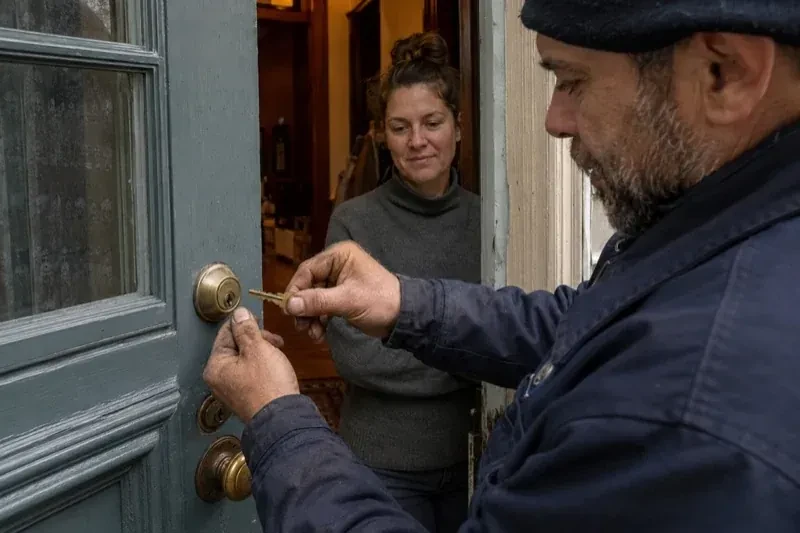
Rekeying and replacing a lock arrive at the same place by different roads. Replacement puts new hardware on the door: a new deadbolt or handle, and a finish that may not match its neighbours. Rekeying leaves all of that alone and changes what is inside the cylinder, commonly the pin stack on a conventional lock or a reset on a homeowner-rekeyable one, so a different key runs it. For hardware in good condition, that is the sensible choice: the door looks and feels as it did while the old key is retired. A worn cylinder can be replaced and keyed to match the rest in the same visit.
How the visit goesYou were shovelling the driveway after dark and the ring must have slid out of your coat pocket somewhere under a metre of snow. You have raked the whole bank with a flashlight. It will turn up in April, and you would rather not wait.
Lost Keys — Same-Visit Rekey
How the visit goes
Rekey or replace, cylinder by cylinder
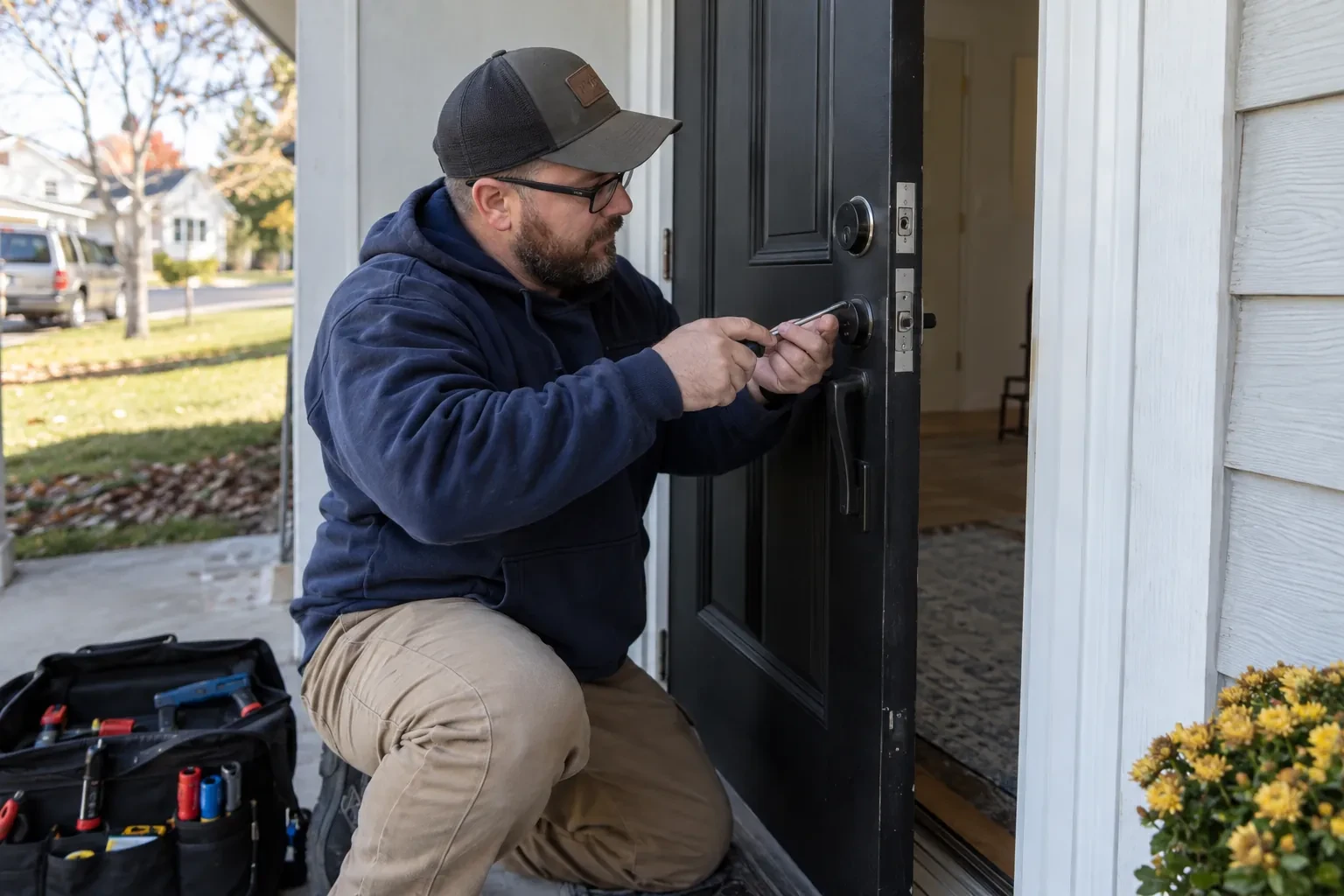
Rekeying suits hardware in sound condition, and most cylinders on a house qualify. The locksmith flags the exceptions while the list is being made: a plug worn oval by decades of use, a cylinder packed with salt and grit from a side door that faces the driveway, a knob lock so light it offers little resistance, or a keyway that no longer has blanks available. For those, a replacement cylinder or a complete new deadbolt keyed to match the rest is proposed as its own item, so you decide door by door. The aim is that every cylinder leaving the visit on a new key is one that will keep turning well for years.
Removing the cylinder without disturbing the door
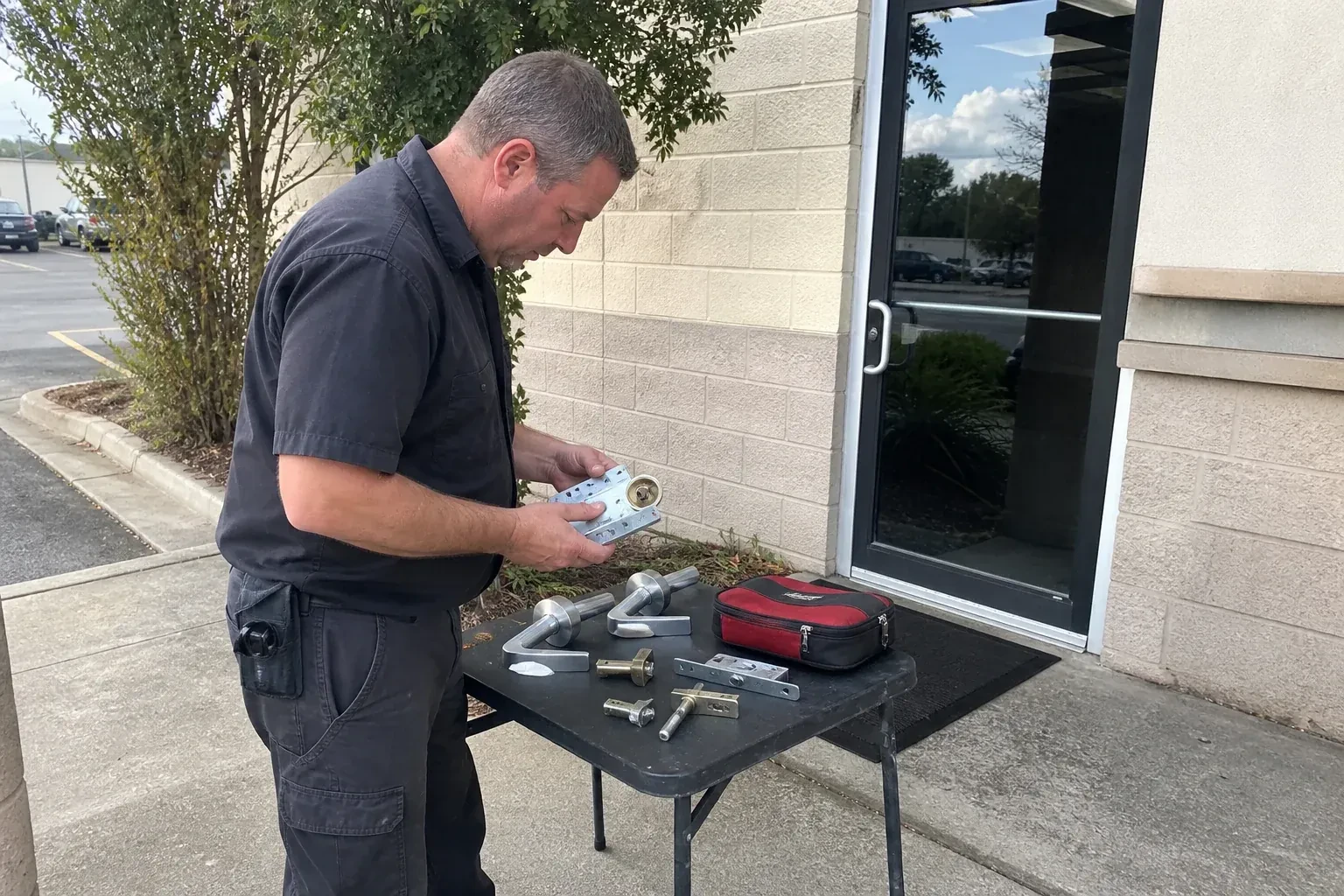
Each cylinder comes off in the way its lock allows, and the door itself is never cut or drilled. A knob or lever lock releases its cylinder once the knob is slipped off its spindle and a retaining clip or cap is eased back. A deadbolt cylinder comes out when the interior thumb-turn assembly is unscrewed and the housing lifts away. A mortise cylinder in an older door backs out after its small set screw is loosened, and a rim cylinder on a night latch unscrews from its back plate. Each piece is set aside with its own screws so the door goes back together exactly as it was.
When to think about rekeying again
Rekeying is a repeatable act, and after this visit you know what triggers it. Moving into a new home, because previous occupants and their helpers may hold copies. A contractor or tenant leaving without handing a key back. A separation or a change of roommates. A ring lost with anything that names your address. Manufacturers list exactly these moments, and a household that treats them as routine stays in control of its doors for decades with the same hardware. The locks on the door today can be repinned many more times; only the small pins and the keys change each time.
Lost Keys — Same-Visit Rekey
In the van
Cylinder retaining-clip and cap tools
Key gauge and decoder
Plug follower set
Replacement cylinders
Pin tweezers and shims
Lost Keys — Same-Visit Rekey
What affects the quote
Condition of the cylinders
A clean, healthy cylinder is repinned as is. One clogged with salt and grit is cleaned first, and a worn or damaged one is replaced rather than repinned, each priced as its own item.
Whether the doors can share one key as they are
Cylinders from the same keyway family are pinned alike with no extra parts. A door from a different family needs a compatible cylinder swapped in if you want a single key, and that part is quoted separately.
Paperwork for a landlord or building
Where a landlord, condominium or lease requires a written record of the lock change and key count, preparing that note and any key register update is a small named item.
What to have ready
- Do you know roughly how many copies of the old key exist?
- Which doors did the missing key open: front, back, side, garage, shed, gate?
- How many people will need a key afterwards?
Lost Keys — Same-Visit Rekey: questions
QuestionsThe car key was on the same ring. Can you deal with that too?
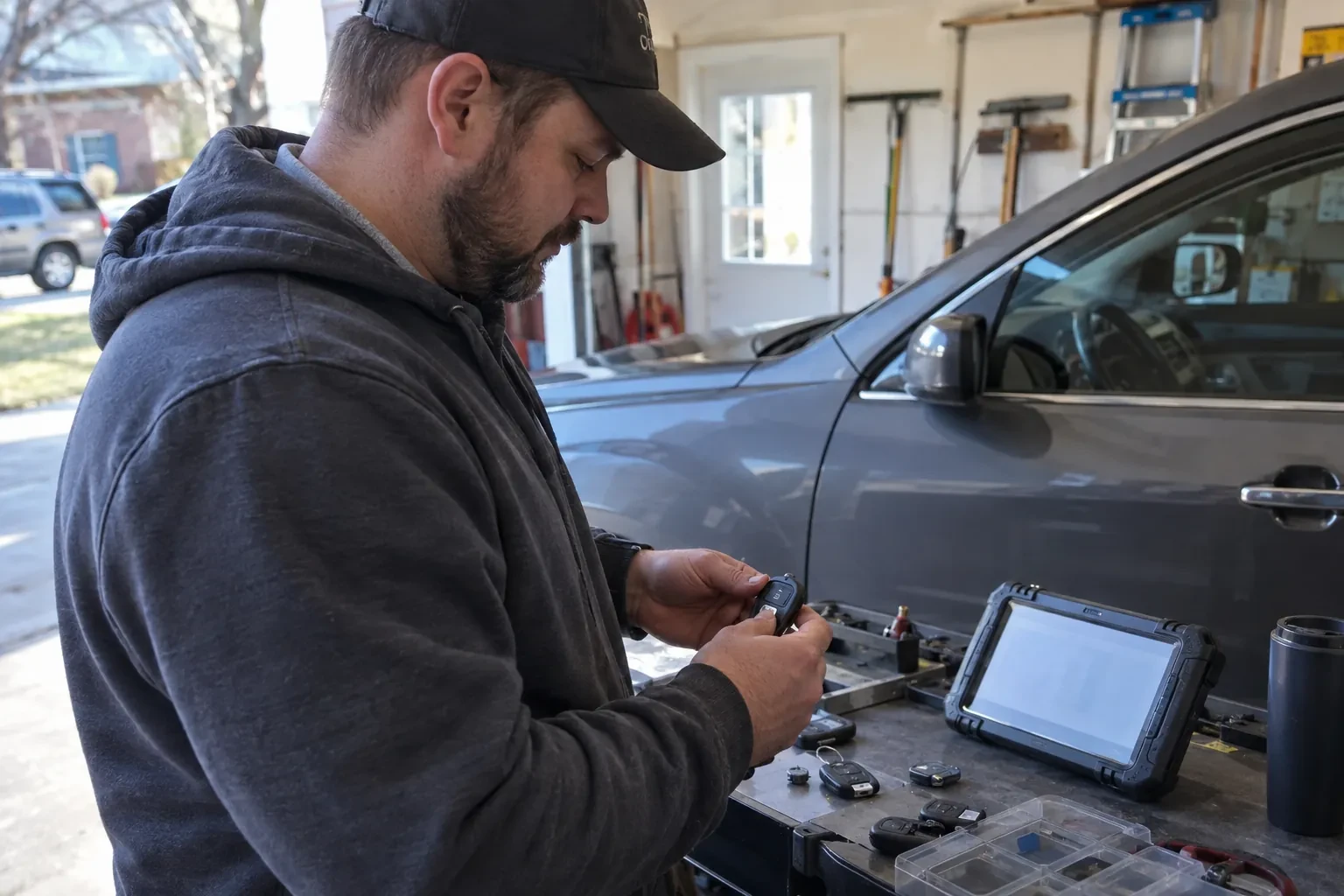
Vehicle keys are a separate branch of locksmith work because most carry a chip the car's immobiliser recognises. Retiring a lost car key means programming the car to forget it and to accept a new one, which an automotive locksmith does at the vehicle. Mention the car when you book; where the company offers that service it can be scheduled, and otherwise the household rekey proceeds and you are pointed to the right help.
What should I do before the locksmith arrives?
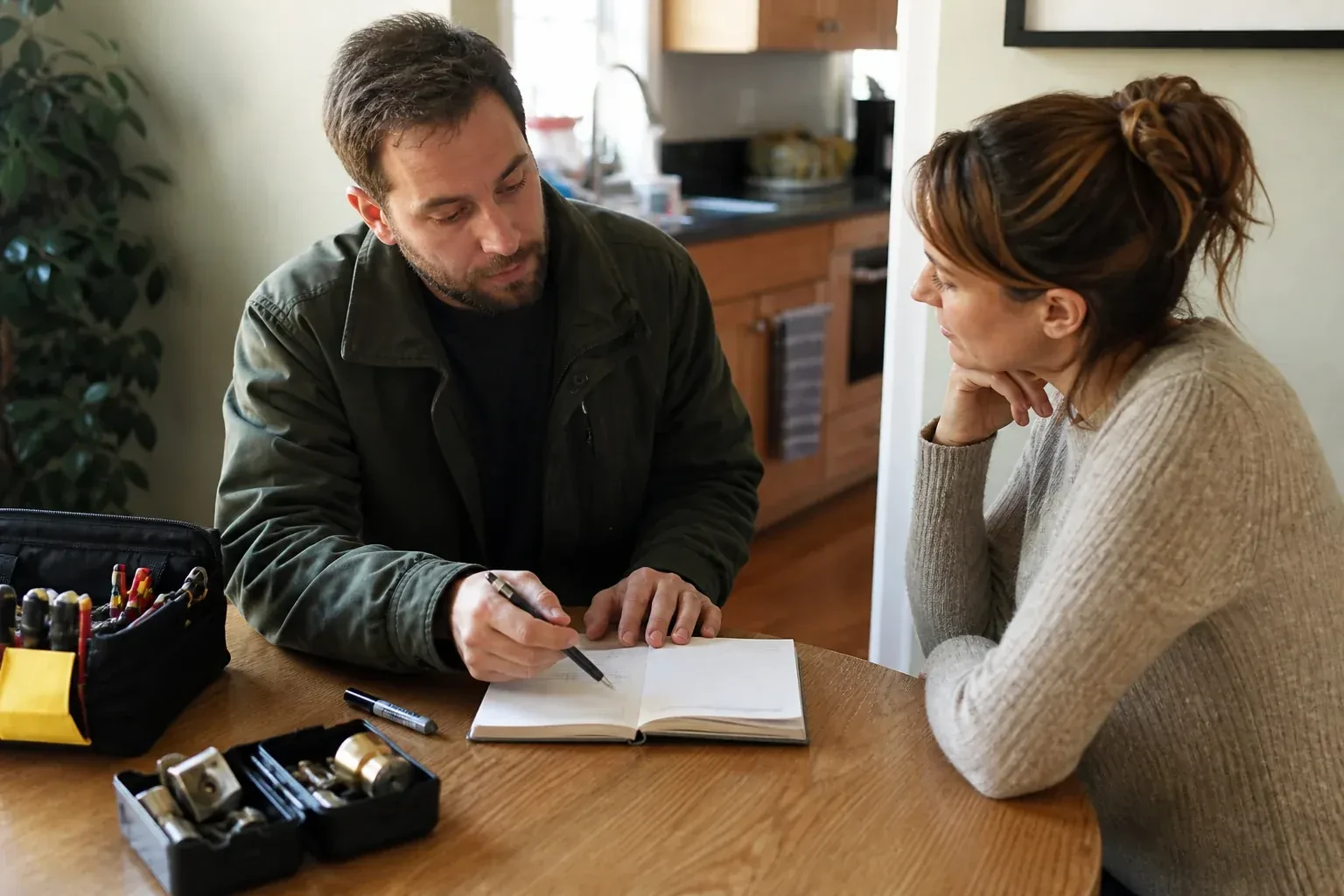
Walk the property and note every door the missing key opened, including the garage, shed and gate. Gather any keys you still have, since a working key helps in reading each cylinder. Have identification and, for tenants, something showing the tenancy. Decide roughly how many keys you want and whether you would like all doors on one key. If a garage remote or building fob was lost too, mention it when you book.
My lock is the homeowner-rekeyable type but the working key is lost. Can it still be reset?
Yes. Those cylinders let an owner change the key with a small learn tool, but only while a working key is in hand. Without one, a design such as Kwikset SmartKey is removed and placed in its own reset fixture, returning it to a blank state; other cylinder types are rekeyed by their own method instead. A new key is then set and the lock goes back on. It is a few extra minutes rather than a replacement.