Car keys · Brantford
Key Fob Programming in Brantford
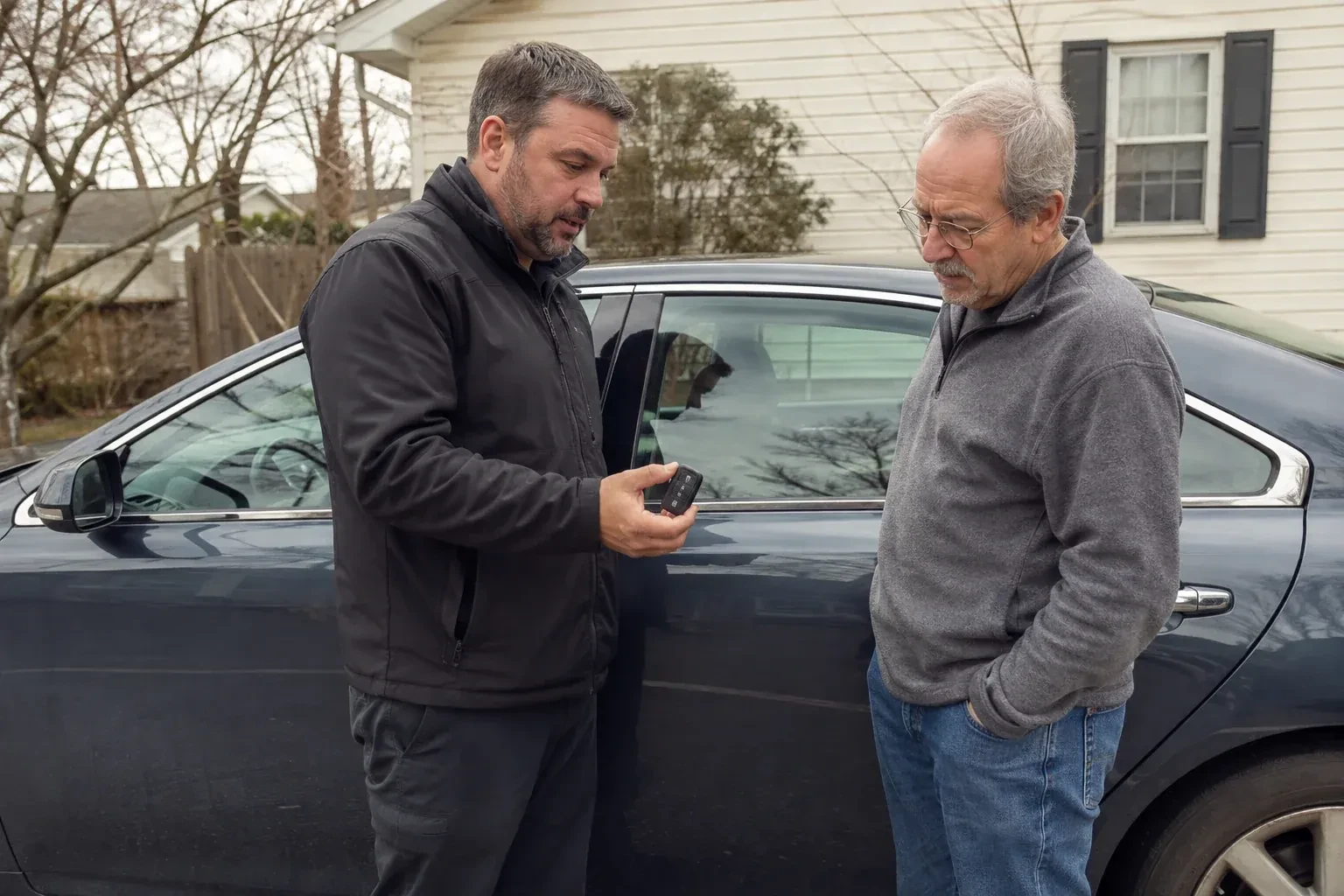
A fob went missing weeks ago somewhere between a coat pocket and a parking lot, and a spare has covered the gap since.
In plain words
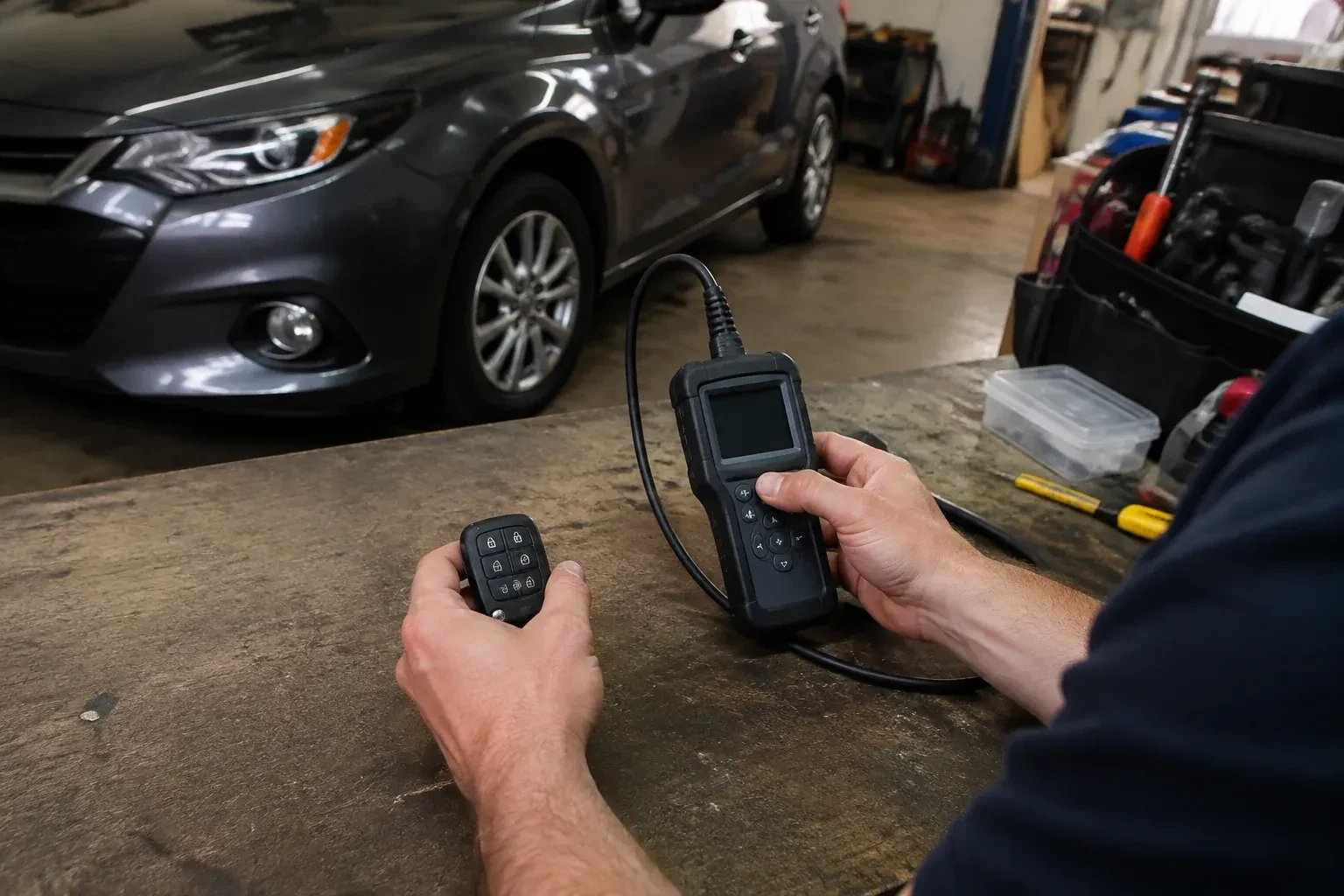
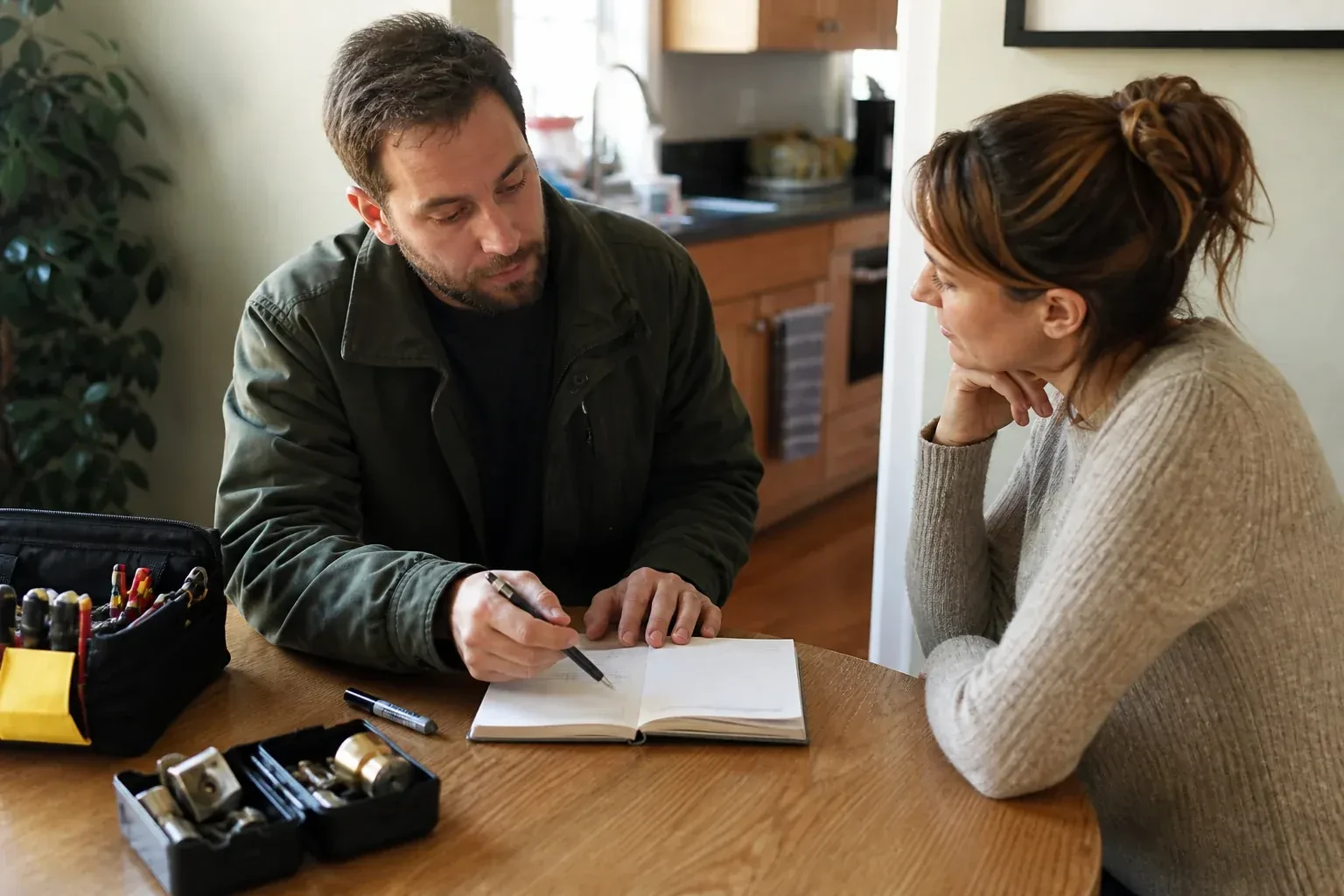
Fobs age the way most electronics do: batteries fade, buttons stick, cases crack after years on a keyring. This kind of work often overlaps with simple repair, since a fob that has stopped responding is frequently a battery issue rather than an electronic failure, and a cracked shell can be replaced without touching the electronics inside it at all. Sorting out which problem is which, before assuming a full replacement is needed, is part of the visit.
How the visit goesThe remote clicks the way it always has, but the vehicle no longer locks, unlocks or answers with its usual chirp. Nothing on the dash reacts either. A fading battery inside the fob is the likely reason, even though the fob itself looks and feels completely normal.
Key Fob Programming
How the visit goes
Battery, buttons or the hidden chip
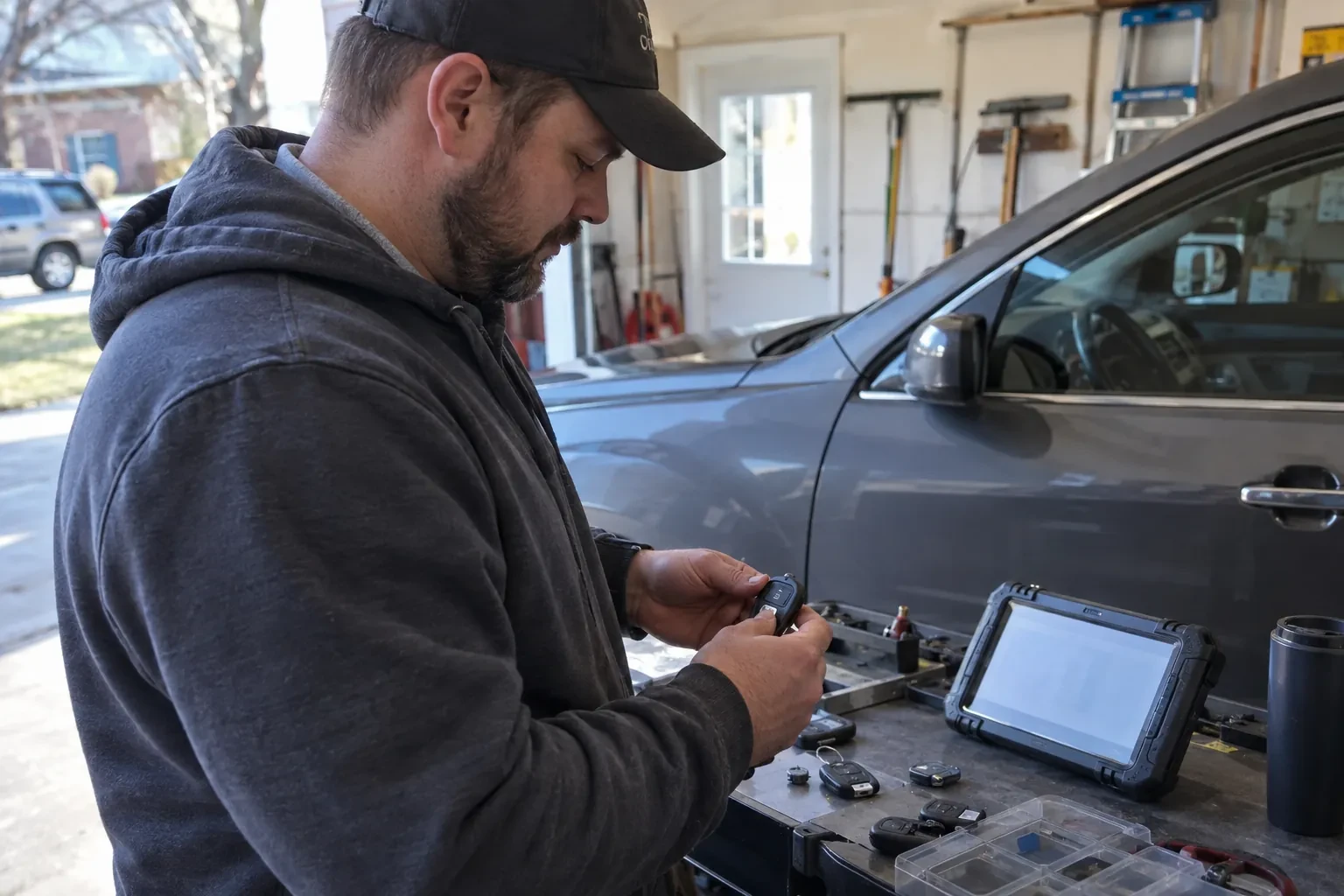
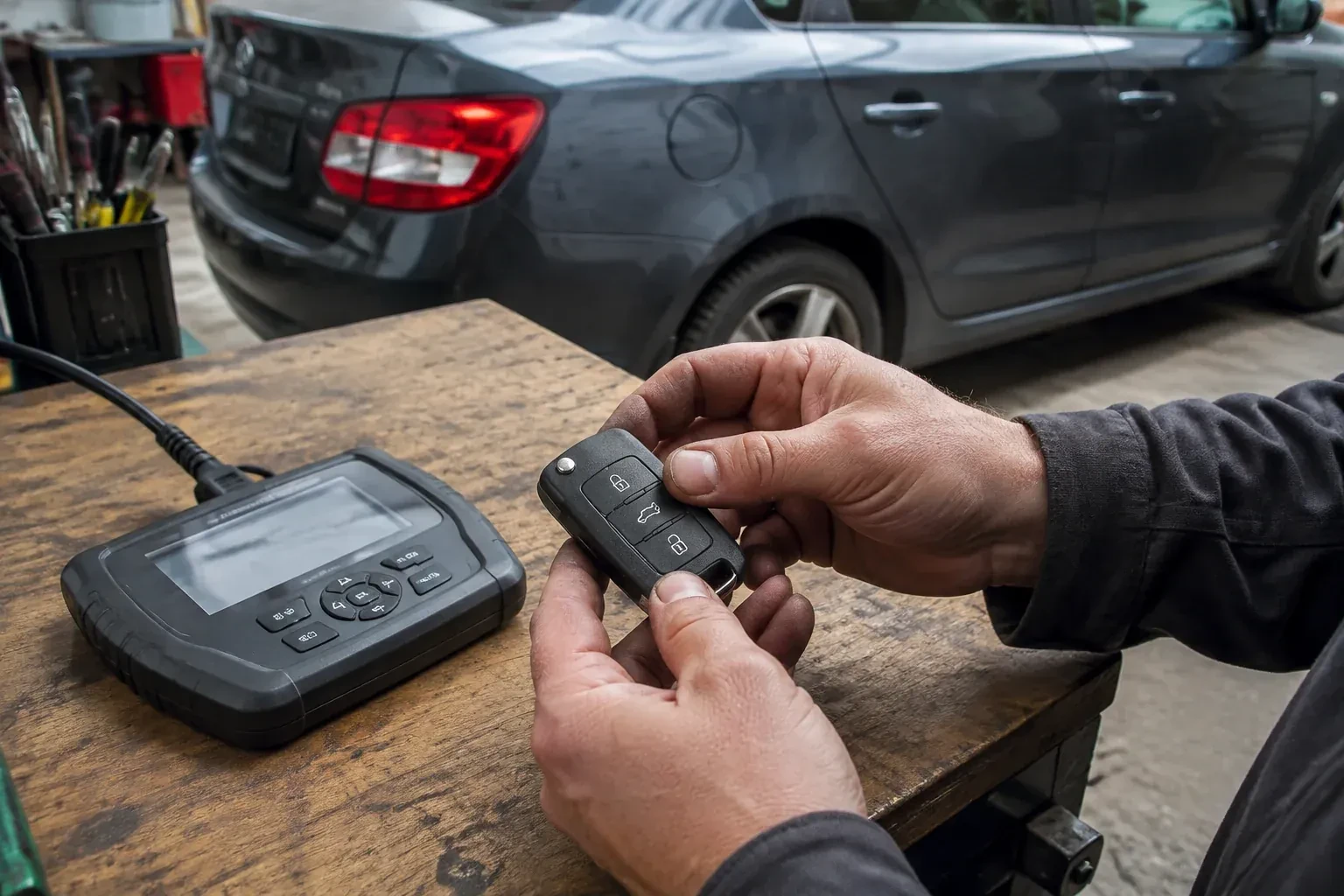
A fob that has gone quiet is checked in layers before anything is assumed. The battery is tested first, since a fading coin cell is the most common reason a remote stops answering while the mechanical blade still turns the door. If a fresh battery changes nothing, the buttons and the small circuit board are examined for wear, cracks or corrosion. Only once the physical fob is ruled out does the check turn to the vehicle's own memory, since a fob can be in working order and still be missing from the accepted list.
Removing a lost fob from the vehicle's memory
Adding a new fob solves half the problem when the old one is genuinely missing rather than simply misplaced at home; the other half is telling the vehicle to stop recognizing the fob that is out there somewhere. The procedure follows that model's own lost-key route: some delete just that one fob's authorization and leave the others untouched, while others first erase every known credential and then relearn the ones you keep, so a household with three fobs and one lost one still ends the visit with two working fobs and a lost one that no longer operates the vehicle electronically.
A vehicle with every driver properly on file
With a fob programmed for each person who drives the vehicle, nobody in the household is sharing a single key or waiting for someone else to come home before leaving. Each fob remains distinct in the vehicle's memory, so a future change, such as one more driver joining or one fob eventually needing replacement, follows that vehicle's own programming mode, which on many systems touches only the one fob and on others needs every retained fob present and relearned together. The vehicle simply recognizes one more signal than it did before.
Key Fob Programming
In the van
Key cutting machine
Fob and remote signal tester
Precision case-opening tools
Diagnostic port interface cable
VIN and manufacturer service records
Key Fob Programming
What affects the quote
Adding a fob versus starting from nothing
Registering an additional fob while others still work is a shorter procedure than working through that vehicle's own all-keys-lost route, commonly a full key-memory reset and sometimes an app or service credential instead, after every fob has gone missing; the quote reflects which situation actually applies.
Aftermarket parts versus original manufacturer fobs
An aftermarket fob can cost less than an original manufacturer part where one is compatible, and availability varies by vehicle age and make, which the quote takes into account once compatibility is confirmed.
Battery and hardware needs uncovered during the visit
A fob that turns out to need only a battery or a replacement shell, once opened and examined, is a smaller job than full electronic replacement, and the quote adjusts to reflect what was actually needed.
What to have ready
- What is your vehicle's year, make and model?
- Has any fob been dropped, cracked or gotten wet recently?
- Is any fob genuinely lost, or just misplaced at home?
Key Fob Programming: questions
QuestionsDo I need to bring my car anywhere, or does the work happen where it is?
The vehicle generally stays where it is parked, since the equipment used for programming travels to it rather than the other way around. What matters more than the location is that the vehicle itself is present for the visit, since most procedures read information directly from the car as part of registering the new fob.
What does testing remote start or passive entry actually involve?
Each function the vehicle offers is tried in person once the fob is registered: trying whatever passive-entry action that vehicle actually needs, approach alone, or a handle touch, grip or button press, pressing the remote start button and confirming the engine turns over, and checking that the vehicle re-locks or shuts down the way it is meant to. Nothing is assumed to work simply because the fob was accepted by the vehicle's memory.
What is the difference between a remote, a transponder key and a proximity fob?
A basic remote only operates the locks and alarm from a distance while a separate metal key still starts the engine. A transponder key combines a cut blade with a chip the immobilizer reads before allowing a start. A proximity fob goes further: it authorizes entry while it is nearby, though most vehicles still need the handle touched, gripped or pressed to actually unlock, and it starts the engine with a push button, with no key insertion needed day to day. Each type is programmed differently.
Related services
- Car Key ReplacementThe car is yours now, but somebody else still holds a key to it.
- Spare Car Key DuplicationA lockout last month ended with a locksmith opening the door and going home, and the same single key has been carried ever since with nothing behind it.
- Transponder Key ProgrammingSince the remote starter was installed last month, the original key has started acting strangely, the car catches on the first turn some mornings and refuses outright on others.